








Filter op
Filter op
Actieprijs€20,90
€104,50  / kg
Actieprijs€14,90
€183,95  / kg
Actieprijs€13,90
€165,48  / kg
UitverkochtCafeïne XXL 200 mg 365 tabletten van LUTO Supplements - verpakking Cafeïne XXL 200 mg 365 tabletten van LUTO Supplements - vegan, glutenvrij, zonder kleurstoffen
Actieprijs€13,90
€171,60  / kg

Caffeine tablets and capsules: controlled caffeine intake without coffee or energy drinks

Caffeine is one of the most consumed substances in the world and occurs naturally in coffee beans, tea leaves, cocoa beans, and guarana seeds. As a supplement, caffeine tablets and caffeine capsules are a practical way to accurately regulate daily caffeine intake without the extra sugars, calories, or liquids that come with coffee, tea, or energy drinks. In our range, you will find caffeine supplements from reputable brands in dosages of 200 mg and 250 mg per tablet, so you can always choose the option that suits your usage and sensitivity.

What is caffeine?

Caffeine is a natural chemical compound belonging to the group of alkaloids, more specifically methylxanthines. It occurs naturally in various plants and is both extracted from natural sources and synthetically produced for use in foods, beverages, and supplements. In pure form, caffeine is a white, odorless powder with a distinctly bitter taste. Caffeine is one of the most studied and well-documented substances in the dietary supplement industry and is consumed daily by millions of people worldwide through coffee, tea, energy drinks, and supplements.

How much caffeine is in a tablet compared to coffee?

One of the practical advantages of caffeine tablets is that the amount of caffeine per serving is precisely known. A standard 200 mg caffeine tablet usually contains more than twice as much caffeine as a regular 200 ml cup of coffee, which contains an average of approximately 80 mg of caffeine. An energy drink of 250 ml also contains approximately 80 mg, green tea approximately 50 mg per 200 ml, and cola approximately 33 mg per 330 ml. For those who want to consciously monitor or dose their daily caffeine intake, tablets provide immediate insight into the exact amount per intake, without having to calculate variations per cup or can.

Caffeine tablets versus caffeine from beverages

Caffeine in supplement form differs from caffeine in beverages in several ways. First, the dosage per tablet is predetermined and consistent, while the caffeine concentration in coffee or tea can vary depending on the preparation method, brand, or type. Second, caffeine tablets contain no added sugars, calories, milk, or other ingredients that are standard in beverages. Third, tablets are compact and easy to carry, making them practical for on the go, at work, or during sports.

Recommended dosage of caffeine supplements

Caffeine supplements are available in dosages of 100 mg to 250 mg per tablet or capsule. The right amount per day depends on personal preference, sensitivity to caffeine, and the total intake from other sources such as coffee, tea, or energy drinks. Always follow the recommended dosage on the packaging and take all sources together into account when monitoring your total daily caffeine intake. No official nutritional reference value has been established for caffeine, making personal assessment and caution with high intake extra important.

When do you take caffeine?

Caffeine tablets can be taken at different times of the day, depending on personal preference. It is wise not to take caffeine right before bedtime, as this can affect your night's sleep. Whether it is better to take it with a meal or on an empty stomach also depends on your personal sensitivity, as for some people caffeine on an empty stomach can lead to a slightly restless feeling in the stomach.

Who are caffeine tablets suitable for?

Caffeine tablets are suitable for adults who want to consciously regulate their caffeine intake without being dependent on coffee, tea, or energy drinks. They are popular with people who are on the go and do not have coffee at hand, with athletes who want to time their intake, and with people who want to avoid the sugars and calories of energy drinks. Caffeine tablets are not suitable for children, pregnant women, or people with a sensitivity to caffeine or certain medical conditions. If in doubt, always consult a doctor before you start using caffeine supplements, especially if you already use other caffeine-containing products or medications.

Possible side effects of caffeine

When used within the recommended amounts, caffeine is generally well tolerated. At higher dosages or in people who are sensitive to caffeine, side effects such as restlessness, heart palpitations, headache, or mild stomach complaints can occur. Excessive use can also lead to sleep problems or a feeling of nervousness. It is therefore important to monitor the total daily intake from all sources and adjust the dosage if necessary. In case of persistent complaints or if in doubt, it is wise to consult a doctor.

Comparing caffeine supplements: what to look for?

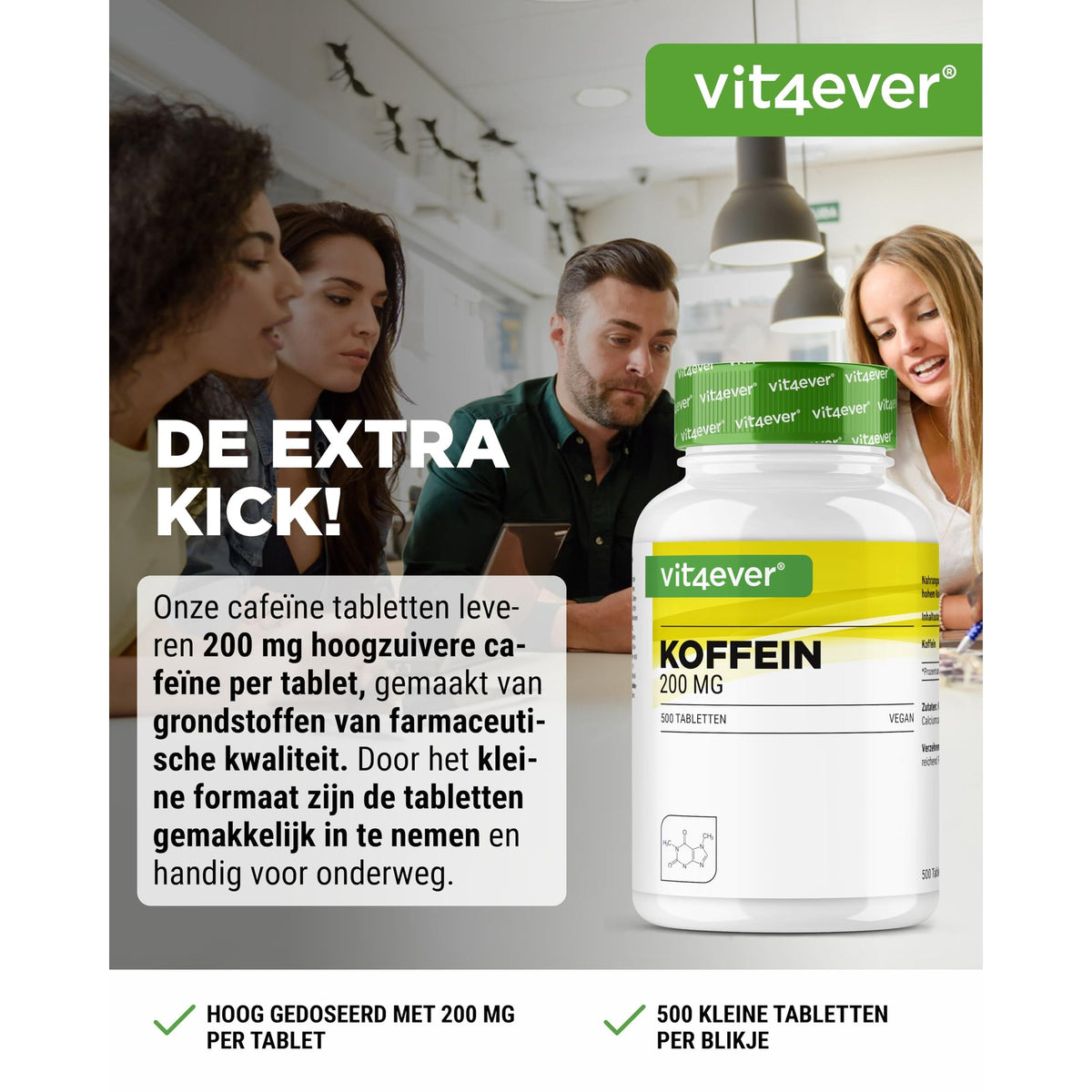
When choosing a caffeine supplement, there are several practical things to consider. First, the dosage per tablet, so you can easily align it with your desired intake. Second, the price per serving, which can vary greatly between products with 100, 200, or 500 tablets per package. Third, the purity of the product and the presence or absence of fillers or additives. In our range, you will find caffeine tablets from brands such as Vit4ever and LUTO Supplements in dosages of 200 mg and 250 mg per tablet, with a favorable price per serving for daily use.

Need more advice?

Feel free to send us a message. We're happy to help and will answer your questions as soon as possible.
Tobian

Tobian

Customer service