







Filter op
Filter op
Actieprijs€24,90
€332,00  / kg
Actieprijs€34,90
€740,98  / kg
ActieprijsVanaf €23,90
€810,17  / kg
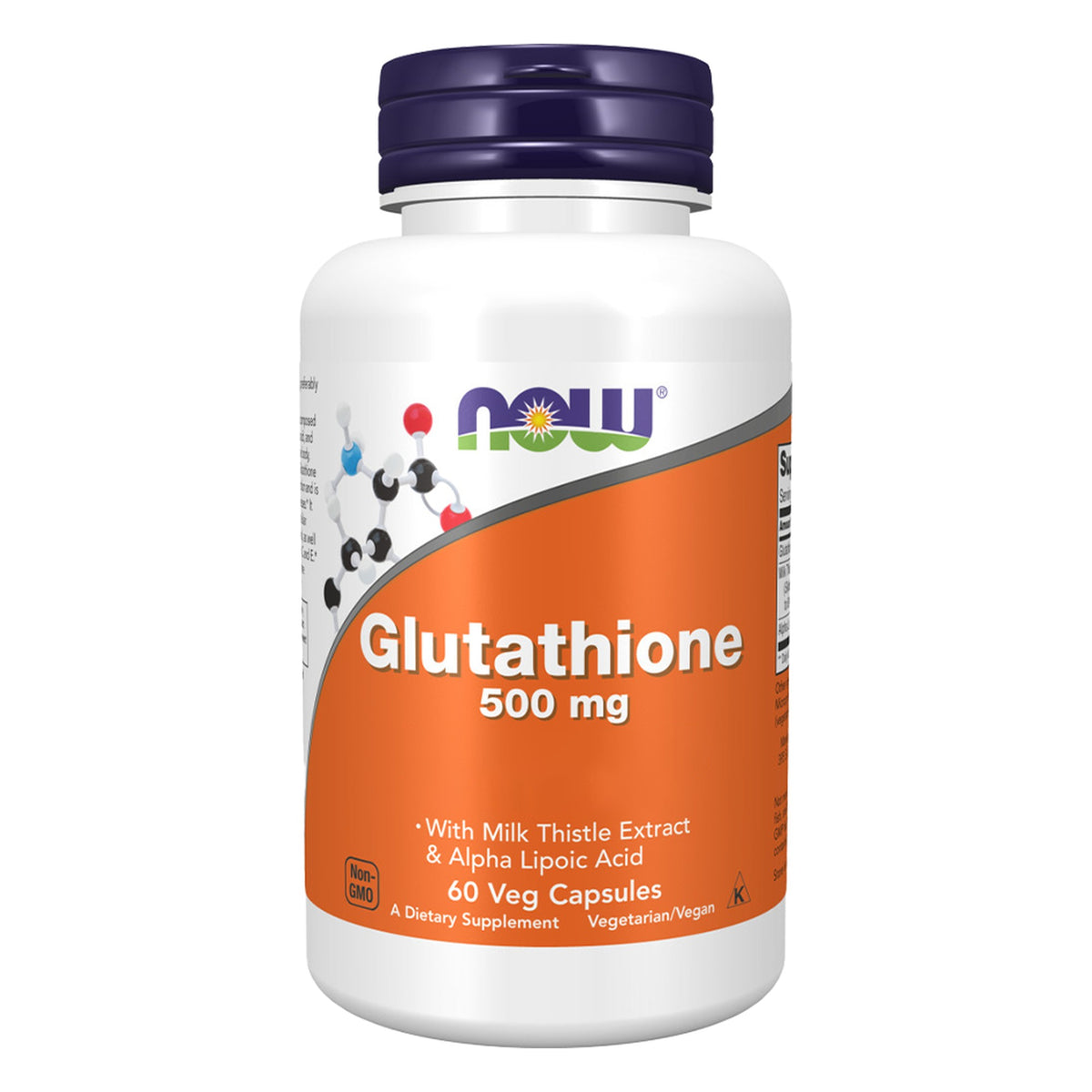
UitverkochtGlutathion met Mariadistel & Alfa-liponzuur 500mg | 60 Capsules | NOW Foods
Buy glutathione: an endogenous substance as a supplement

Glutathione is a substance that occurs naturally in the body and is present in virtually all cells. It is composed of three amino acids (cysteine, glutamic acid, and glycine) and is therefore called a tripeptide. As a supplement, glutathione is popular, including in a liposomal form aimed at absorption and in combination with substances such as NAC and milk thistle (silymarin).

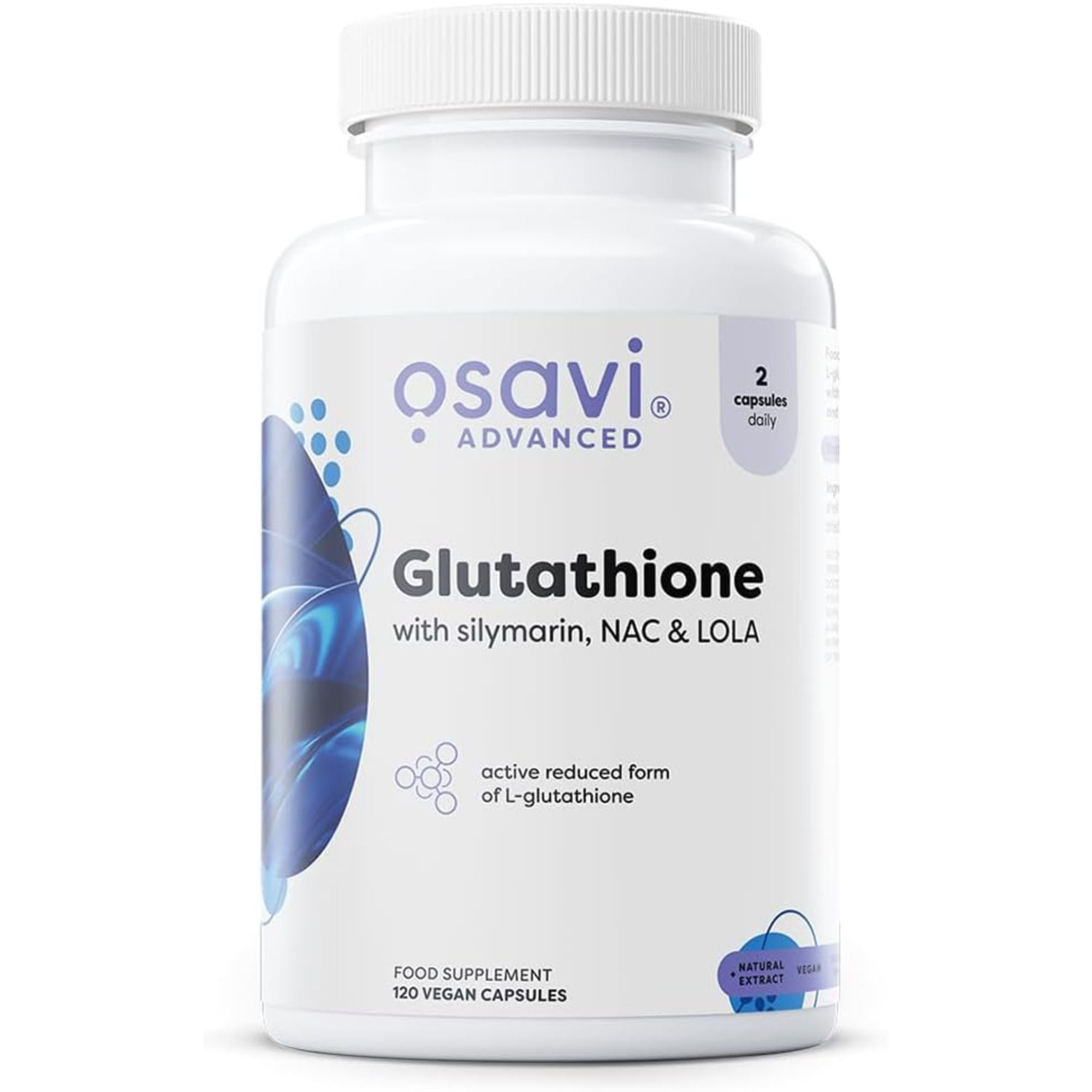
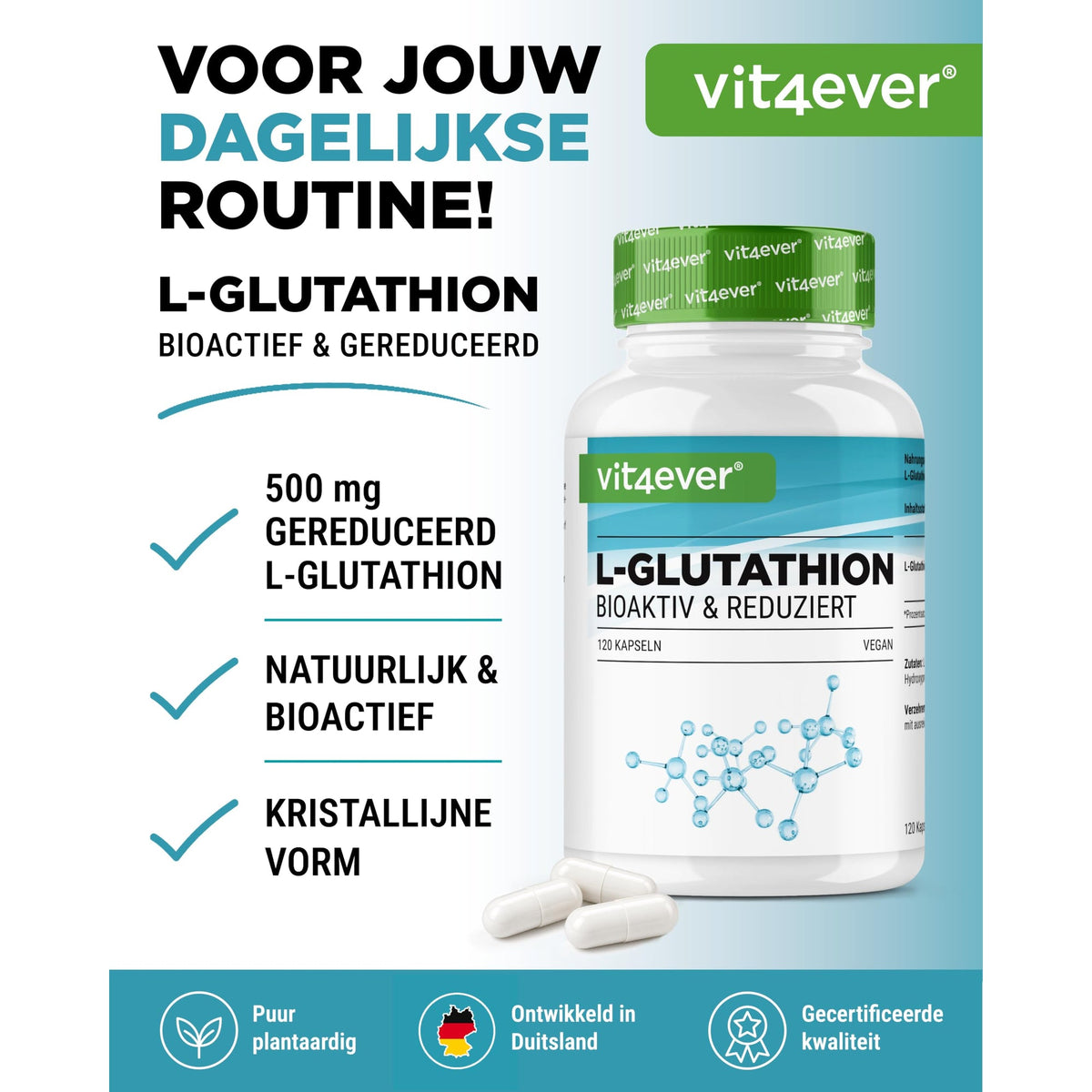
In our range, you will find glutathione in various forms and from multiple brands. For example, there is standalone L-glutathione 500 mg in capsules from Vit4ever, liposomal glutathione 500 mg from Osavi, and a combination preparation from Osavi with silymarin, NAC, and LOLA. This allows you to choose between pure glutathione and a complex with multiple substances, in varying dosages.

What is glutathione?

Glutathione is a tripeptide, a small molecule composed of the amino acids cysteine, glutamic acid, and glycine. It occurs naturally in the body and is present in virtually all cells. There are two forms: the reduced form (indicated as GSH or reduced glutathione) and the oxidized form. Supplements usually contain the reduced form, often indicated as L-glutathione. The label states how much glutathione a product provides per serving and which form it is.

What does the body make glutathione from and where is it found?

The body produces glutathione itself from three amino acids: cysteine, glutamic acid, and glycine. Cysteine is often considered the building block that is least readily available. The amino acids that serve as building blocks are found in high-protein foods, such as meat, fish, eggs, dairy, legumes, and nuts. Glutathione itself is also found in small amounts in fresh fruits and vegetables. In the body, glutathione is present in virtually all cells. As a supplement, it is offered alone or in combination with other substances.

What forms of glutathione are there?

Glutathione is offered in various forms. The reduced form (GSH or L-glutathione) is the form you most often encounter in capsules. In addition, there is liposomal glutathione, where the glutathione is packaged in small fat globules (liposomes), a technique aimed at absorption. You will also come across S-acetyl-glutathione, a variant with an acetyl group. The forms differ in composition and presentation; on the label, you can read which form and quantity a specific product provides.

Is glutathione the same as L-glutamine?

Glutathione is sometimes confused with L-glutamine, but they are two different substances. L-glutamine is a single amino acid that is mainly known among athletes and in sports nutrition. Glutathione is a tripeptide composed of three amino acids (including glutamic acid, which is related to glutamine, but not the same). The names are similar, but the substances, their composition, and their application differ. Therefore, pay close attention when choosing whether you are looking for glutathione or L-glutamine.

What is the difference between glutathione and NAC?

Glutathione and NAC (N-acetylcysteine) are often mentioned in the same breath, but they are different substances. NAC is a form of the amino acid cysteine, one of the three building blocks of glutathione. Glutathione itself is the complete tripeptide of cysteine, glutamic acid, and glycine. In supplements, you will find them separately, but also together in one preparation, such as the combination product from Osavi with glutathione, NAC, silymarin, and LOLA. Those looking for pure glutathione choose a standalone or liposomal product; those who want to combine multiple substances look for a complex.

Liposomal glutathione and absorption

One consideration with glutathione is absorption, because the molecule is partially broken down in the digestive system. For that reason, glutathione is often offered in a liposomal form: the glutathione is then packaged in small fat globules (liposomes), a technique aimed at absorption. Osavi's liposomal glutathione uses the branded raw material Liposovit®-Glutathione for this purpose. When comparing products, it is useful to pay attention to the form (for example, liposomal or standard capsules), the amount of glutathione per serving, and whether a standardized raw material is used.

Glutathione combined with NAC and milk thistle

Glutathione is regularly combined with other substances in supplements. A well-known combination is with NAC (N-acetylcysteine), a form of the amino acid cysteine, which is one of the building blocks of glutathione. You will also come across glutathione in complexes with milk thistle (silymarin) and with amino acids such as L-ornithine-L-aspartate (LOLA). The combination preparation from Osavi in our range brings glutathione, silymarin, NAC, and LOLA together in one capsule. These complexes are intended for those who want to use multiple substances at the same time; those looking for pure glutathione choose a standalone or liposomal product.

When do you take glutathione?

There is no fixed time that applies to everyone; the time of use varies per product and per person. Many people take glutathione at a time that fits into their daily routine, for example with a meal or on an empty stomach, depending on what the manufacturer indicates. The packaging states how many capsules or servings per day are intended and at what time. Follow the directions for use of the specific supplement you use.

How much glutathione per day?

No official recommended daily amount has been established for glutathione. The dosage per product varies and is stated on the packaging, expressed in milligrams per capsule or serving, for example 500 mg. The liposomal glutathione and the standalone L-glutathione in our range each provide 500 mg per indicated serving. Follow the directions for use of the specific supplement and do not exceed the recommended dosage without advice. If you are taking medication, during pregnancy or breastfeeding, or in case of doubt, it is wise to consult a doctor or therapist beforehand.

Who is glutathione intended for?

Glutathione is chosen by people who want to use this endogenous substance as a standalone supplement or in combination with substances such as NAC and milk thistle. Because it is an endogenous substance, you can use it as a standalone supplement or as part of a broader complex. Most glutathione supplements in capsule form are suitable for vegetarians and vegans; always check this and any allergens on the label. Glutathione is a dietary supplement and not a replacement for a varied diet.

Buying glutathione: what to pay attention to?

When choosing a glutathione supplement, there are a few points that are practically useful to pay attention to. Look at the amount of glutathione per serving and at the form: liposomal glutathione or a branded raw material such as Liposovit® is aimed at absorption. Determine whether you are looking for pure glutathione or a combination, for example with NAC or milk thistle. Pay attention to whether it is the reduced form, to the purity, to certification marks such as vegan, and to the price per daily serving.

Glutathione is an endogenous tripeptide. For related products, also view our collections Antioxidants, Amino Acids, NAC, and Milk Thistle.

Need more advice?

Feel free to send us a message. We're happy to help and will answer your questions as soon as possible.
Tobian

Tobian

Customer service