

































Maitake
Maitake (Grifola frondosa) is an edible mushroom traditionally used in East Asian cuisine and herbal traditions. The mushroom grows in large, fan-shaped clusters and, like reishi and shiitake, naturally contains beta-glucans. No health claims for maitake have been approved under European law, which is why you will primarily find information here about what it is, where it comes from, and in what forms you can buy it. In this range, you will find maitake in a standardised mushroom complex in capsule form, combined with reishi and shiitake.
Buy Maitake: Mushroom Extract from the Asian Tradition
Maitake (Grifola frondosa) is an edible mushroom that has traditionally been used in East Asian cuisine and herbal traditions. The mushroom grows in large, fan-shaped clusters at the base of trees and is known in Japan as the "dancing mushroom". Like other mushrooms such as reishi and shiitake, maitake naturally contains beta-glucans, plant fibers that are characteristic of this group. No health claims have been approved for maitake under European legislation, so here we only describe what it is, where it comes from, and the forms in which you can buy it.
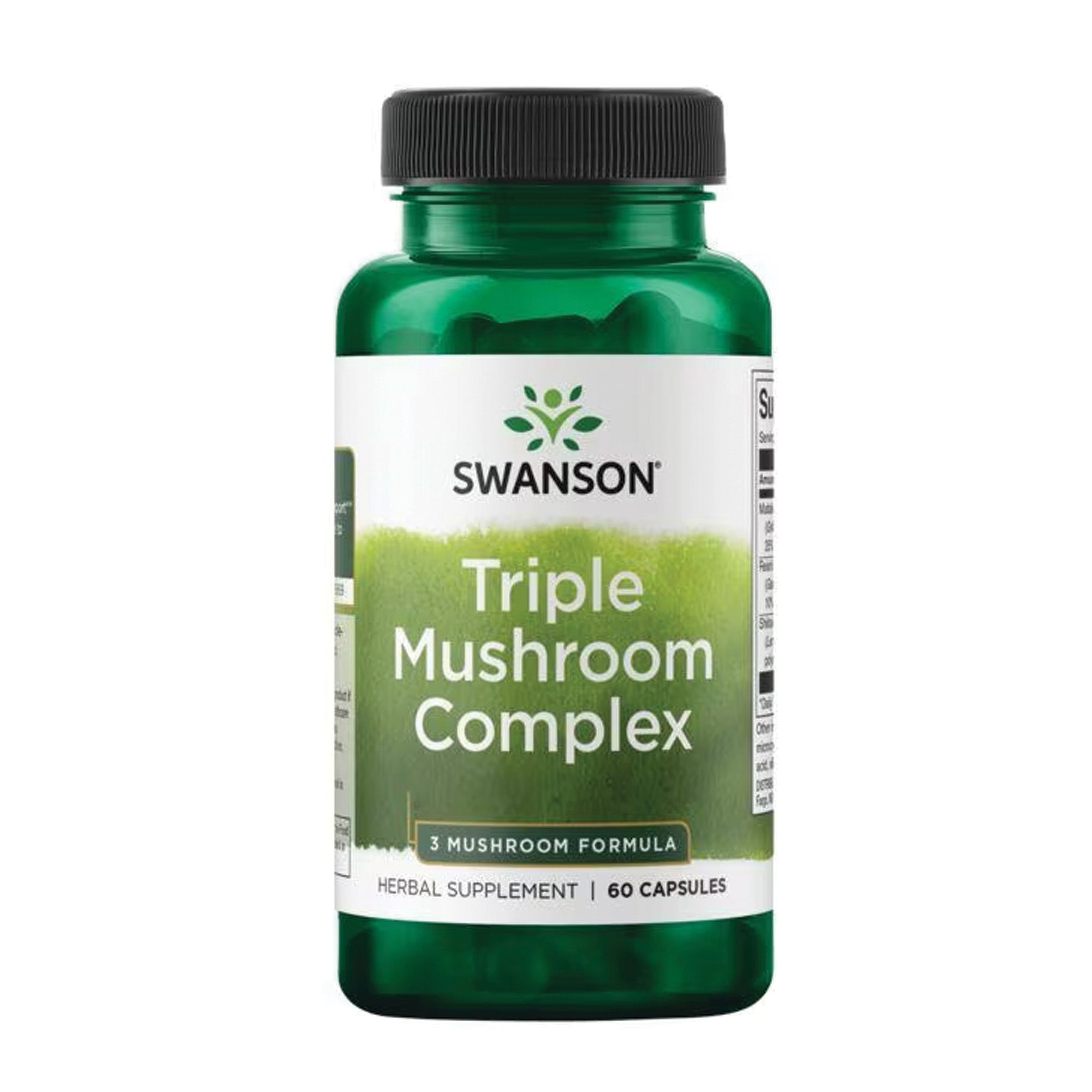
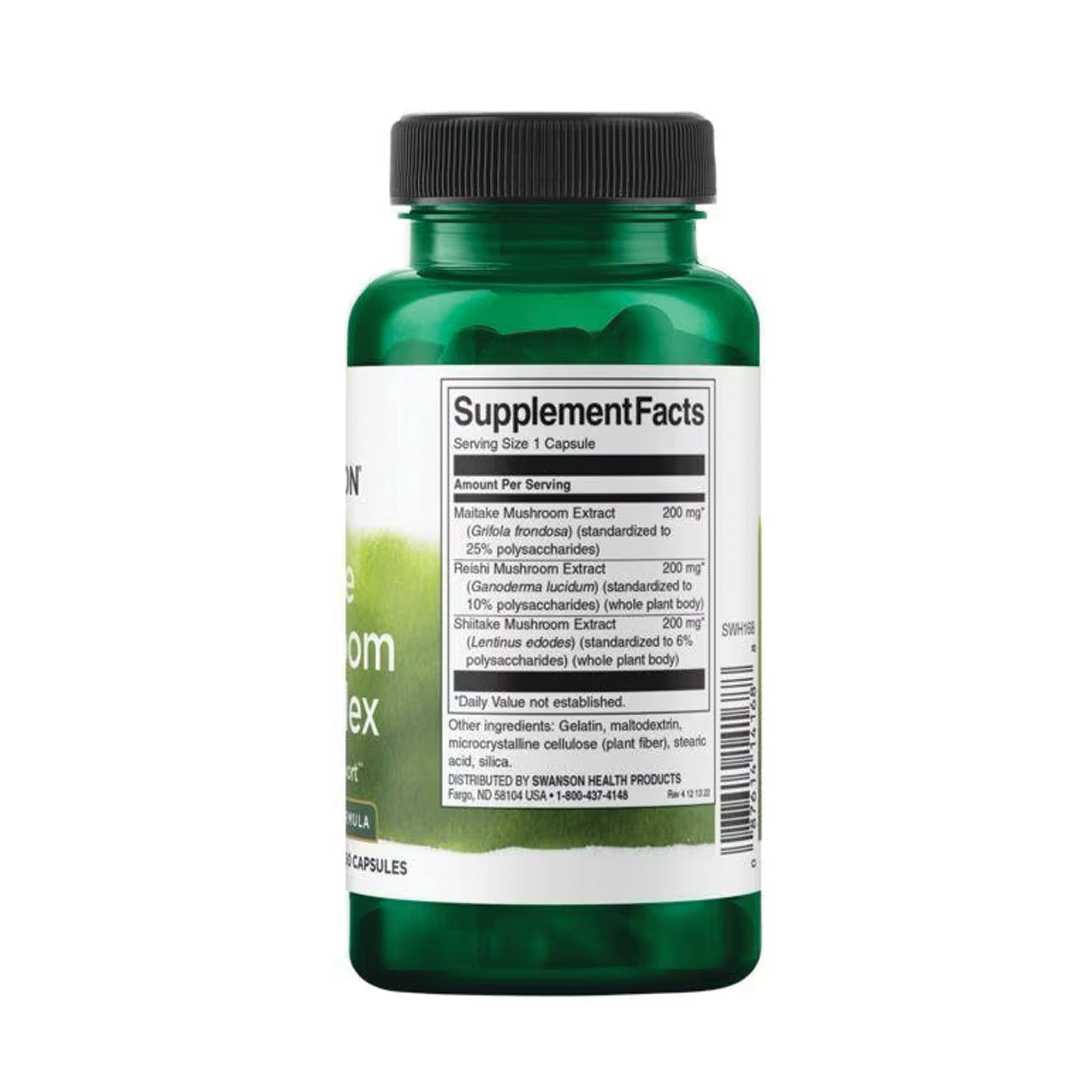
In this range, you will find maitake in a standardized mushroom complex from Swanson, in which maitake is combined with reishi and shiitake in capsule form. If you want to compare individual extracts or other mushrooms, also take a look at our wider collection of mushroom extracts.
What is maitake?
Maitake is the Japanese name for Grifola frondosa, a wood-growing mushroom that grows in the temperate regions of Asia, Europe, and North America. The mushroom does not form a single cap, but a bundle of overlapping, grey-brown fans that together form a large cluster. In the kitchen, maitake is valued for its firm texture and full flavor; as a supplement, the extract of the fruiting bodies is primarily used.
Where does maitake come from?
Traditionally, maitake is harvested in the mountain forests of Japan and China, where the mushroom grows at the base of oak trees and other deciduous trees. Today, maitake for supplements and food is mainly cultivated under controlled conditions, so that the quality and origin remain consistent. For extracts, the fruiting bodies are harvested, dried, and processed into powder or standardized extract.
Maitake, reishi, and shiitake: the difference
Maitake is often mentioned in the same breath as other mushrooms. Reishi (Ganoderma lucidum) is a hard, woody mushroom with a bitter taste that is traditionally used as tea or extract. Shiitake (Lentinula edodes) is the well-known culinary mushroom from Asian cuisine. Maitake stands out because of its fan-shaped growth. In a complex, these three mushrooms are combined, so you will find several types in one capsule.
Forms and variants
Maitake is available as a supplement in various forms. Capsules with (standardized) extract are the most practical for daily use and contain a fixed amount per capsule. Maitake is also available as a separate powder, which you can incorporate into drinks or dishes. In this range, you will find maitake as part of a mushroom complex in capsule form, together with reishi and shiitake.
What are beta-glucans?
Beta-glucans are natural polysaccharides (a type of soluble fiber) that occur in the cell walls of mushrooms, yeast, and grains. They are characteristic of mushrooms such as maitake, reishi, and shiitake and are often used as a measure of the quality of an extract. On the packaging of standardized extracts, the content of polysaccharides or beta-glucans is sometimes stated.
Dosage and use
The amount of maitake per serving varies by product and depends on the concentration of the extract. With a mushroom complex in capsule form, you generally take one or several capsules per day with some water. Always follow the stated daily dosage and use maitake as a supplement to a varied diet, not as a replacement for it. For the correct dosage and duration of use, always consult the instructions for use on the packaging of the product in question.
When do you take maitake?
You can decide exactly when to take maitake; there is no fixed time that is mandatory. Many people take their capsules at a time that is easy to stick to, for example during or just after a meal with some water. Choose a fixed time of day so that you do not forget to take it. Follow the recommended time of intake and daily dosage in the instructions for use on the product packaging.
Who is maitake interesting for?
Maitake is popular with people who are interested in mushrooms and want to expand their range with a less well-known type than reishi or shiitake. Because it is a dietary supplement, it is not intended for children, pregnant women, or people who use medication without consulting a doctor. If you are unsure whether maitake is right for you, ask an expert for advice.
What to look for when buying maitake?
When purchasing maitake, pay attention to the form (fruiting body extract versus mycelium), the content per capsule, and whether it is a standardized extract. The origin and brand can also play a role. In this range, you will find maitake from Swanson as part of a combined mushroom complex, so you have maitake, reishi, and shiitake in one product.
Also view our collections of Mushroom Extracts, Reishi, Lion's Mane, and Cordyceps for more mushrooms and extracts.
Need more advice?

Tobian
Customer service