



































What is the difference between buffered and regular vitamin C?
Buffered vitamin C is less acidic. Calcium L-ascorbate is neutralized by binding it to calcium, resulting in a higher pH value than pure ascorbic acid.
Bestsellers
Bekijk allesWinkelwagen
Je winkelwagen is leeg


In stock. Order today, delivered Monday by PostNL.
Not valid with discount codes.
Vragen? We helpen je graag!
Chat met ons of bel 038 303 2160
Snel bezorgd
Besteld voor 17:00, morgen in huis*
Achteraf betalen
met Klarna
Kies opties
Not valid with discount codes.
Vragen? We helpen je graag!
Chat met ons of bel 038 303 2160
Snel bezorgd
Besteld voor 17:00, morgen in huis*
Achteraf betalen
met Klarna
Not valid with discount codes.
Vragen? We helpen je graag!
Chat met ons of bel 038 303 2160
Snel bezorgd
Besteld voor 17:00, morgen in huis*
Achteraf betalen
met Klarna
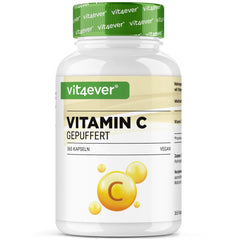
Buffered vitamin C is less acidic than regular ascorbic acid. Instead of pure ascorbic acid, Vit4ever uses calcium L-ascorbate, a form of vitamin C bound to calcium. Two capsules per day provide you with 1000 mg of vitamin C, which is 1250% of the reference intake (RI). The bottle contains 365 capsules, so you have a supply for over half a year of daily doses at one time.
Vitamin C is one of the best-known vitamins, but the form in which you take it makes more difference than you might think. For a dosage of 1000 mg per day, Vit4ever therefore opts for calcium L-ascorbate.
The difference lies in the chemical form. Regular ascorbic acid is quite acidic, with a pH approaching that of vinegar. Calcium L-ascorbate, on the other hand, is "buffered": the acid is partially neutralized by binding it to calcium via a mineral bond, making the pH value closer to neutral. This form is therefore commonly used in higher-dosage vitamin C products. Vitamin C contributes to the normal function of the immune system and helps reduce tiredness and fatigue.
At first glance, 1250% of the reference intake sounds like a substantial amount. However, vitamin C is a water-soluble vitamin: whatever your body does not use, you simply excrete through your kidneys. Manufacturers therefore often choose a higher dosage than the legal minimum, precisely because excess vitamin C does not pose a problem like it can with fat-soluble vitamins (A, D, E, K), which your body does store in fatty tissue. In addition, vitamin C helps protect cells against oxidative stress and contributes to a normal energy-yielding metabolism. Furthermore, vitamin C contributes to normal psychological function and the normal function of the nervous system.
Vitamin C increases iron absorption. In addition, vitamin C contributes to normal collagen formation for the normal function of the skin, bones, cartilage, blood vessels, teeth and gums, all tissues in which collagen plays a structural role as a kind of connective tissue scaffold. The point is that these claims are not separate: collagen is one protein, but it is incorporated into very different tissues throughout your body.
Vit4ever capsules contain a plant-based capsule shell (hydroxypropyl methylcellulose, also known as HPMC) instead of gelatin, making the product suitable for those who prefer not to use animal-derived ingredients. In addition, the formula contains stearic acid as an anti-caking agent, so that the powder remains easy to process during production and is distributed evenly in each capsule. With 365 capsules in the bottle and a daily dose of 2 capsules, you get over 180 daily doses, so you do not need to order a new bottle every month. For those who prefer to spread it out: you can also take the 2 capsules separately, for example one with breakfast and one later in the day, although that makes little difference to the total daily absorption.
In short: with calcium L-ascorbate, you are choosing a form of vitamin C that is less acidic than ascorbic acid, in a high dosage per daily dose and packaged in a supply that lasts over half a year without having to order a new bottle.
Two capsules together provide 1000 mg of vitamin C, accounting for 1250% of the reference intake.
This buffered form is less acidic than regular ascorbic acid.
At 2 capsules per day, this jar will last you approximately half a year without reordering.
The capsule is made from hydroxypropyl methylcellulose (HPMC), suitable for those who do not want animal-derived ingredients.
* Percentage van de referentie inname volgens Verordening (EU) Nr. 1169/2011.
** Reference intake unknown.
Response within one working day
Our customer service is open on weekdays from 09:00 to 17:00.

Buffered vitamin C is less acidic. Calcium L-ascorbate is neutralized by binding it to calcium, resulting in a higher pH value than pure ascorbic acid.
Vitamin C is water-soluble, which means your body excretes excess amounts through urine. At very high doses (well above 1000 mg), some people report mild digestive issues. If you stick to the recommended daily dose of 2 capsules, you will remain within a common upper limit for this type of supplement.
The calcium in calcium-L-ascorbate is not a separately added mineral, but part of the buffered form of vitamin C itself. The amount of calcium released in this process is small and primarily serves to neutralize the acidity of vitamin C, not as a complete calcium source.
Calcium-L-ascorbate is a more expensive raw material than regular ascorbic acid because the buffering step requires an additional production step. On the other hand, with 365 capsules per jar and 2 capsules per day, you can last well over half a year, without effervescent excipients or added sugars, as are found in many effervescent tablets.
Once the capsule dissolves in your digestive tract, calcium-L-ascorbate splits into vitamin C and a small amount of calcium. Your body absorbs the vitamin C just as it would with other forms; the main difference lies in the journey to absorption, namely a less acidic environment in your stomach during digestion.
Both are buffered forms of vitamin C, but bound to a different mineral. Calcium L-ascorbate contains calcium, sodium ascorbate contains sodium. For people who are monitoring their sodium intake, calcium L-ascorbate is often the preferred form, as it does not add extra sodium to their daily intake.