




































Lion's mane
Lion's mane (pruikzwam, Hericium erinaceus) is an edible mushroom with white, dangling spines. For supplements, the fruiting bodies are processed into powder or extract, often standardized to polysaccharides. In our range, you will find lion's mane as capsules, powder and extract, and in mushroom complexes.


Buy Lion's Mane: the Lion's Mane Mushroom (Hericium erinaceus) as a Supplement
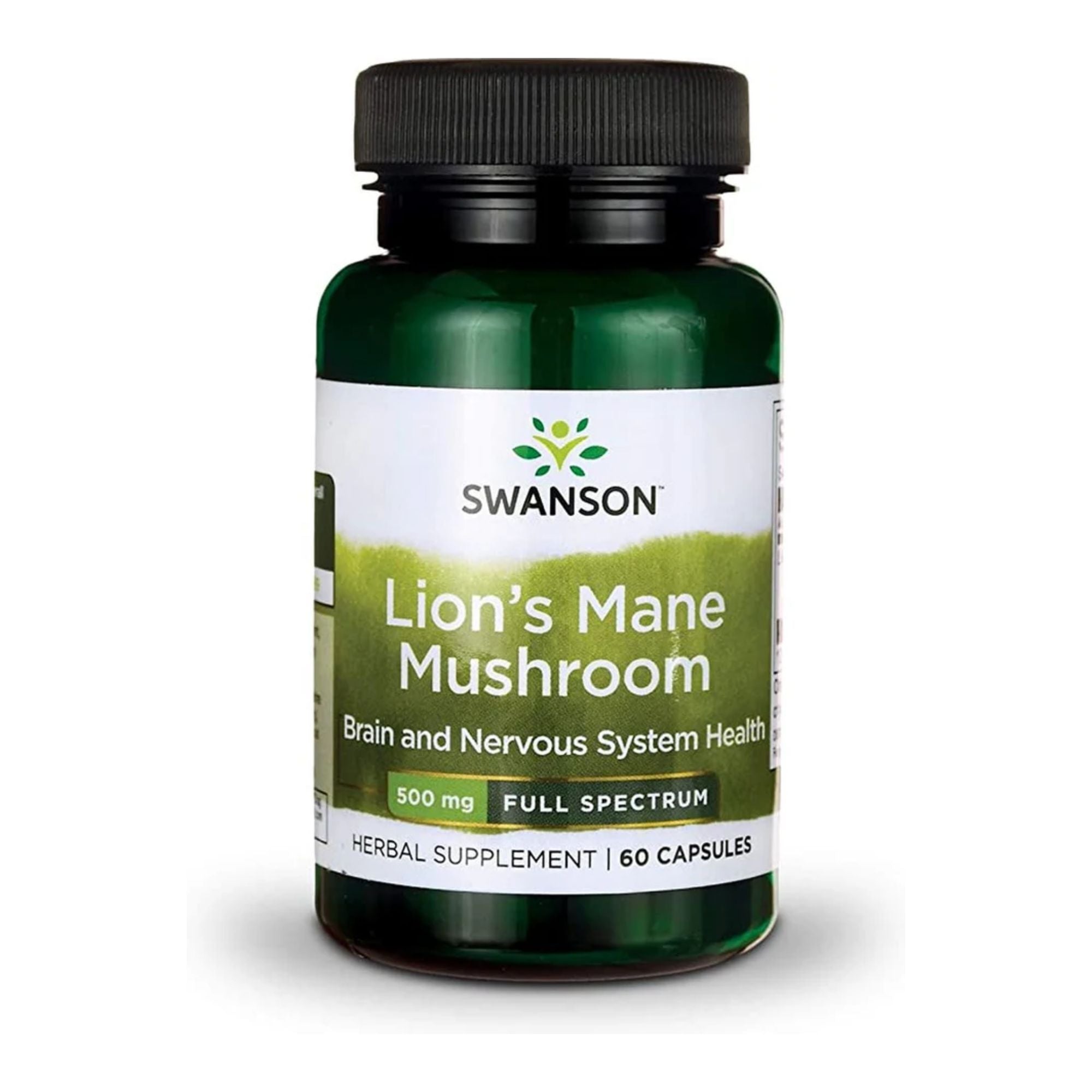
Lion's mane, known in Dutch as pruikzwam, is an edible mushroom with the botanical name Hericium erinaceus. The mushroom owes its name to its distinctive appearance: white, dangling spines that resemble a lion's mane. Lion's mane has traditionally been used in Asian cuisine and herbal traditions and is now also a popular supplement in the Netherlands. In our range, you will find lion's mane as capsules, powder, and extract, as well as in mushroom complexes, in various dosages.
What is Lion's Mane?
Lion's mane is the common name for the mushroom Hericium erinaceus, which is also known as pruikzwam, Yamabushitake, and baardzwam. It is an edible mushroom that naturally grows on deciduous trees and is recognizable by its white, cascading spines. For supplements, the fruiting bodies (and sometimes the mycelium) of the mushroom are dried and processed into powder or a concentrated extract. Extracts are often standardized to components such as polysaccharides (including beta-glucans). The label states how much lion's mane a product provides per serving and which components the extract may be standardized to.
Health Claims and Lion's Mane
Lion's mane is an edible mushroom that has traditionally been used in Asian traditions; that is the factual background. It is important to know that no official health claims have been approved for lion's mane as a food supplement. The claims circulating about mushrooms such as lion's mane are being reviewed ("on hold") by European authorities and have not been approved. We therefore cannot and may not promise what lion's mane "does" or what it is "good for". Anyone considering lion's mane as a supplement does so based on their own interest in this mushroom and its traditional use. We deliberately provide only the factual background here; for personal advice, you can consult a doctor or therapist.
Lion's Mane and Other Mushrooms
Lion's mane is often mentioned in the same breath as other mushrooms such as reishi, cordyceps, and chaga. These mushrooms have traditionally been used in Asian traditions and have also become popular in the West in recent years as supplements. We describe lion's mane here factually, without attaching any promises of efficacy to it. What makes lion's mane popular is primarily the interest in this mushroom and its naturally occurring components, such as polysaccharides.
Where Does Lion's Mane Come From?
Lion's mane occurs naturally in the Northern Hemisphere, including Asia, Europe, and North America, where it grows on old or dead deciduous trees. For the production of supplements, the mushroom is generally cultivated under controlled conditions, after which the fruiting bodies are harvested, dried, and processed into powder or extract. For quality, the distinction between fruiting body and mycelium is important; quality products often state which part is used and which components (such as beta-glucans) it is standardized to. This information is on the product page.
What Forms of Lion's Mane Are Available?
Lion's mane is available as a supplement in various forms. Capsules offer a fixed dosage and are convenient to use. Powder can be flexibly dosed and can be stirred into a hot drink, coffee, or smoothie. Concentrated extracts (for example, with a standardized polysaccharide or beta-glucan content) provide a higher concentration per serving. In addition, you will find lion's mane in mushroom complexes, together with other mushrooms. When comparing, it is useful to pay attention to the amount of lion's mane per serving, whether it is fruiting body or extract, and the standardization.
How Much Lion's Mane Per Day?
No official recommended daily amount has been established for lion's mane. The dosage varies per product and per form (capsules, powder, or extract) and is stated on the packaging, expressed in milligrams or grams per serving. Follow the directions for use of the specific supplement and do not exceed the recommended dosage without advice. When using medication, during pregnancy or breastfeeding, or in case of doubt, it is wise to consult a doctor or therapist beforehand.
Buying Lion's Mane: What to Look For?
When choosing a lion's mane supplement, there are a few practical points to consider. Look at the amount of lion's mane per serving and the form (capsules, powder, or extract). Pay attention to whether it is the fruiting body or the mycelium, and whether a standardized content of polysaccharides or beta-glucans is stated, because that says something about the concentration. Determine whether you are looking for pure lion's mane or a mushroom complex, and calculate the price per daily serving. Lion's mane is a mushroom; for related products, also view our Reishi and Cordyceps collections.
Want to know more? Read our explanation what Lion's Mane is: origin, use, and what to look for.
Need more advice?

Tobian
Customer service