


































Green tea
Green tea is made from the leaves of the tea plant Camellia sinensis and is available as tea, finely ground matcha powder and as a concentrated extract in capsules. Green tea naturally contains caffeine and polyphenols, including the catechin EGCG; the content is usually stated on the label. The forms differ in concentration, caffeine content and method of consumption. In this collection you will find green tea extract, organic matcha and powder blends with green tea side by side.



Buy green tea: extract, matcha and tea plant powder
Green tea is made from the leaves of the tea plant (Camellia sinensis). After harvesting, the leaves are briefly heated, which prevents them from oxidizing as much as black tea leaves and helps them retain their green colour. In addition to traditional tea for brewing, green tea is also available as a concentrated extract in capsules and as a finely ground powder, such as matcha. This collection offers a variety of forms, so you can choose the one that best suits your preferences.
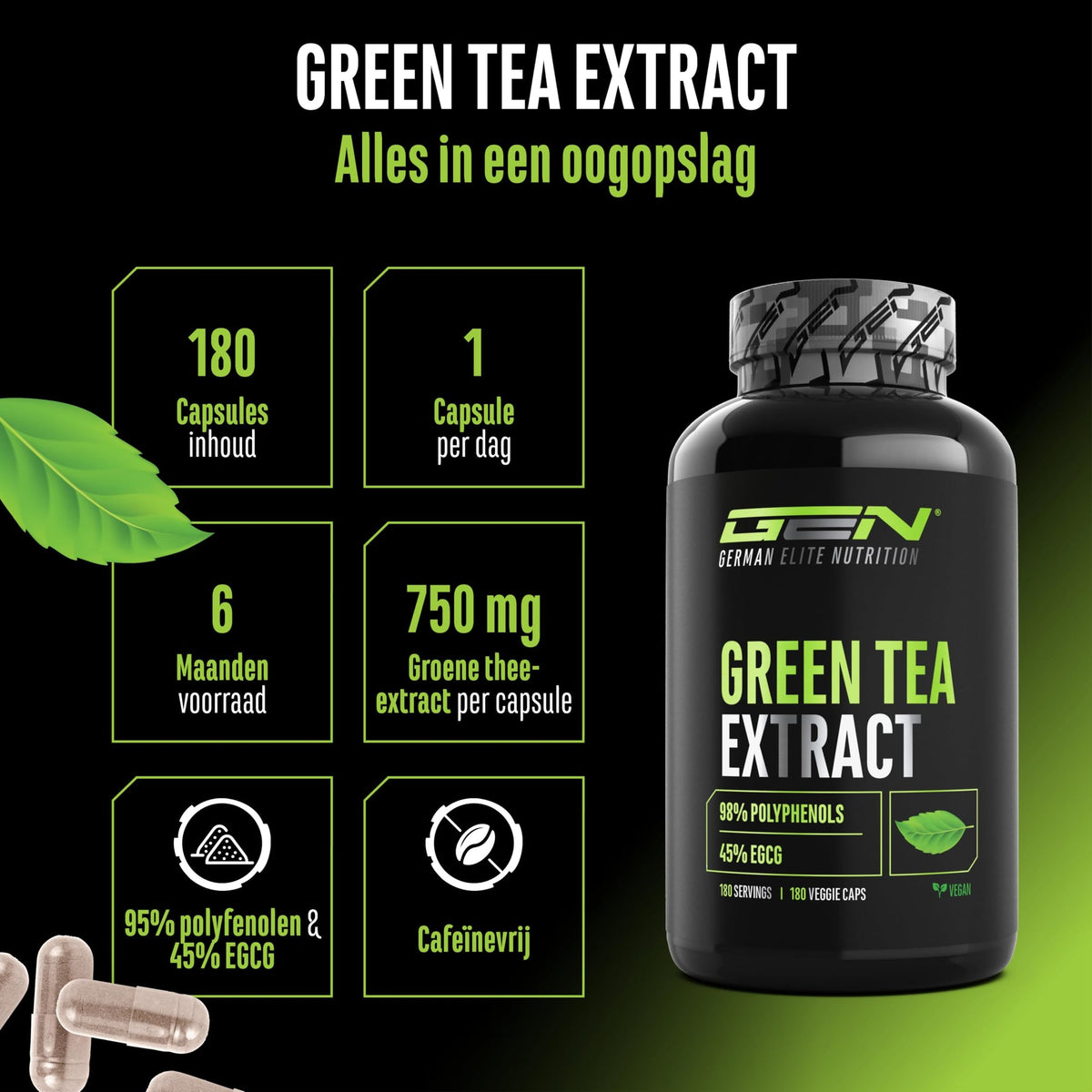
The range includes green tea extract capsules from German Elite Nutrition, organic matcha powder and powder blends containing green tea. The different forms vary in concentration, caffeine content and how they are taken. Read below to find out exactly what green tea extract is, how it compares with matcha and what to consider when choosing.
What is green tea extract?
Green tea extract is a concentrated form of the compounds found in tea leaves. During production, tea plant leaves are extracted with water or alcohol, and the liquid is then evaporated to create a powder. This powder is often standardised to a specific level of polyphenols. In capsule form, the extract is odourless and tasteless, which distinguishes it from brewing tea or whisking matcha.
Green tea extract versus matcha: what is the difference?
Both matcha and green tea extract come from the tea plant, but they are processed differently. Matcha consists of whole tea leaves that are grown in the shade and then ground into a fine powder; you drink the entire leaf. Green tea extract is a concentrated extract in which certain compounds are extracted from the leaf and processed into capsules or powder. Matcha is mixed with hot water to make a drink, while extract capsules are taken without preparation.
Origin and tradition
The tea plant has traditionally been cultivated in countries such as China and Japan, where drinking green tea has a long history. Matcha is closely associated with Japanese tea culture and is traditionally made from leaves grown in regions such as Uji and Kakegawa. Green tea extract is a more modern, concentrated application used in dietary supplements.
Caffeine content
Green tea naturally contains caffeine. The amount varies depending on the form: a cup of green tea usually contains less caffeine than a cup of coffee, while matcha can be relatively high in caffeine because the whole leaf is consumed. Green tea extract is available in both caffeinated and decaffeinated (caffeine-free) versions; for example, the GEN Green Tea Extract in this collection is caffeine-free. Check the label if you want to monitor the caffeine content.
EGCG and polyphenols
Green tea naturally contains polyphenols, a group of plant compounds known as catechins. The best-known catechin in green tea is epigallocatechin gallate, abbreviated as EGCG. Extracts are often standardised to a specific percentage of polyphenols or catechins, so the level in each capsule is known. These values are usually stated on the label and provide an objective measure of the product's composition.
Forms: capsules, powder and more
This collection offers green tea in several forms. Extract capsules are convenient for taking on the go and contain a fixed amount in each capsule. Matcha powder can be whisked with hot water or added to smoothies and baked goods, for example. Green tea is also available as an ingredient in powder blends. The best form for you depends on your taste and how you want to use it.
Daily dosage
The recommended amount varies depending on the product and form. For extract capsules, the dosage depends on the concentration of polyphenols in each capsule, while matcha is measured by the teaspoon. When combining several tea products, consider your total intake, especially if a product contains caffeine. Always read the instructions on the packaging for the correct dosage.
What to consider when buying
When choosing green tea extract, check the standardised level of polyphenols or catechins to see how concentrated the product is. For matcha, the origin, quality grade and organic certification provide information about the product. Also consider the caffeine content, ingredients list and whether the product is suitable for a vegan or allergy-friendly diet. This will help you choose the form that best suits your needs.
Explore our Caffeine, Antioxidants, Superfoods and Herbs & Plants collections too.
Need more advice?

Tobian
Customer service