




































Cyclic Dextrin / Cluster Dextrin
Cyclic dextrin, also known as cluster dextrin or highly branched cyclic dextrin (HBCD), is a carbohydrate powder that is popular among endurance athletes and strength athletes. Due to its large, branched structure, it has a low osmolarity while still providing a high amount of carbohydrates. In this collection, you will find unflavored cyclic dextrin powder from German Elite Nutrition and ESN, which can be mixed with water on its own or combined with electrolytes and proteins.


Buy cyclic dextrin: carbohydrate powder for endurance athletes
Cyclic dextrin, also known as cluster dextrin or highly branched cyclic dextrin (HBCD), is a carbohydrate powder that many endurance and strength athletes use during and after prolonged or intense exercise. It is a large, branched carbohydrate structure that forms a low-osmolality drink in water.
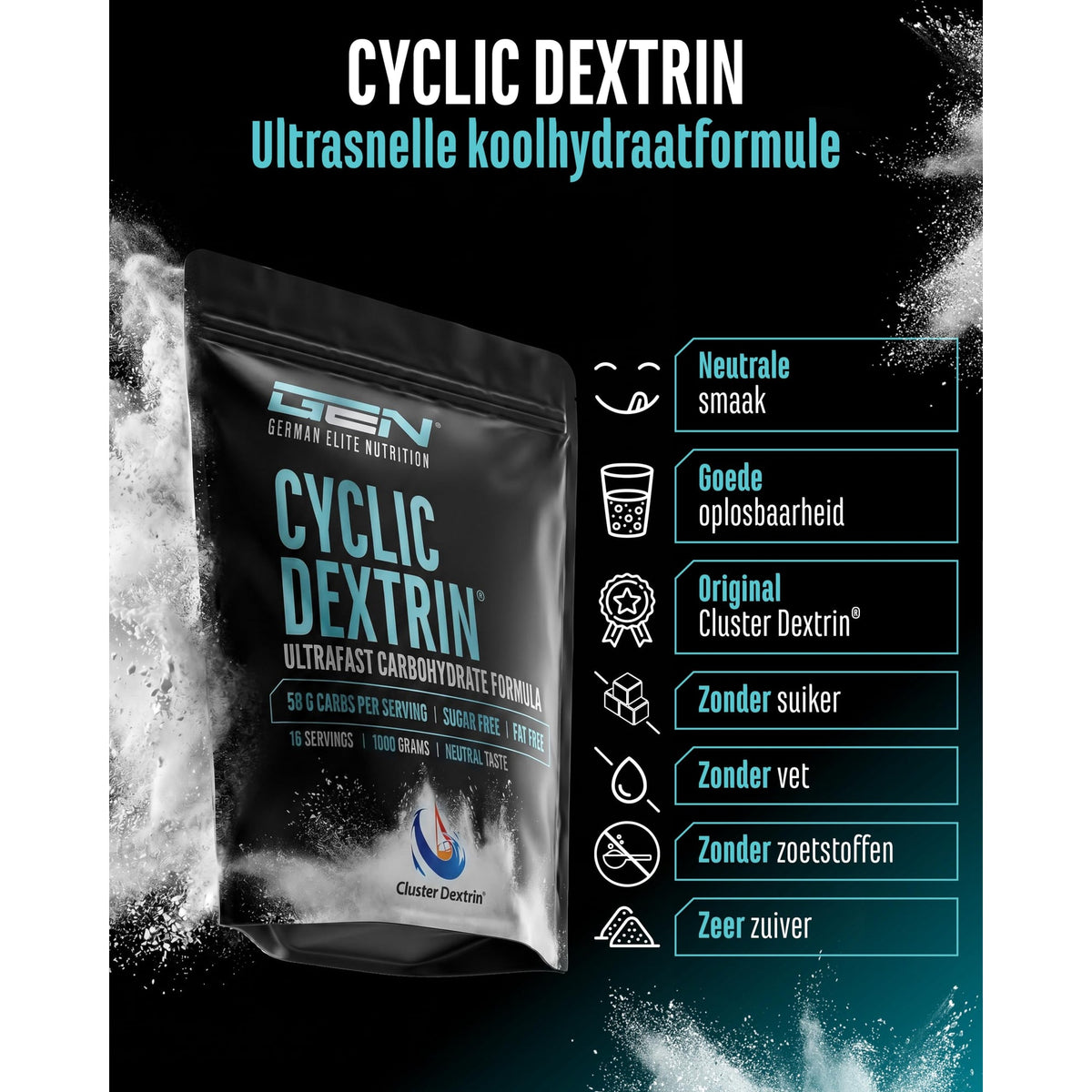
In this collection, you will find cyclic dextrin as a pure, neutral carbohydrate powder. You can choose between Cyclic Dextrin (Highly Branched Cluster Dextrin) from German Elite Nutrition in a 1000-gram tub and Ultrapure Cyclic Dextrin (Cluster Dextrin) from ESN in a 900-gram tub. Both are flavor-neutral, so you can stir them into water on their own or combine them with electrolytes, a protein shake, or a pre-workout.
What is cyclic dextrin (cluster dextrin)?
Cyclic dextrin is a carbohydrate made from starch, usually corn starch. An enzymatic process creates a highly branched, partially ring-shaped molecular structure, which is where the names highly branched cyclic dextrin and cluster dextrin come from. It is characterized by its high molecular mass combined with low osmolality: this means that the drink contains relatively few particles per volume, despite the large amount of carbohydrates. The powder dissolves well and produces a thin, slightly cloudy drink.
Where does cyclic dextrin naturally occur?
Cyclic dextrin does not occur ready-made in food. It is made from starch, usually corn starch, which is converted into a highly branched, partially ring-shaped structure through an enzymatic process. Its building blocks, glucose units from starch, can be found naturally in starch-rich crops such as corn, but the branched cyclic dextrin structure itself is only created during production. In this collection, you will find it as a pure, neutral powder.
What does cyclic dextrin contribute to?
Cyclic dextrin provides carbohydrates, and there are two permitted health claims for carbohydrates, each with its own conditions. Carbohydrates contribute to the recovery of normal muscle function (contraction) after very intense and/or prolonged physical exercise that has led to muscle fatigue and depletion of glycogen stores in the skeletal muscles. The beneficial effect is obtained with an intake of carbohydrates from all sources totaling 4 g per kg of body weight, in doses, within the first 4 hours and no later than 6 hours after very intense and/or prolonged physical exercise. In addition, carbohydrates contribute to the maintenance of normal brain function. The beneficial effect is obtained with a daily intake of 130 g of carbohydrates from all sources.
Cyclic dextrin, maltodextrin, or dextrose: what is the difference?
All three provide fast-absorbing carbohydrates, but they differ in structure. Dextrose (grape sugar) consists of individual glucose molecules and has high osmolality. Maltodextrin consists of shorter chains and falls somewhere in between. Cyclic dextrin has a much larger, branched structure and therefore low osmolality at a comparable number of grams of carbohydrates. This is why athletes often choose cyclic dextrin when they want to consume a lot of carbohydrates without making the drink too concentrated.
How do you use cyclic dextrin?
You stir cyclic dextrin powder into water or a sports drink. A typical serving is around 40 to 60 grams, depending on the duration and intensity of your training and your personal needs. For long-duration exercise, athletes often spread the intake over several small servings per hour. You can also combine the powder with electrolytes or a protein source after training. Always follow the directions for use on the packaging for the correct amount and preparation.
When do you take cyclic dextrin?
Cyclic dextrin is used both during and after exercise. During long training sessions or races, athletes use it as a carbohydrate source. After strenuous, prolonged exercise, athletes often consume carbohydrates; see above for the permitted claim and the associated conditions. Some people also take it around a strength training session. Which time is best for you depends on your sport, your schedule, and your goals.
Who is cyclic dextrin suitable for?
Cyclic dextrin is especially popular among endurance athletes such as cyclists, runners, and triathletes, and among people who do long or intense strength training. It is a neutral carbohydrate powder with no added flavor, which makes it flexible to use. If you are looking for a ready-made solution with flavor, electrolytes, or caffeine, check out the energy gels and sports drinks in our range.
What should you look for when buying cyclic dextrin?
When buying, pay attention to the amount per tub, the purity of the powder, and whether it is flavor-neutral or flavored. The products in this collection are pure and neutral, so you can decide what to combine them with yourself. Also look at the number of servings per package and the number of grams of carbohydrates per serving, so you can compare the price per serving. Always check the ingredients and the directions for use on the packaging.
Also check out our other sports nutrition products, such as Energy gel, Electrolytes, Protein, and Creatine Monohydrate.
Need more advice?

Tobian
Customer service