
































PEA (Palmitoylethanolamide)
PEA stands for palmitoylethanolamide, a fatty acid amide that occurs naturally in the body and is found in small amounts in foods such as egg yolk, soy, and peanuts. As it is an endogenous substance, many adults choose to supplement their diet with palmitoylethanolamide. In supplements, PEA is almost always processed into capsules, sometimes in micronized form and in dosages usually ranging from 600 to 1200 mg per capsule. In our range, you will find PEA capsules from various brands, including LUTO Supplements and Vit4ever, many of which are suitable for a vegan diet.


Buy PEA: palmitoylethanolamide in capsules
PEA stands for palmitoylethanolamide, a fatty acid amide that occurs naturally in the human body and is also found in small amounts in food. It is an endogenous substance chosen by many people as a dietary supplement. On this page, you can read what PEA exactly is, in what forms and dosages it can be found, and what to look for when you want to buy PEA.
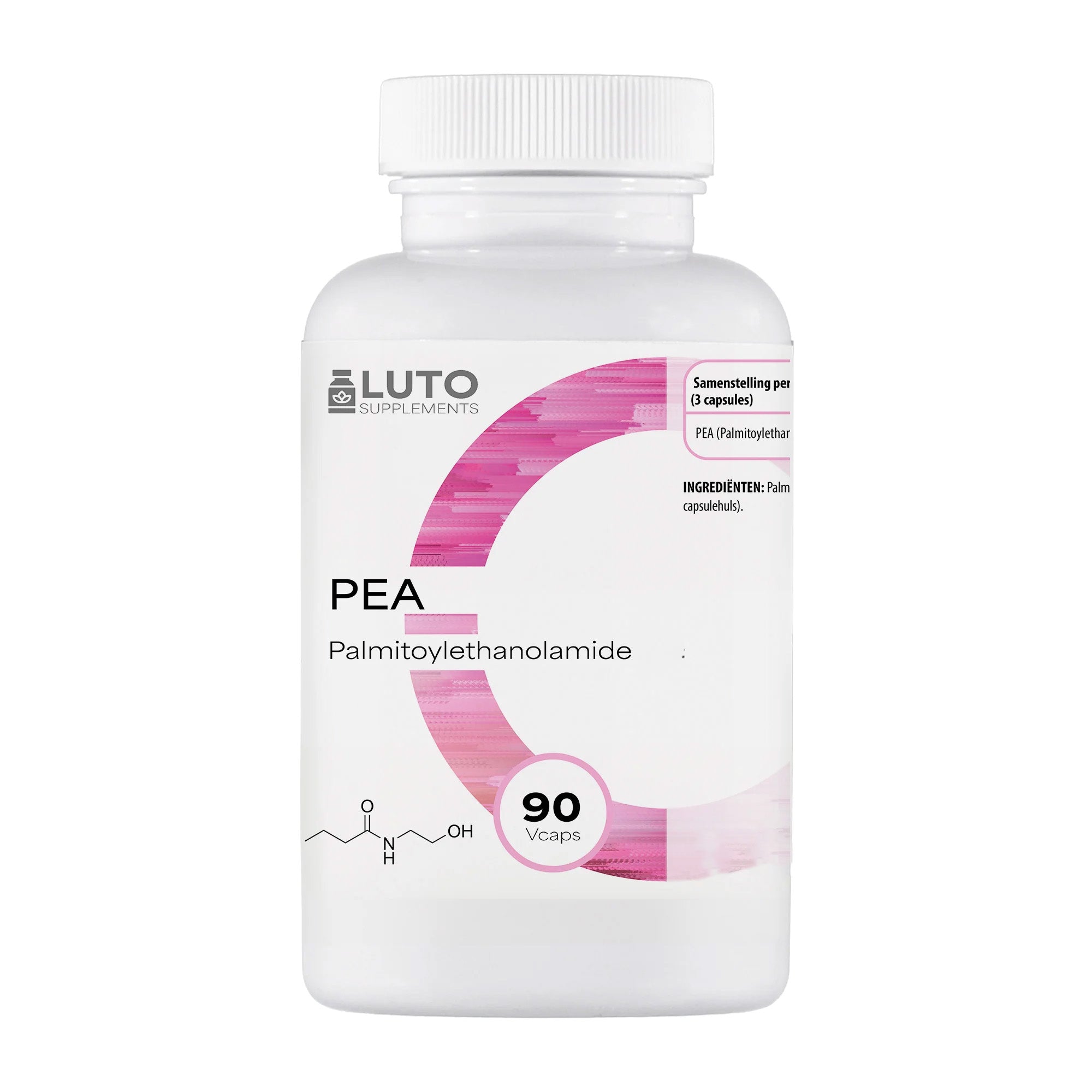
In our assortment, you will find PEA as capsules from various brands and dosages. For example, we offer PEA 1200 mg per capsule from LUTO Supplements (90 capsules) and PEA 600 mg from Vit4ever (180 capsules). Both are suitable for a vegan diet and contain palmitoylethanolamide as the sole active ingredient, without unnecessary additives.
What is PEA (palmitoylethanolamide)?
PEA is the abbreviation for palmitoylethanolamide. Chemically, it is an amide of the saturated fatty acid palmitic acid and ethanolamine. The substance belongs to the group of fatty acid amides and is produced by the body itself. As it is an endogenous molecule, PEA has become popular as a dietary supplement in recent years. In supplements, palmitoylethanolamide is usually processed in powder form into capsules.
Where does PEA naturally occur?
Palmitoylethanolamide is not only formed by the body itself but also occurs in very small amounts in various foods. Examples include egg yolk, soy, peanuts, and milk. However, the amounts in food are limited, which is why people who desire a higher intake often choose a supplement. The PEA in supplements is typically produced in the laboratory into a pure, standardized raw material.
Comparing forms and dosages
PEA is almost always offered as a capsule. The main distinction lies in the dosage per capsule and the number of capsules per package. A capsule with 1200 mg provides a higher dose per unit, while a dosage of 600 mg gives you the option to spread the intake throughout the day or to dose more precisely yourself. Some products use micronized or ultra-micronized PEA, where the particles have been made extra fine. When comparing, look at the dosage per capsule, the number of capsules, and the price per dose.
Micronization: what does it mean?
On PEA packaging, you sometimes encounter terms like micronized or ultra-micronized PEA. This refers to the particle size of the raw material: during micronization, the PEA particles are reduced in size. Manufacturers mention this because the particle size can differ between products. You can read on the label or product page which form a specific product uses.
Dosage and use
The usual dosage varies per product and brand. PEA supplements generally provide between 400 and 1200 mg per capsule. Many people take the capsule with a meal with some water. Because the correct amount depends on the specific product, it is important not to exceed the recommended dosage on your own initiative. Always consult the instructions for use and the recommended daily amount on the packaging of the product you choose.
When should you take PEA?
When you take PEA is primarily a matter of practical use and personal preference. Many users take the capsule during or shortly after a meal with some water, as PEA is a fatty substance. If you want to spread the intake, you can choose a package with a lower dosage per capsule to distribute throughout the day. Always follow the instructions for use on the packaging for the correct intake time and recommended amount.
Who is PEA interesting for?
PEA is chosen by adults who want to supplement their diet with this endogenous substance. The capsules in our assortment are largely suitable for vegetarians and vegans, as palmitoylethanolamide is produced from plant-based sources or synthetically. Are you pregnant, breastfeeding, taking medication, or do you have a medical condition? Then consult a doctor or other expert before using a new supplement.
What should you pay attention to when buying PEA?
When purchasing PEA, pay attention to the dosage per capsule, the total number of capsules, and whether the PEA is micronized. Also, look at the purity: products that contain only palmitoylethanolamide, without unnecessary fillers or excipients, provide the clearest composition. Additionally, check whether the product fits your dietary needs, for example, vegan, gluten-free, or lactose-free, and whether it has been produced according to recognized quality standards such as GMP.
Also, check out our related collections Turmeric, Quercetin, Omega-3 / Fish Oil and Magnesium for more supplements to complement your diet.
Need more advice?

Tobian
Customer service