



































What is CLA?
CLA stands for conjugated linoleic acid. It is an omega-6 fatty acid found naturally in meat and dairy products, and in supplements it is usually extracted from safflower oil.
Bestsellers
Bekijk allesWinkelwagen
Je winkelwagen is leeg


In stock. Order today, delivered Monday by PostNL.
Not valid with discount codes.
Vragen? We helpen je graag!
Chat met ons of bel 038 303 2160
Snel bezorgd
Besteld voor 17:00, morgen in huis*
Achteraf betalen
met Klarna
Kies opties
Not valid with discount codes.
Vragen? We helpen je graag!
Chat met ons of bel 038 303 2160
Snel bezorgd
Besteld voor 17:00, morgen in huis*
Achteraf betalen
met Klarna
Not valid with discount codes.
Vragen? We helpen je graag!
Chat met ons of bel 038 303 2160
Snel bezorgd
Besteld voor 17:00, morgen in huis*
Achteraf betalen
met Klarna
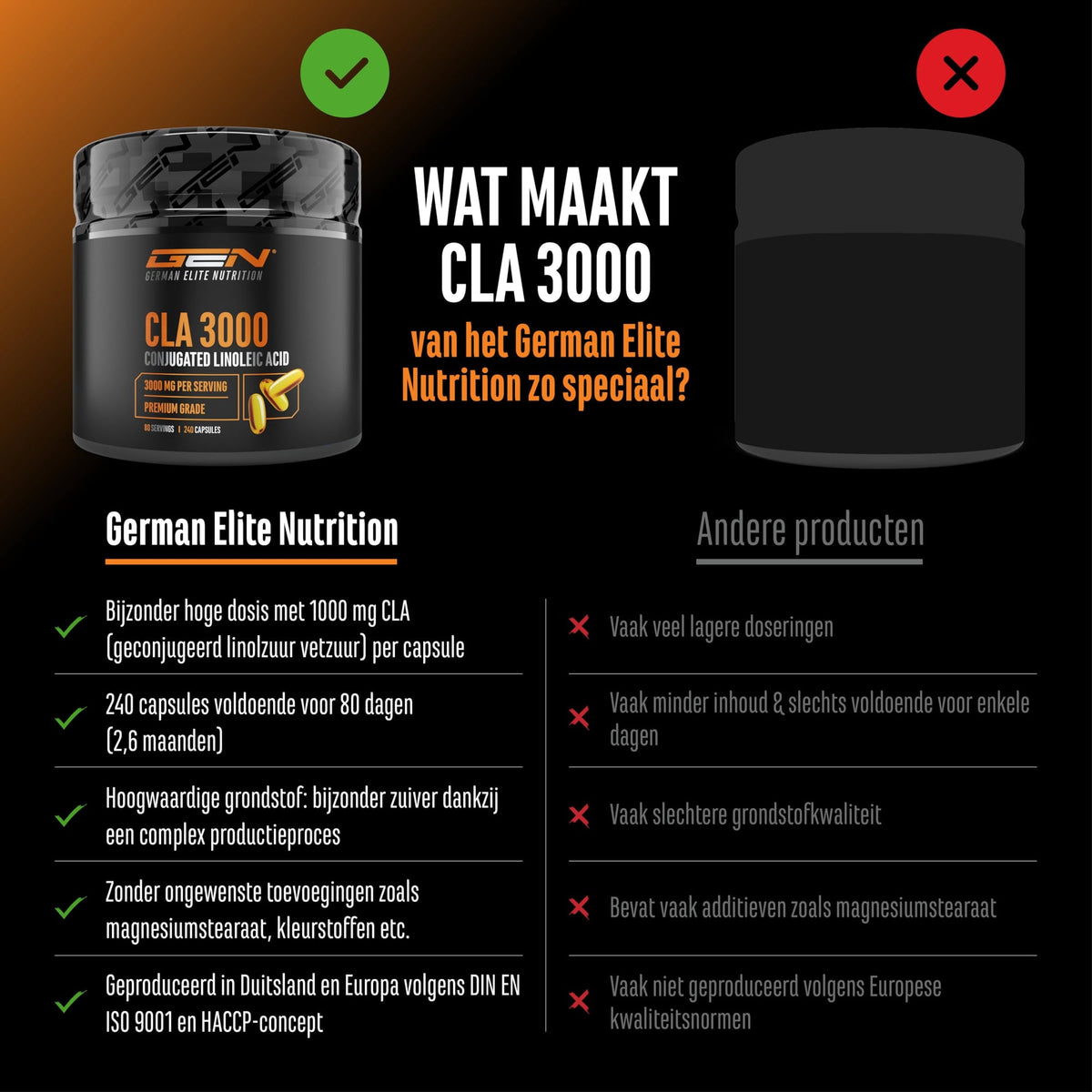
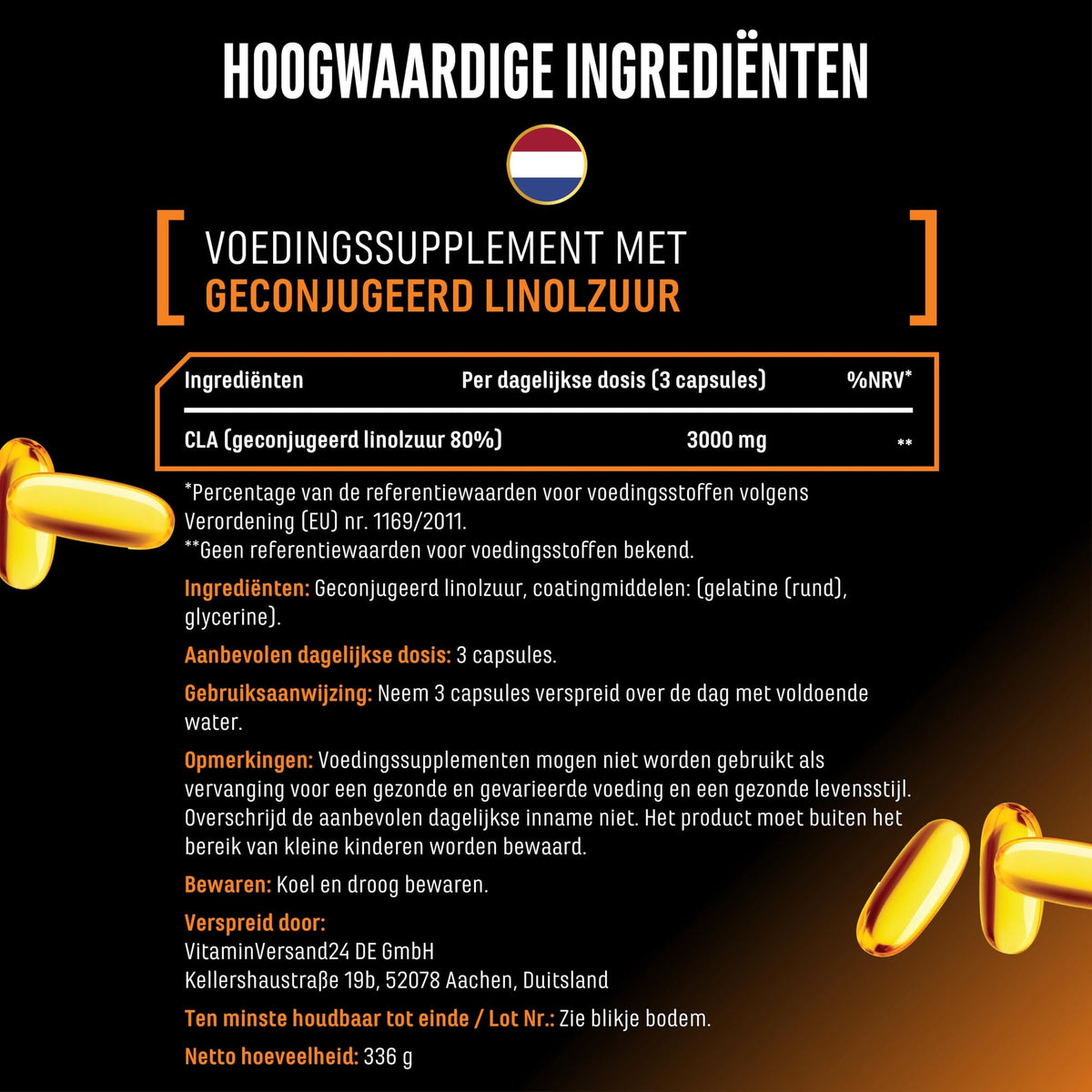
Are you looking for CLA in a high dosage per softgel? German Elite Nutrition's CLA softgels deliver 1000 mg of conjugated linoleic acid per softgel. A daily serving of three softgels thus amounts to 3000 mg. CLA is a fatty acid from the omega-6 family that is usually extracted from plant-based safflower oil. One pot contains 240 softgels. It is a product that athletes often take alongside their daily diet, in a fixed quantity per day.
CLA stands for conjugated linoleic acid. It is a fatty acid that naturally occurs in small amounts in meat and dairy products from ruminants, such as beef, cheese, and milk. In supplements, it is usually extracted from safflower oil, a vegetable oil from the safflower plant. Safflower, also called thistle oil, is a crop from which linoleic acid is concentrated into the CLA-rich oil in these softgels. The difference with regular linoleic acid lies in the structure of the molecule: in CLA, the double bonds are in a different place, and that is exactly what the word conjugated means. These shifted bonds make CLA a separate group of fatty acids with different variants, called isomers. The oil extract in these softgels is standardized to 80% CLA isomers, including the well-known c9- and t11-forms. Among athletes, CLA is one of the more popular fatty acid supplements, often taken alongside the daily diet. Because the effect of CLA is not listed as an approved claim in the EU database, we only describe what it is and how it is structured here. Good to know: the amount of CLA you get from regular food is relatively low, especially if you eat little meat or dairy. A supplement provides a fixed, much higher amount per day, so you know exactly what you are getting. That is the reason for many users to choose a softgel instead of getting it from food.
Each softgel provides 1000 mg of conjugated linoleic acid, standardised to 80% CLA isomers including the c9 and t11 forms.
Three softgels provide a total of 3000 mg CLA, the standard amount in this type of product.
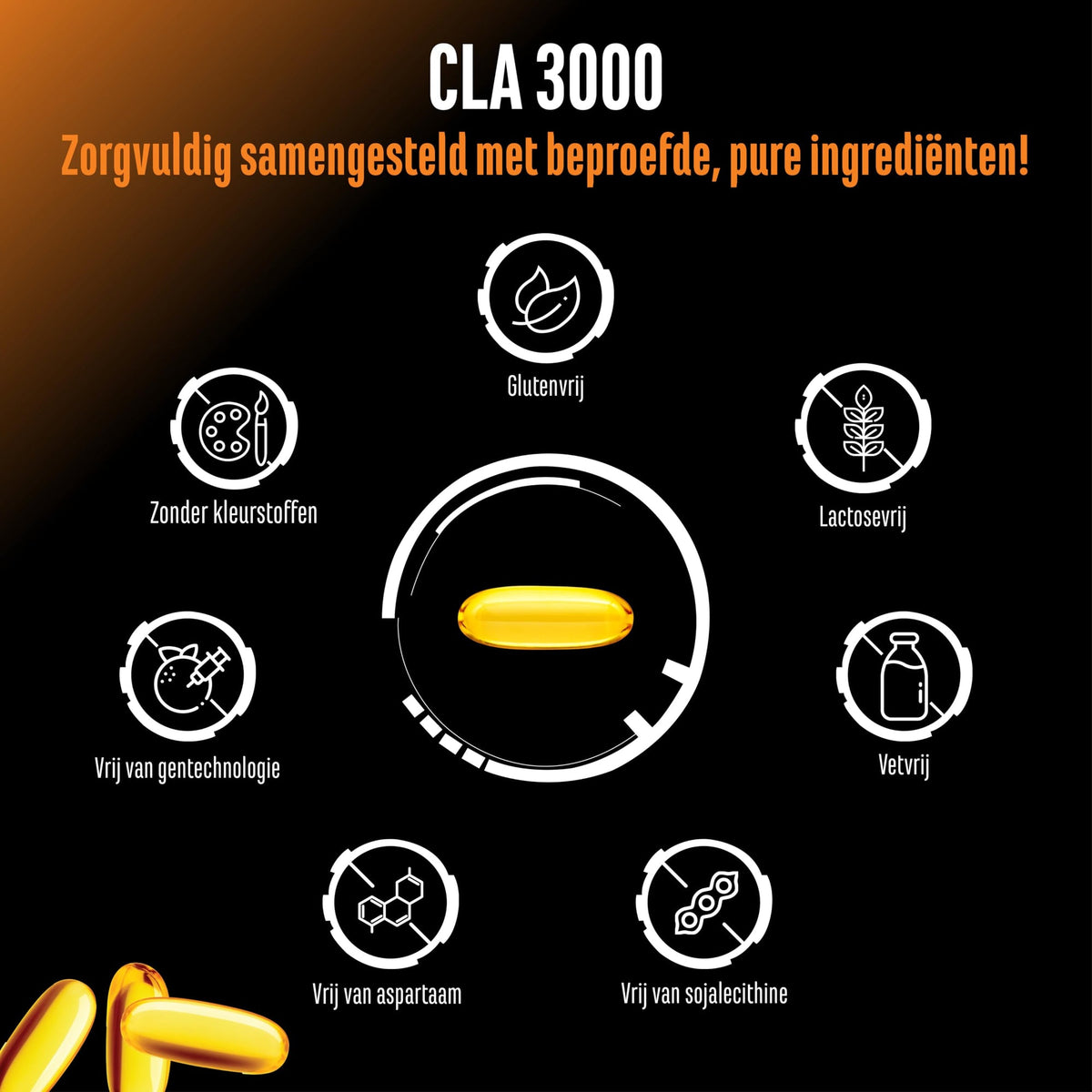
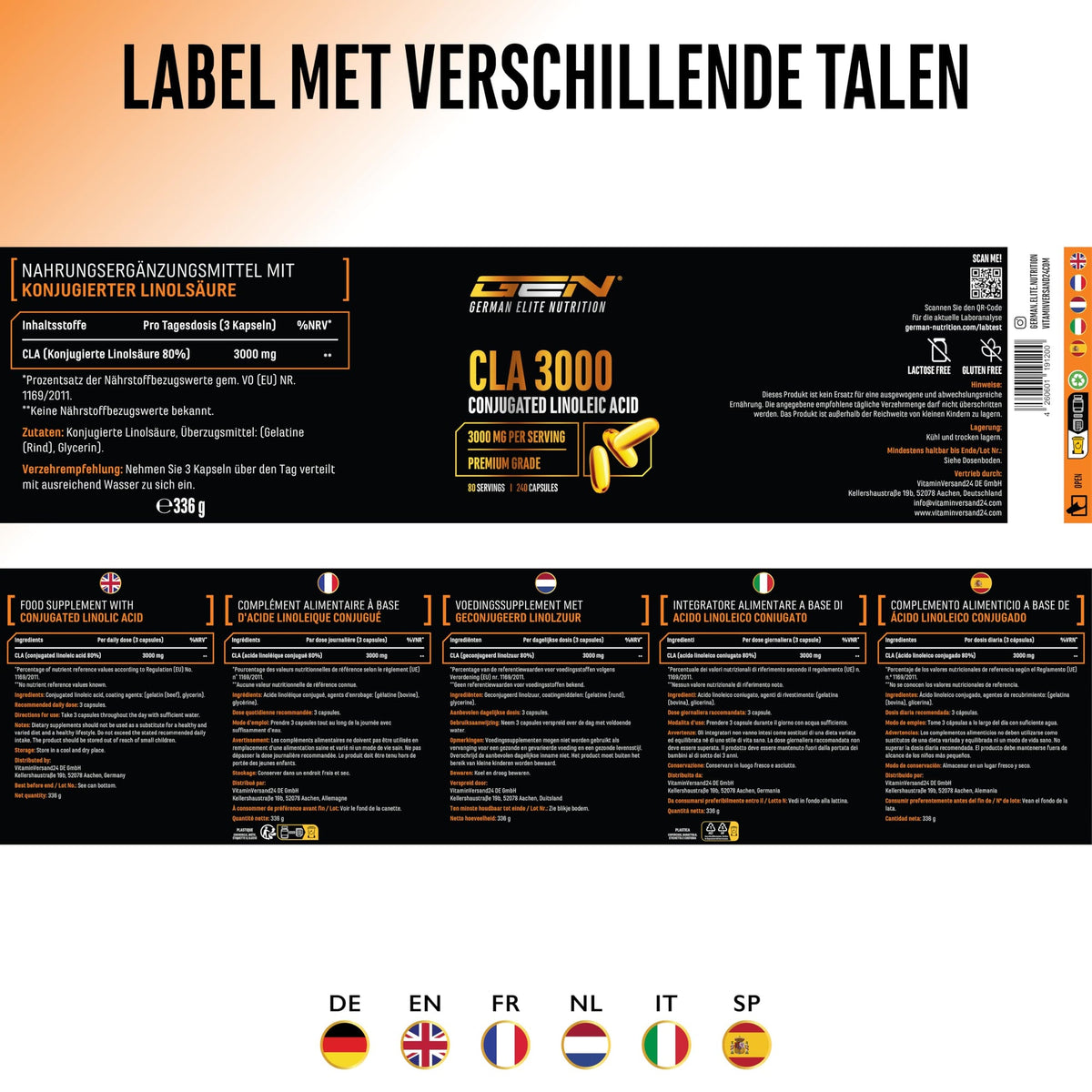
Gluten-free, lactose-free, and without magnesium stearate, colourants, or flavourings. Every batch is tested in Europe for heavy metals and microbiological purity.
A supply pot that lasts over two months at three softgels per day.
* Percentage van de referentie inname volgens Verordening (EU) Nr. 1169/2011.
** Reference intake unknown.
Response within one working day
Our customer service is open on weekdays from 09:00 to 17:00.

CLA stands for conjugated linoleic acid. It is an omega-6 fatty acid found naturally in meat and dairy products, and in supplements it is usually extracted from safflower oil.
The daily serving is three softgels, taken throughout the day with plenty of water. This amounts to 3000 mg of CLA. A jar of 240 softgels will last for over two months.
No. The softgel capsule is made from bovine gelatin, so the product is not vegan or vegetarian. However, the CLA fatty acid itself is of plant origin.
The CLA in this product is extracted from vegetable oil, in this type of supplement usually safflower oil. The extract is standardised to 80% CLA isomers.
There is no fixed time. Many people divide the three softgels throughout the day, for example, around mealtimes. Choose what fits into your routine.
The difference lies in the structure of the molecule. In CLA, the double bonds are in a different position than in regular linoleic acid, and that is what the word conjugated indicates. Furthermore, like linoleic acid, it is a fatty acid from the omega-6 family.