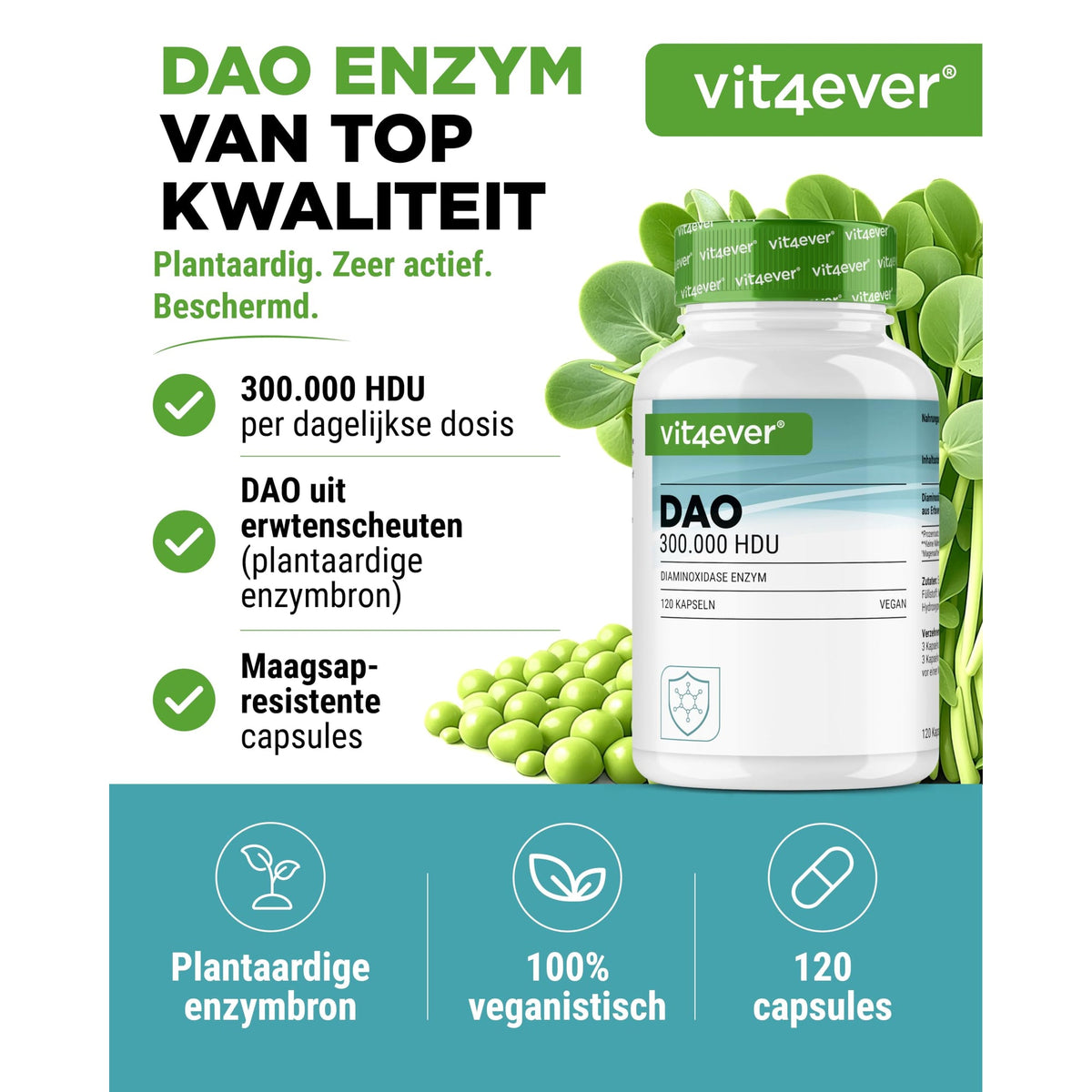
DAO Enzym 300.000 HDU | 120 Capsules | Vit4ever - verpakking voorkant
DAO Enzym 300.000 HDU | 120 Capsules | Vit4ever - voordelen en kenmerken
DAO Enzym 300.000 HDU | 120 Capsules | Vit4ever - voordelen en kenmerken (2)
DAO Enzym 300.000 HDU | 120 Capsules | Vit4ever - voordelen en kenmerken (3)
DAO Enzym 300.000 HDU | 120 Capsules | Vit4ever - voordelen en kenmerken (4)
DAO Enzym 300.000 HDU | 120 Capsules | Vit4ever - voordelen en kenmerken (5)
DAO Enzym 300.000 HDU | 120 Capsules | Vit4ever - voordelen en kenmerken (6)
DAO Enzym 300.000 HDU | 120 Capsules | Vit4ever - etiket met ingrediënten en voedingswaarden
DAO Enzym 300.000 HDU | 120 Capsules | Vit4ever - etiket met ingrediënten en voedingswaarden (2)
DAO Enzym 300.000 HDU | 120 Capsules | Vit4ever - merk Vit4ever
DAO Enzym 300.000 HDU | 120 Capsules | Vit4ever - sfeerbeeld

Vit4ever

DAO Enzyme 300,000 HDU | 120 Capsules | Vit4ever

Actieprijs€28,90

In stock. Order today, delivered Monday by PostNL.

Volume discount

Not valid with discount codes.

iDEAL Wero Bancontact Klarna Visa Mastercard PayPal

Vragen? We helpen je graag!

Chat met ons of bel 038 303 2160

Snel bezorgd

Besteld voor 17:00, morgen in huis*

Achteraf betalen

met Klarna

Specificaties

Merk Vit4ever
Categorie Enzymes
Artikelcode vit4-518
Barcode 4260601190012
Houdbaar tot Op aanvraag
Batchnummer Op aanvraag
Inhoud 120 capsules
Aantal doseringen 40

DAO Enzyme 300,000 HDU by Vit4ever

This is a DAO enzyme in acid-resistant capsules, made from sprouted peas instead of porcine kidney. Each capsule contains 100,000 HDU, and the daily dose of three capsules thus amounts to 300,000 HDU. A bottle contains 120. Below you will read what the substance is and how the product is formulated.

What diamine oxidase exactly is

Diamine oxidase, known in the enzyme catalog as EC 1.4.3.22, is a protein that your body produces itself. It is found mainly in the mucous membrane of your small intestine, in the upper cells of the intestinal villi, and also in the kidneys and the placenta. It is a so-called copper-containing amine oxidase: at the heart of the molecule is a copper ion, plus a second cofactor that the enzyme builds itself by converting its own building block. The technical term for that is topaquinone. Without those two components, it does not work.

Histamine is a small molecule that is made in your body and that is also found in food, especially in products that are aged, fermented, or stored for longer. Bacteria make it from the amino acid histidine. Diamine oxidase is one of the enzymes involved in the conversion of histamine in the body.

Why from sprouted peas and not from porcine kidney

The classic source is a protein extract from porcine kidney. Sprouted peas naturally produce the same type of copper-containing enzyme, and it accumulates strongly in the germ root. The plant-based enzyme from peas is even one of the best-studied models of this enzyme family in biochemistry; crystal structures of its three-dimensional structure exist. The reaction is the same, with the same two cofactors. Practical difference: peas are plant-based, so this product is vegan and contains no animal by-products. To be fair: most published research on diamine oxidase has been done with the porcine kidney variant.

Why the capsule is acid-resistant

An enzyme is a folded protein, and that folding determines whether it works. In an empty stomach, the acidity is between pH 1.5 and 3. At such a low value, the bonds that hold the folding together break and the protein unfolds. Pepsin, the cutting enzyme of your stomach, is actually most active at that acidity and has many more points of attack on an unfolded protein. An unprotected enzyme thus arrives in your intestine as loose fragments. The coating here remains intact at low acidity and only dissolves around pH 6 to 7.5, in the small intestine. Therefore, you must not open, chew, or finely grind these capsules: then you throw away the protection.

What those 300,000 HDU mean

HDU stands for Histamine Degrading Units. It is not a weight but a measure of activity: how much conversion the enzyme can still perform under standard conditions. With an enzyme, the number of milligrams tells you almost nothing. Do pay attention to this when comparing brands, because there is no legally established measurement method for HDU. Manufacturers of animal and plant-based variants use different determinations, which means the numbers can only be compared when the same method is used. A product with a tenfold higher number on the label is therefore not automatically tenfold more active.

In short: 120 acid-resistant capsules, three ingredients on the label, and a plant-based origin. There is no EU-approved health claim for diamine oxidase, so on this page we only describe what the substance is and how the product is formulated.

Why Vit4ever’s DAO Enzyme 300,000 HDU?

100,000 HDU per capsule

HDU is a measure of enzyme activity, not weight. Three capsules together contain 300,000 HDU. Compare this figure only with products that use the same measurement method, as there is no legal standard for HDU.

Germinated pea, no pig kidney

The classic source for this enzyme is an extract from pig kidney. Here it comes from Pisum sativum, the common pea, making the product completely plant-based.

Capsule only opens in the small intestine

The coating remains intact in the acidity of the stomach and only dissolves around pH 6 to 7.5. An enzyme is a folded protein that unfolds in stomach acid, and then pepsin breaks it apart.

Three lines on the label

Pea sprout powder, microcrystalline cellulose and a plant-based capsule shell. No magnesium stearate, no coloring and no sweetener.

Samenstelling

* Percentage van de referentie inname volgens Verordening (EU) Nr. 1169/2011.

** Reference intake unknown.

Ingredients:
Pea sprout powder (Pisum sativum, contains diamine oxidase), bulking agent: microcrystalline cellulose, capsule shell: hydroxypropyl methylcellulose (plant-based).
Recommended use:
Take no more than 3 capsules per day, 1 capsule at a time approximately 15 minutes before a meal, with sufficient water. Swallow the capsule whole: do not open, chew or crush it, as this will destroy its acid-resistant properties.
Storage advice:
Store in a cool, dry and dark place with the lid tightly closed. Enzymes lose activity when exposed to heat and moisture, so do not store the jar in the bathroom or next to the stove. Keep out of reach of young children.


Safety:
Consult a doctor beforehand in case of known histamine intolerance, unclear or persistent symptoms, during pregnancy and breastfeeding, and when taking medication regularly. Never adjust medication on your own initiative. In laboratory tests with isolated enzymes, chloroquine, clavulanic acid, cimetidine and verapamil showed inhibition, among others; that is test tube research and says nothing about what happens in a human, but discuss it with your doctor or pharmacist if in doubt. Do not exceed the recommended daily dose of 3 capsules. A dietary supplement is not a substitute for a varied diet and sufficient exercise. Keep out of reach of young children.

Health claims

Why is there little information about how this product works?
Within the European Union, only health claims authorized by the European Commission may be used. There are no authorized health claims for this product or its ingredients. Therefore, on this page we mainly describe the composition, the amounts per serving and the use. A food supplement is not a substitute for a varied, balanced diet and a healthy lifestyle.

Do you have any questions?

Response within one working day

Our customer service is open on weekdays from 09:00 to 17:00.

  • 💬 Chat
  • 📧 customerservice@luto-supplements.nl
  • 📞 038 - 303 2160
Contactpersoon

Frequently Asked Questions

What exactly is diamine oxidase?

An enzyme with catalog number EC 1.4.3.22 that your body produces itself, especially in the mucous membrane of the small intestine. It contains a copper ion and a second cofactor that forms the enzyme itself, called topaquinone.

What does HDU mean and why do other brands show a much higher number?

HDU stands for Histamine Degrading Units and measures activity, not weight. There is no legally established reference method, so manufacturers measure in different ways. As a result, the numbers from different brands are not directly comparable. A tenfold higher number does not automatically mean tenfold more activity.

Why should I not open these capsules?

Because the coating is acid-resistant. An enzyme is a folded protein; at the acidity of the stomach, it unfolds and pepsin then cuts it into pieces. The coating prevents that and only dissolves in the small intestine. If you open the capsule, the powder will end up unprotected in the stomach.

When do I take the capsule?

Take the capsule approximately 15 minutes before a meal. One capsule per main meal, a maximum of three per day.

Is this the same enzyme as the one from pig kidney?

It is the same type of reaction with the same two cofactors, copper and topoquinone. Germinating peas naturally produce such a copper-containing amine oxidase. The plant enzyme has been well studied in biochemistry; crystal structures of the structure exist. To be fair: most published research has been done with the variant from pig kidney.

Does it contain allergens?

The formula contains pea material, which is a legume. Pea is not on the list of fourteen allergens that must be declared by law, but people with a legume allergy or cross-reactivity with soy or peanuts may want to take this into account. Gluten, lactose and soy are not included as ingredients in the formula. Always check the current label on the jar.