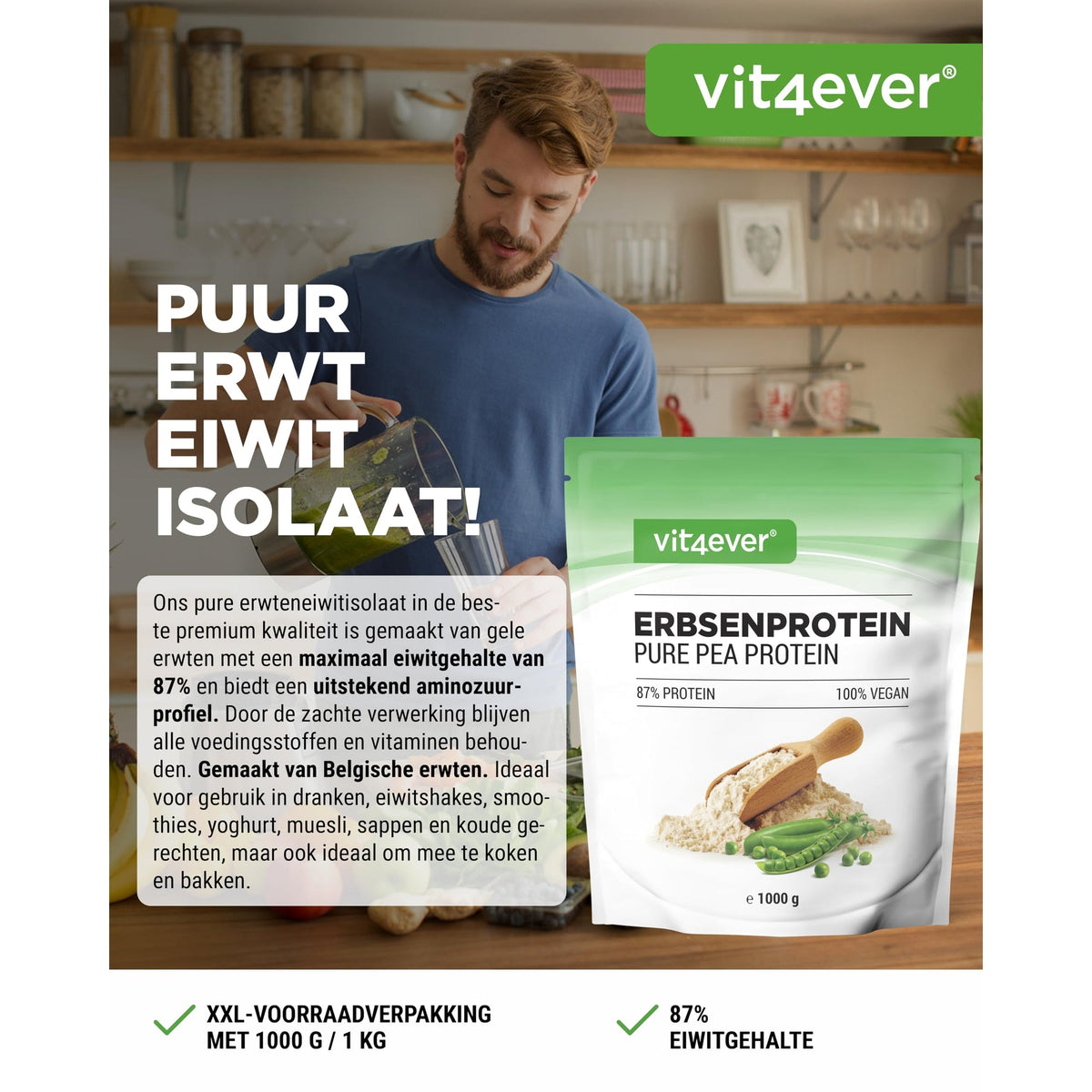
Erwten Eiwitpoeder | 1000 g | Vit4ever - verpakking voorkant
Erwten Eiwitpoeder | 1000 g | Vit4ever - voordelen en kenmerken
Erwten Eiwitpoeder | 1000 g | Vit4ever - etiket met ingrediënten en voedingswaarden
Erwten Eiwitpoeder | 1000 g | Vit4ever - voordelen en kenmerken (2)
Erwten Eiwitpoeder | 1000 g | Vit4ever - voordelen en kenmerken (3)
Erwten Eiwitpoeder | 1000 g | Vit4ever - etiket met ingrediënten en voedingswaarden (2)
Erwten Eiwitpoeder | 1000 g | Vit4ever - etiket met ingrediënten en voedingswaarden (3)
Erwten Eiwitpoeder | 1000 g | Vit4ever - voordelen en kenmerken (4)
Erwten Eiwitpoeder | 1000 g | Vit4ever - merk Vit4ever
Erwten Eiwitpoeder | 1000 g | Vit4ever - sfeerbeeld

Vit4ever

Pea Protein Powder | 1000 g | Vit4ever

Actieprijs€19,90
€19,90  / kg

In stock. Order before 17:00, delivered tomorrow.

Volume discount

Not valid with discount codes.

iDEAL Wero Bancontact Klarna Visa Mastercard PayPal

Vragen? We helpen je graag!

Chat met ons of bel 038 303 2160

Snel bezorgd

Besteld voor 17:00, morgen in huis*

Achteraf betalen

met Klarna

Specificaties

Merk Vit4ever
Categorie Sports nutrition
Artikelcode vit4-222
Barcode 4260601191262
Houdbaar tot Op aanvraag
Batchnummer Op aanvraag
Inhoud 1000 grams
Aantal doseringen 33

Vit4ever Pea Protein Isolate

Anyone who trains plant-based or simply doesn't fancy dairy will sooner or later come across the same question: where do you get your protein from? Pea protein is the answer for many people. Vit4ever produces this isolate from yellow peas grown and processed in Belgium, turning them into a powder with 87 percent protein. The bag contains 1000 grams, divided into 33 servings of 30 grams, and contains nothing else but the isolate itself.

How pea protein isolate is made

The difference between regular pea flour and an isolate lies in the processing. In this product, the peas are processed without hexane, meaning without the solvent that is still used in many cheaper isolates to separate the protein from starch and fiber. Instead, a mechanical separation process is used, where water and pressure separate the protein fraction from the rest of the pea. What remains is a fine powder in which the protein content is highly concentrated. As a result, with 30 grams of powder you get approximately 26 grams of protein, instead of the much lower amount you would get from unrefined pea flour. For those looking for a concentrated protein source without soy or dairy, that difference is immediately noticeable in practice in the number of servings you need. Moreover, the color and smell of the powder remain mild as a result, something that was sometimes disappointing with older processing methods.

What distinguishes pea protein from whey

Pea protein owes its popularity mainly to what it does not contain: no lactose and no soy. For those who do not want to use whey or consciously eat plant-based, that is a practical difference. The amino acid profile is remarkably complete for a plant-based source. Per 100 grams of powder, there are approximately 7310 mg of arginine and 6050 mg of lysine, two amino acids that animal proteins often contain less of. Lysine is particularly interesting because many plant-based protein sources actually lack it, while peas fill that gap well. Proteins contribute to an increase in muscle mass and proteins contribute to the maintenance of muscle mass, and that applies just as well to protein from peas as to protein from milk or meat.

A powder with more applications than a shake

Most people stir it into water or a plant-based drink after exercising, but pea protein isolate is also suitable for cooking and baking. The powder has a neutral taste, contains no flavorings, sugar or sweeteners, and dissolves reasonably well in liquid without needing a blender. This way you can mix it through oatmeal, yogurt or a batch of pancake batter without it taking over the taste. Those who prefer to drink it pure simply stir 30 grams into a glass of water or plant-based milk; those looking for more variety incorporate it into a smoothie with fruit. Proteins contribute to the maintenance of normal bones. It is precisely that versatility that makes pea protein isolate more practical than some people initially think.

Who is this powder a logical choice for

Pea protein isolate is primarily interesting for people who, for whatever reason, do not want or cannot use whey, or who consciously choose a plant-based diet. But also those who simply want to alternate multiple protein sources throughout the week can make good use of it. Because the powder contains nothing else but the isolate itself, it fits just as easily into a strict diet as into a regular diet in which you want to add some extra protein occasionally. And because a 1000-gram bag is good for 33 servings, you do not need to order a new bag every week. That also makes it practical for those who prefer to stock up on a bit more at once rather than reordering small quantities every time.

With 87 percent protein per 100 grams, a short ingredient list and processing without hexane, this isolate is above all a practical product: easy to dose, widely applicable and clear about what is in it.

Why Pea Protein Powder from Vit4ever?

87 percent protein per 100 grams

The isolate provides 26 grams of protein per 30-gram serving, one of the higher concentrations among plant-based protein powders.

Rich in arginine and lysine

Per 100 grams, it contains approximately 7310 mg of arginine and 6050 mg of lysine, supplemented with all essential amino acids.

Hexane-free processing

The peas are processed without the solvent hexane, which is sometimes still used in cheaper isolates to separate protein from starch.

Free from soy, lactose, and sweeteners

The powder consists of 100 percent pea protein isolate, with no flavourings, sugar, or other additives.

Samenstelling

* Percentage van de referentie inname volgens Verordening (EU) Nr. 1169/2011.

** Reference intake unknown.

Ingredients:
100% pea protein isolate (from yellow peas), without additives.
Recommended use:
Stir 30 grams of powder daily into water, juice, milk or a plant-based drink. A shaker prevents lumps.
Storage advice:
Store the bag in a dry, cool place and out of reach of young children. Close the bag tightly immediately after use.
Safety:
Food supplements are not a substitute for a varied and balanced diet and a healthy lifestyle. Do not exceed the recommended daily dose. Keep out of reach of young children.

Health claims

  • Proteins: Proteins are needed for normal growth and development of bone in children
  • Proteins: Proteins contribute to the maintenance of normal bones
  • Proteins: Proteins contribute to a growth in muscle mass
  • Proteins: Proteins contribute to the maintenance of muscle mass

Do you have any questions?

Response within one working day

Our customer service is open on weekdays from 09:00 to 17:00.

  • 💬 Chat
  • 📧 customerservice@luto-supplements.nl
  • 📞 038 - 303 2160
Contactpersoon

Frequently Asked Questions

Is pea protein a good alternative to whey?

Yes, for those who want to avoid lactose or animal proteins, this is a practical alternative. The amino acid profile contains all essential amino acids, including relatively high amounts of arginine and lysine. The taste is more neutral than some other plant-based powders.

How much protein is in one serving?

A 30-gram serving provides approximately 26 grams of protein. Per 100 grams of powder, this amounts to 87 grams of protein, 1.7 grams of carbohydrates, and 4 grams of fat.
Can you also use this powder for baking?

Yes, the powder has a neutral taste and dissolves reasonably well in liquids, making it also suitable for pancakes, oatmeal, or yogurt in addition to the usual shake.
Why choose an isolate over cheaper pea flour?

An isolate is more concentrated: the hexane-free processing results in proportionally more protein and less starch and fibre. This means you consume more protein with the same serving size than with unrefined pea flour.

What exactly is hexane-free processing?

Hexane is a solvent used in some protein isolates to separate protein from other plant components. This powder is processed without that agent, which makes the processing simpler and the final product clearer in terms of composition.

What is the difference between pea protein and soy protein?

Both are plant-based protein sources with a complete amino acid profile, but pea protein naturally contains no soy, making it a good option for people with a soy allergy or intolerance. They do differ somewhat in taste and solubility.