
































What exactly is glucomannan?
Glucomannan is a soluble dietary fiber derived from the konjac plant root. Your body does not digest this fiber. What is special is that glucomannan binds a lot of water and swells into a gel-like mass in the stomach.
Bestsellers
Bekijk allesWinkelwagen
Je winkelwagen is leeg


Out of stock.
Not valid with discount codes.
Vragen? We helpen je graag!
Chat met ons of bel 038 303 2160
Snel bezorgd
Besteld voor 17:00, morgen in huis*
Achteraf betalen
met Klarna
Kies opties
Not valid with discount codes.
Vragen? We helpen je graag!
Chat met ons of bel 038 303 2160
Snel bezorgd
Besteld voor 17:00, morgen in huis*
Achteraf betalen
met Klarna
Not valid with discount codes.
Vragen? We helpen je graag!
Chat met ons of bel 038 303 2160
Snel bezorgd
Besteld voor 17:00, morgen in huis*
Achteraf betalen
met Klarna
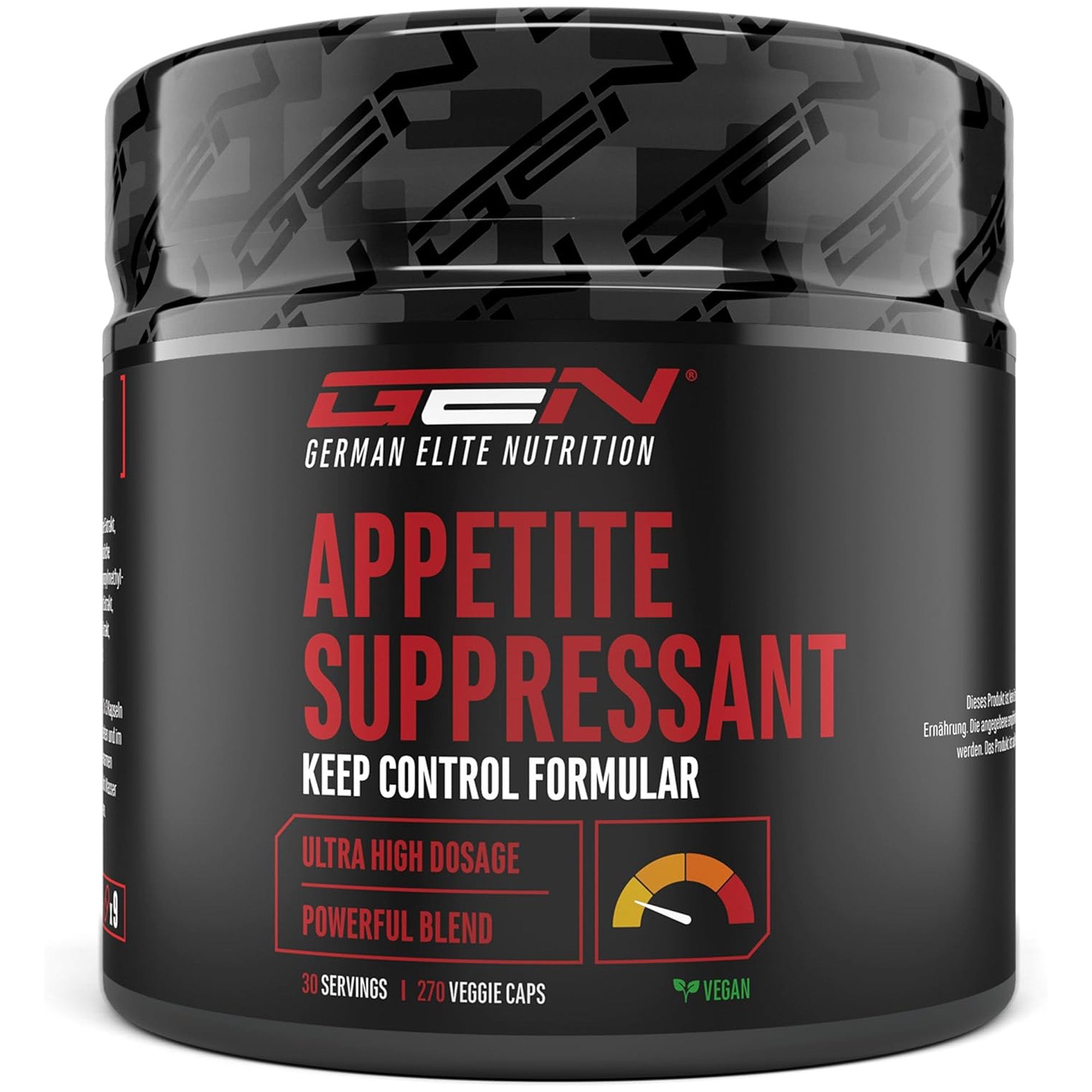
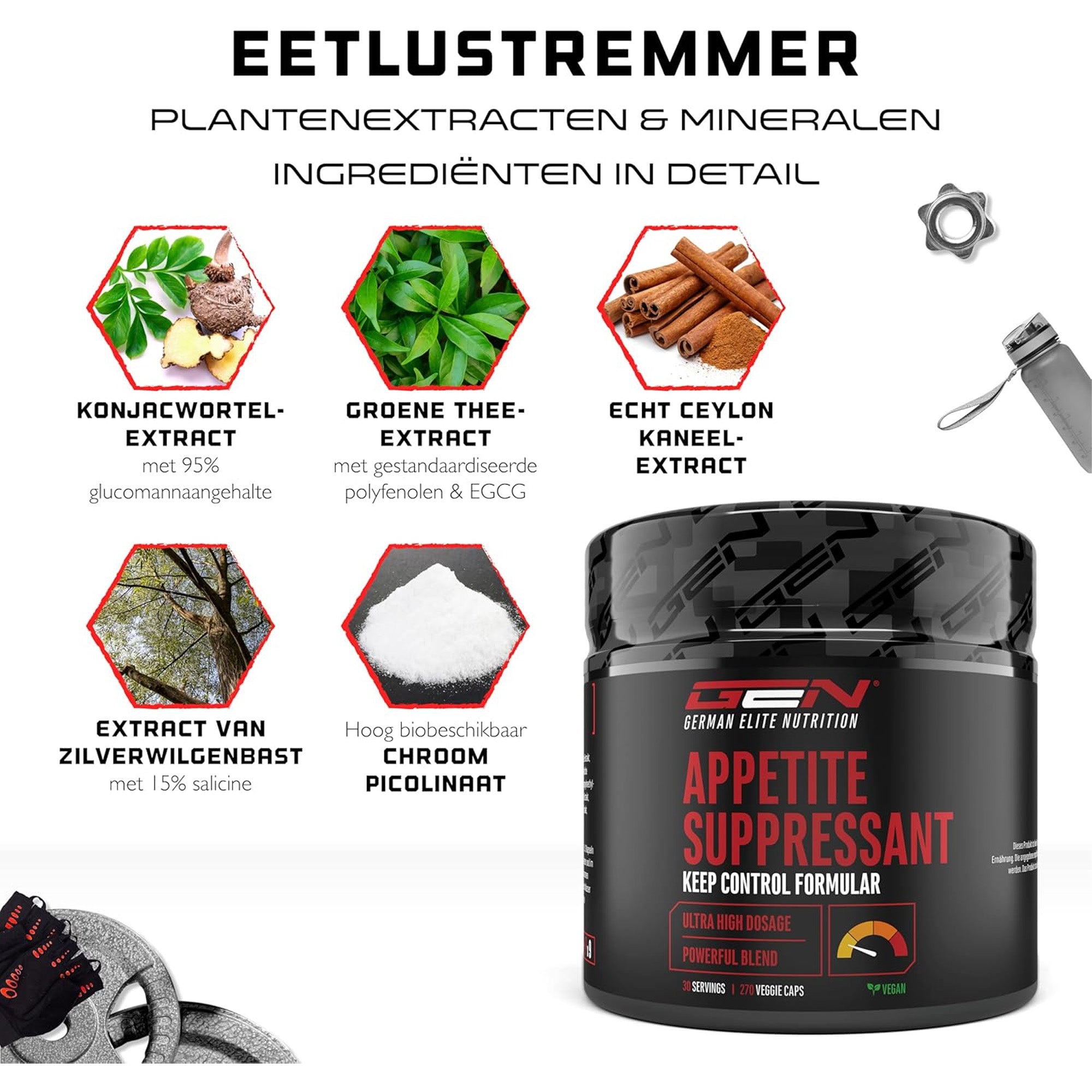
This glucomannan formula by German Elite Nutrition is a plant-based supplement centered on glucomannan, a soluble fiber from konjac root. The formula is supplemented with green tea extract, Ceylon cinnamon, silver willow bark, and chromium. The product is intended for adults looking for a high-fiber supplement in capsule form. The base is deliberately plant-based, with a fiber as the main ingredient and a few targeted extracts around it. One jar contains 270 capsules, enough for approximately one month at the recommended daily dosage.
Glucomannan is a soluble dietary fiber extracted from the root tuber of the konjac plant (Amorphophallus konjac), a crop that grows mainly in Asia. Glucomannan binds water and swells when it comes into contact with moisture. Therefore, you should always take the capsules with plenty of water. Per daily dose of nine capsules, this formula provides 4500 mg of konjac extract, of which 4275 mg is glucomannan fiber. It is a plant fiber that your body does not digest. You may know the konjac plant without realizing it. Shirataki noodles, the crystal-clear noodles from Asian cuisine that consist almost entirely of this fiber, are made from the same root.
In addition to the fiber base, this formula contains three plant extracts, each with its own background. Green tea extract, with 1125 mg per daily dose, is naturally rich in polyphenols. The best-known of these is EGCG (epigallocatechin gallate, a plant substance characteristic of the leaves of the Camellia sinensis tea plant). Ceylon cinnamon comes from the true cinnamon tree from Sri Lanka. This is not the same as the cheaper cassia cinnamon that you often find in the supermarket. Silver willow bark, or Salix alba, naturally contains salicin. The difference with loose herbal powders lies in the form: here we are talking about extracts, which means the plant substances are more concentrated than in raw herbs. Green tea is made from the unprocessed, non-fermented leaves of the tea plant. That is immediately the difference with black tea, which does undergo a fermentation process.
Chromium has also been added to the formula in the form of chromium picolinate. Chromium is a trace element that occurs in very small amounts in, among others, whole grain products, nuts, meat, and broccoli. In these capsules, it is included as a supplement alongside the plant extracts. Good to know: the manufacturer does not list the exact amount of chromium, Ceylon cinnamon, and silver willow bark separately on the label. Therefore, in the table below you will only find the dosages that German Elite Nutrition does specify, namely the konjac extract with glucomannan and the green tea extract.
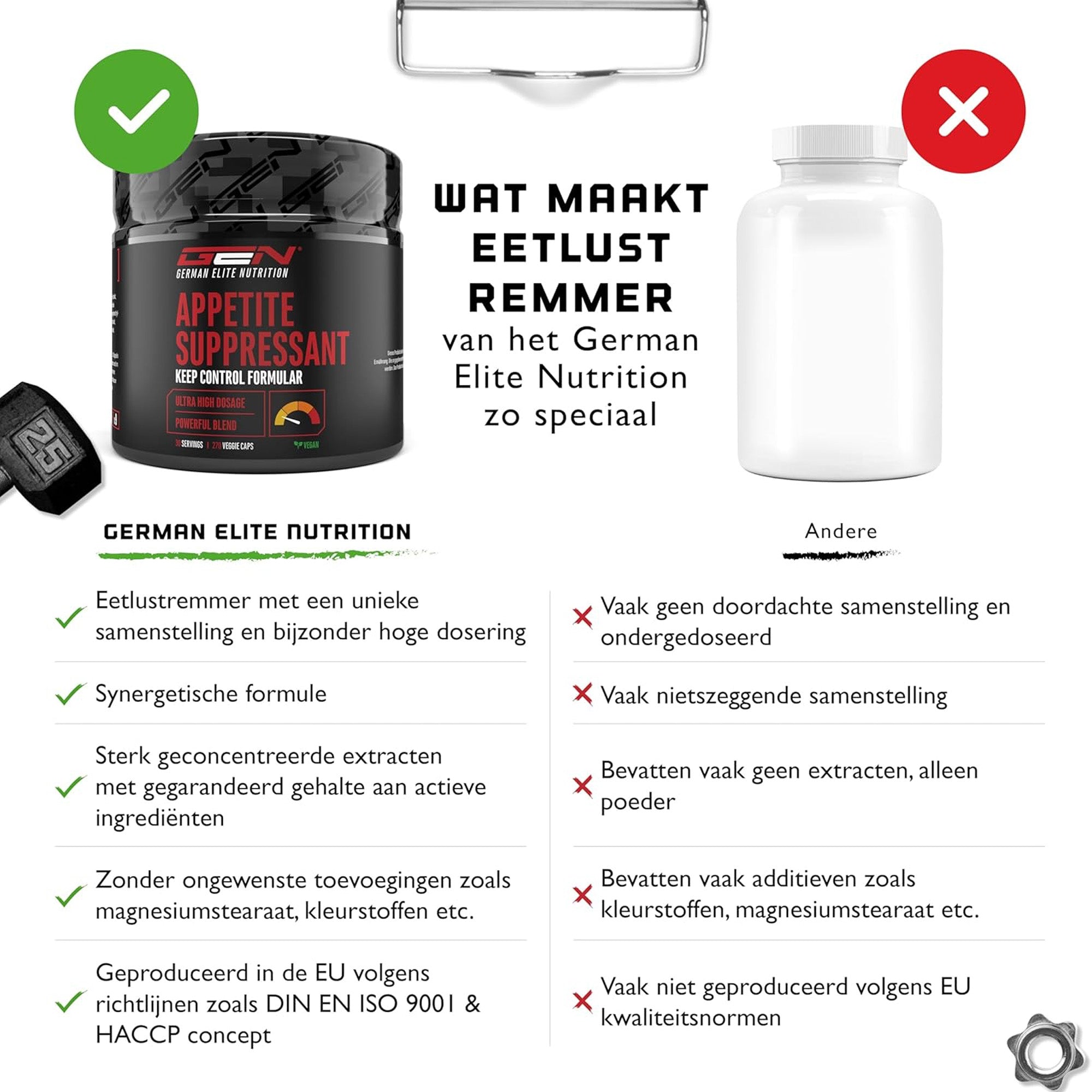
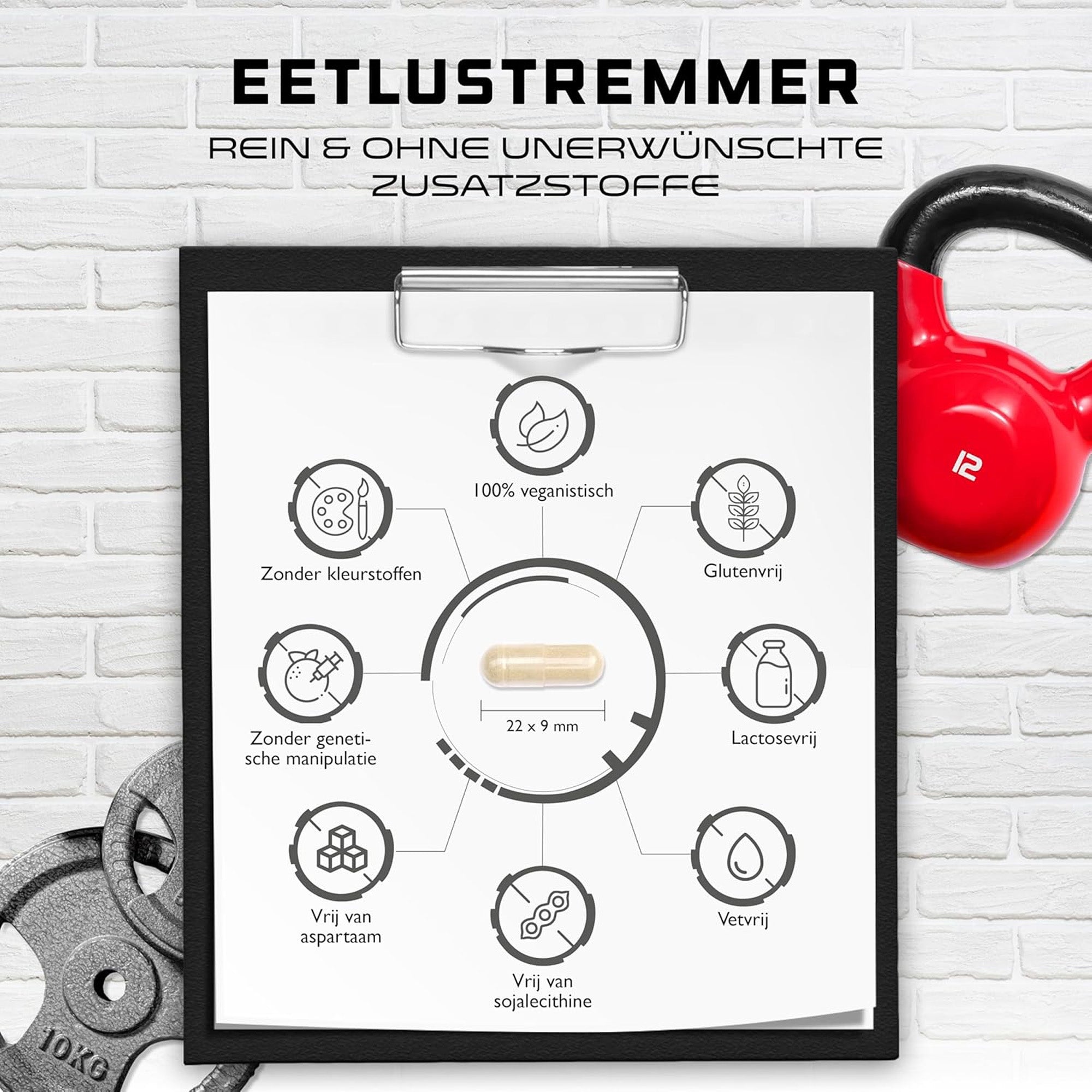
The capsules themselves are made of HPMC (hydroxypropyl methylcellulose), a plant-based alternative to the gelatin found in many other capsules. This makes the product suitable for vegans and vegetarians. German Elite Nutrition has deliberately kept the composition clean. It contains no magnesium stearate, no artificial colors or flavorings, and no preservatives. The product is gluten-free and lactose-free and is produced in Germany according to the quality standards applicable there. What you are left with is a straightforward, plant-based fiber formula with a few targeted botanical extracts: konjac fiber as a base, supplemented with green tea, cinnamon, willow bark, and chromium, packaged in a capsule that you can easily swallow with a glass of water.
Nine capsules together provide 4500 mg of konjac root extract, of which 4275 mg is glucomannan fiber from a single plant source.
In addition to the fiber base, the formula contains green tea extract, Ceylon cinnamon, white willow bark, and chromium picolinate.
The HPMC capsules are plant-based. Without magnesium stearate, artificial colours or flavourings. Gluten-free and lactose-free.
One pot contains 270 capsules, enough for approximately one month at nine capsules per day. Produced in Germany.
* Percentage van de referentie inname volgens Verordening (EU) Nr. 1169/2011.
** Reference intake unknown.
Response within one working day
Our customer service is open on weekdays from 09:00 to 17:00.

Glucomannan is a soluble dietary fiber derived from the konjac plant root. Your body does not digest this fiber. What is special is that glucomannan binds a lot of water and swells into a gel-like mass in the stomach.
Because glucomannan swells considerably as soon as it absorbs moisture. By taking the capsules with 1 to 2 glasses of water, you ensure that the fibre expands only in the stomach and not in the oesophagus. Therefore, never take it with too little liquid.
Yes. The capsule is made of HPMC, a plant-based material, and contains no animal-derived ingredients. Therefore, the product is suitable for vegans and vegetarians.
The formula contains green tea extract, and green tea naturally contains a small amount of caffeine. The exact amount is not stated on the label. If you are sensitive to caffeine, please keep this in mind.
Ceylon cinnamon comes from the true cinnamon tree (Cinnamomum verum) from Sri Lanka and has a softer, finer taste. Regular supermarket cinnamon is usually cassia cinnamon, a different and cheaper type of cinnamon. This product uses the Ceylon variety.
Both are soluble fibres that bind water, but they come from different plants. Glucomannan comes from the konjac root, psyllium from the seed husks of the Plantago ovata plant. Glucomannan is known for its high water-binding capacity per gram.