


































How much glycine do you take per day?
The label recommends a quarter level teaspoon 1 to 3 times a day, which is 1 gram at a time. This amounts to 1 to 3 grams per day. Follow this advice and do not exceed the recommended daily amount.
Bestsellers
Bekijk allesWinkelwagen
Je winkelwagen is leeg
In stock. Order today, delivered Monday by PostNL.
Not valid with discount codes.
Vragen? We helpen je graag!
Chat met ons of bel 038 303 2160
Snel bezorgd
Besteld voor 17:00, morgen in huis*
Achteraf betalen
met Klarna
Kies opties
Not valid with discount codes.
Vragen? We helpen je graag!
Chat met ons of bel 038 303 2160
Snel bezorgd
Besteld voor 17:00, morgen in huis*
Achteraf betalen
met Klarna
Not valid with discount codes.
Vragen? We helpen je graag!
Chat met ons of bel 038 303 2160
Snel bezorgd
Besteld voor 17:00, morgen in huis*
Achteraf betalen
met Klarna
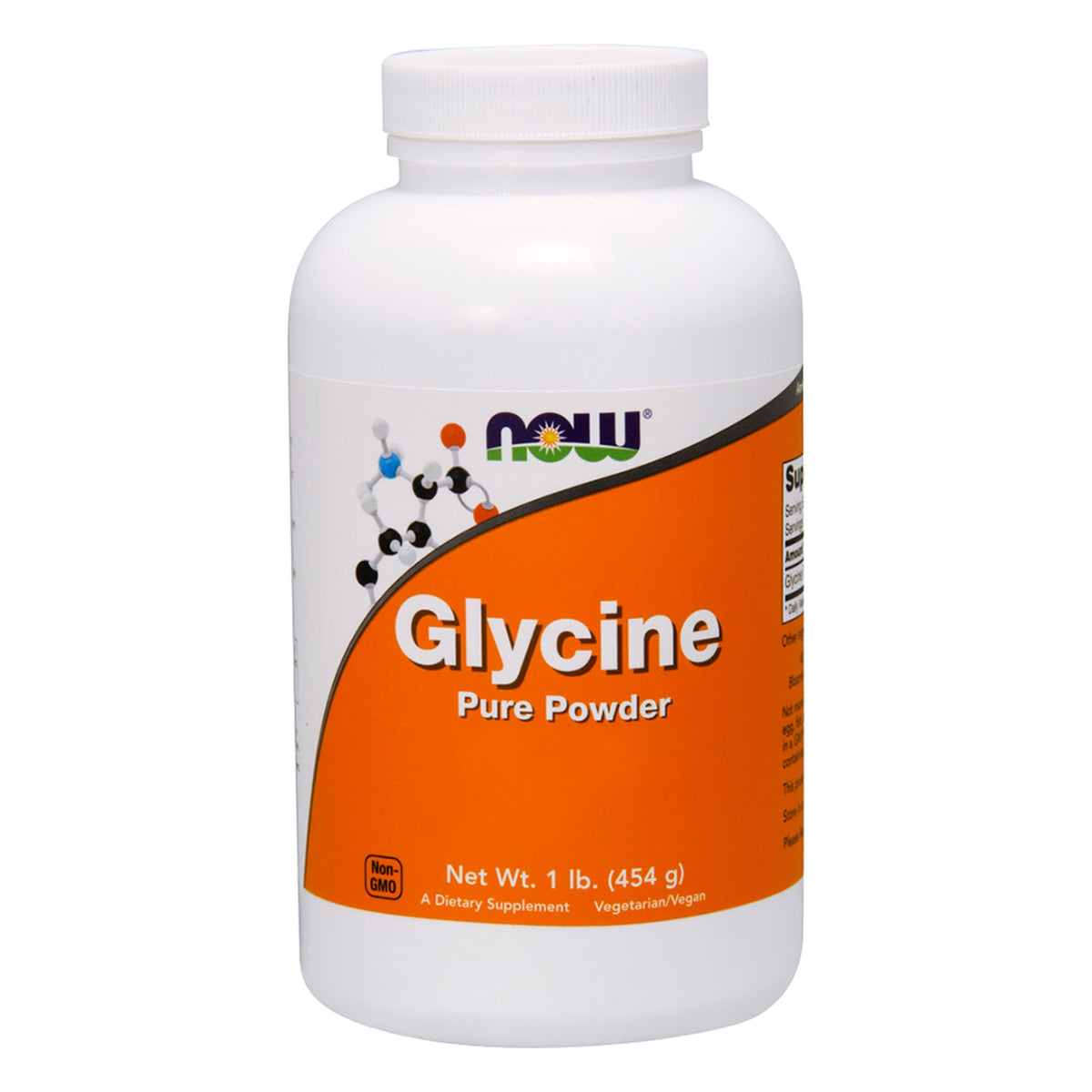
This is glycine in the simplest form you can get: a container with 454 grams of pure powder, without flavorings, sweeteners, or fillers. The label lists exactly one ingredient. That makes this powder interesting for those who want to decide for themselves how much they take and what they dissolve it in. Per 1-gram serving, you get over 450 servings from one container.
Glycine is the smallest amino acid (a building block of protein) that exists. The molecule is so compact that it fits into places in protein chains where larger amino acids do not fit. Your body can make it itself, among other things from serine. Yet you get a good portion of it from your diet. What many people do not know: collagen consists of about one-third glycine. Almost every third building block in a collagen chain is therefore a glycine molecule. You will therefore find it mainly in bone broth, gelatin, and the skin and tendons of meat. Lean meat, dairy, and plant-based proteins also contain glycine, but in smaller proportions.
Many people wonder what glycine exactly does in the body. In short: it is a building material and a signaling substance at the same time. As a building material, it goes into collagen, but also into creatine and glutathione (a small protein that is in almost all your cells). Together with cysteine and glutamine, glycine forms that glutathione. In addition, glycine is found in your nervous system as a messenger substance. Glycine is also the reason that this powder tastes slightly sweet. The name even comes from the Greek word glykys, which means sweet. In practice, that means: your body uses this small molecule in very different places, from connective tissue to the nervous system.
The difference with glycine in capsules lies in the amount. A capsule usually contains 500 to 1000mg. With powder you scoop out your portion in a few seconds. The label recommends 1 to 3 times a day a quarter of a level teaspoon, which amounts to 1 gram at a time. Because glycine dissolves well and has a mild, sweet taste, you barely notice it in water, tea, or a shake. Some people even use it as a replacement for a little bit of sugar in their coffee. Good to know: the powder is free of gluten, soy, milk, and egg, and contains no sugar, starch, or preservatives.
NOW Foods packages this glycine powder in the United States according to GMP guidelines (Good Manufacturing Practice). The raw material itself comes from China, as with the largest part of the global glycine production. A simple container, a single ingredient, and a sweet taste that easily disappears in your drink: it doesn't need to be more than that.
No flavorings, sweeteners or fillers. The label only lists glycine.
A 454-gram container provides more than 450 doses when using a quarter teaspoon per serving.
Glycine dissolves quickly in water or tea. Its mild sweet taste blends into almost any drink.
The powder also contains no sugar, starch, yeast or preservatives.
* Percentage van de referentie inname volgens Verordening (EU) Nr. 1169/2011.
** Reference intake unknown.
Response within one working day
Our customer service is open on weekdays from 09:00 to 17:00.

The label recommends a quarter level teaspoon 1 to 3 times a day, which is 1 gram at a time. This amounts to 1 to 3 grams per day. Follow this advice and do not exceed the recommended daily amount.
Slightly sweet, similar to a hint of sugar but less pronounced. That’s why it blends easily into water, tea, or a shake. It contains no flavorings or sweeteners; that sweet taste comes from the glycine itself.
You can choose whenever you like; the label does not specify a particular time. Many people take a serving in the evening in a cup of tea or spread the servings throughout the day. Dissolve the powder in a glass of water or another beverage of your choice.
Because powder is easy to dose by the gram. A capsule usually contains about 500 mg, so for 3 grams you could easily end up taking six capsules a day. With a quarter teaspoon per serving, you’ll be done in a few seconds and get over 450 servings from one container.
Glycine is the most common building block of collagen: about one in three amino acids in a collagen chain is glycine. Due to its small size, it fits perfectly into the tight triple helix that makes up collagen. Your body also produces glycine itself, but some comes from your diet. Bone broth, gelatin, and cuts of meat with skin and tendons are particularly rich in it.
Magnesium glycinate is magnesium chemically bonded to glycine; it is the mineral that matters there. This product contains only free glycine, without a mineral attached to it. This means you get a full gram of glycine per gram of powder, much more than the amount contained in a magnesium glycinate tablet.