Osavi Himalaya Shilajit 500mg (Asphaltum punjabianum) - hars van 25 g, verpakking
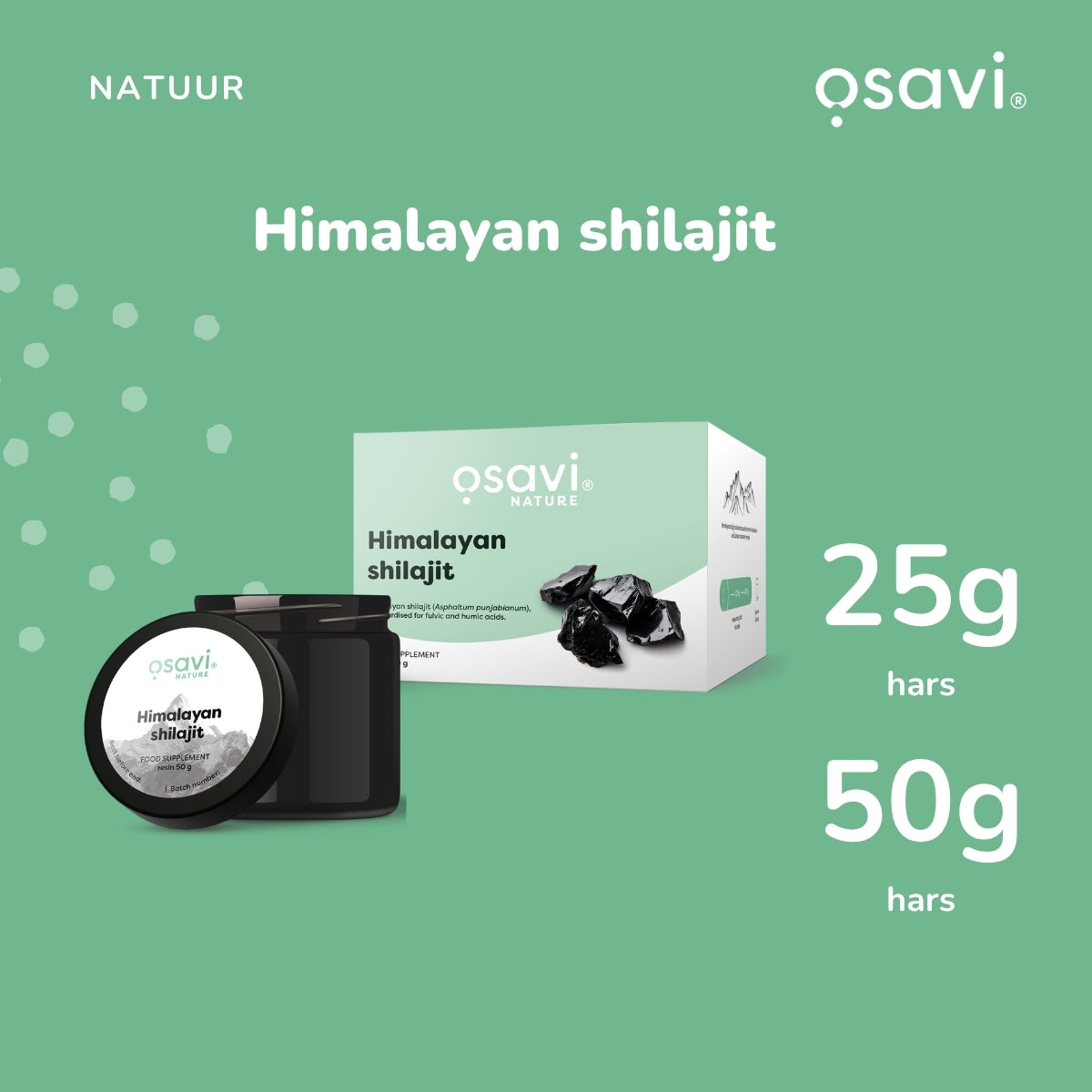
Osavi Himalaya Shilajit hars - verkrijgbaar in 25g en 50g, gestandaardiseerd op fulvine- en humuszuren
Osavi Himalaya Shilajit infographic - natuurlijke hars uit de Karakoram- en Zanskarbergketens met doseerstokje
Osavi Himalaya Shilajit in gebruik - dosering 500mg oftewel 250mg tweemaal daags, pot en verpakking
Osavi Himalaya Shilajit - natuurlijke hars mumijo uit de Himalaya, bekend uit de Ayurveda
Osavi Himalaya Shilajit - bevat fulvinezuur, humuszuur, ijzer en aminozuren, close-up van de hars
Osavi Himalaya Shilajit infographic - uitleg over de DER extractverhouding op het etiket

Osavi

Himalayan Shilajit (Asphaltum punjabianum) 500mg | 25g | Osavi

Actieprijs€42,90
€1.716,00  / kg

In stock. Order today, delivered Monday by PostNL.

Volume discount

Not valid with discount codes.

iDEAL Wero Bancontact Klarna Visa Mastercard PayPal

Vragen? We helpen je graag!

Chat met ons of bel 038 303 2160

Snel bezorgd

Besteld voor 17:00, morgen in huis*

Achteraf betalen

met Klarna

Specificaties

Merk Osavi
Categorie Herbs & Plants
Artikelcode Osavi-025
Barcode 5904139925355
Houdbaar tot Op aanvraag
Batchnummer Op aanvraag
Inhoud 25 grams
Aantal doseringen 50

Pure Himalayan shilajit in resin form

You are looking for real shilajit and find yourself facing a lot of confusion online. One supplier claims all sorts of things, while another says nothing about origin or purity. This is pure Himalayan resin (Asphaltum punjabianum), standardized to 40-60% fulvic acid and 6-18% humic acid. No powder, no capsules, no fillers. On this page, we honestly explain what you have on your hands.

What shilajit actually is

Shilajit (also known as mumio or mumijo) is a dark brown, sticky resin that seeps from rock crevices in the high mountains. It is not a herb and not a plant. Over centuries, it is formed by the slow decomposition of plant material under pressure, a process called humification. This resin has been used in Ayurveda for a very long time. The main components are humic substances, plus trace minerals and amino acids. Our resin comes from the Himalayas and bears the botanical name Asphaltum punjabianum.

Fulvic acid and humic acid, in plain language

The two best-known substances in shilajit are fulvic acid and humic acid. Both are humic substances, byproducts of centuries of plant decomposition. The difference lies in the size of the molecule. Fulvic acid is small and dissolves well in water, even at varying acidity levels. Humic acid is a larger molecule. Together, they deliver the minerals in shilajit in an organically bound form.

Why authenticity and purity matter so much here

A large part of the shilajit you find online is reportedly fake, heavily diluted, or contaminated. Raw, unprocessed resin can contain heavy metals such as lead, arsenic, and mercury, or fungi and pesticides. We are honest about that. This resin has been purified and lab-tested, with a certificate of analysis for each batch. The standardization to 40-60% fulvic acid is not a marketing trick but a measurable quality indicator: you know what you are buying. And because this is resin and not powder, you can check the authenticity yourself, for example by dissolving a piece in warm water. That is immediately the advantage of resin over powder or capsules: it is the least processed form, usually with a higher fulvic acid content and without added fillers. The downside is the earthy, bitter taste and that measuring it requires a little more attention. That is why a wooden dosing stick is included. For those who consciously choose quality and origin, pure shilajit in resin form is the logical choice.

About health claims

There are no permitted health claims available for shilajit. Therefore, on this page we describe the origin, composition, and use, and we do not attach any promises about energy or testosterone like some webshops do.

In short: this is pure Himalayan shilajit for the curious, quality-conscious user. Transparent about origin, standardized to fulvic acid, and tested for heavy metals. A 25-gram jar, a wooden stick for dosing, and an honest explanation instead of empty promises. This way, you know exactly what you are bringing into your home.

Why Himalaya Shilajit from Osavi?

Pure resin from the Himalayas

Pure Himalayan resin (Asphaltum punjabianum), the least processed form of shilajit. No powder, no capsules, no fillers.

Standardized to Fulvic Acid

Standardized to 40-60% fulvic acid and 6-18% humic acid. Not a vague label, but a measurable value, so you know exactly what's in the pot.

Lab-tested for heavy metals

Purified and lab-tested with an analysis certificate per batch. This allows us to honestly address the known problem of counterfeiting and contamination in shilajit.

25 g with wooden dosing stick

A 25-gram jar, at approx. 500 mg per day, is good for about 50 doses. The wooden stick makes it easy to measure out the correct amount.

Samenstelling

* Percentage van de referentie inname volgens Verordening (EU) Nr. 1169/2011.

** Reference intake unknown.

Ingredients:
Shilajit resin (Asphaltum punjabianum, standardized to 40-60% fulvic acid and 6-18% humic acid).
Suggested use:
Take approximately 500 mg per day, a pea-sized portion. Measure with the enclosed wooden spoon and dissolve in a warm drink.
Storage advice:
Store at room temperature, out of reach of young children. The resin may soften when warm; this is normal.
Safety:
Do not exceed the recommended daily dosage. A nutritional supplement is not a substitute for a varied and balanced diet. Keep out of reach of young children. Do not use during pregnancy or breastfeeding. In case of gout or elevated uric acid levels, consult a physician first.
Health claims

No health claims are made for this product.

Do you have any questions?

Response within one working day

Our customer service is open on weekdays from 09:00 to 17:00.

  • 💬 Chat
  • 📧 customerservice@luto-supplements.nl
  • 📞 038 - 303 2160
Contactpersoon

Frequently Asked Questions

What is shilajit and where does it come from?

Shilajit is a dark brown, sticky resin that seeps from rock crevices in high mountain ranges such as the Himalayas. It forms over centuries through the slow decomposition of plant material under pressure. It is therefore not an herb or plant, but a natural phyto-mineral complex traditionally used in Ayurveda. This resin carries the botanical name Asphaltum punjabianum.

What is the difference between fulvic acid and humic acid?

The difference lies mainly in the size of the molecule. Fulvic acid is small and dissolves well in water. Humic acid is a larger molecule. Both are humic substances that are formed during plant decomposition. This resin is standardized to 40-60% fulvic acid and 6-18% humic acid.

Is shilajit resin better than powder or capsules?

Resin is the least processed and purest form and generally contains a higher fulvic acid content. With powders and capsules, drying and processing often reduce the content, and sometimes they contain fillers. The disadvantage of resin is its bitter taste and that dosing requires a little more attention. A wooden stick is included in the jar for this purpose.

How do I know this shilajit is real and pure?

This resin has been purified and lab-tested, with a certificate of analysis per batch. This is important, as much shilajit online is diluted or contaminated with heavy metals. The standardization to fulvic acid is a measurable quality indicator. Furthermore, because it is a resin and not a powder, you can verify its authenticity yourself by dissolving a small piece in warm water.

What substances are in shilajit?

The main components are humic substances: fulvic acid and humic acid. Fulvic acid is a small molecule that dissolves well in water; humic acid is larger. In addition, shilajit naturally contains trace minerals and amino acids.

What is the difference with cheaper shilajit?

The biggest difference is purity and transparency. Cheap shilajit is more often powder or capsules with a lower fulvic acid content, and often lacks provenance or a lab report. This Osavi resin is standardized to 40-60% fulvic acid, tested for heavy metals, and comes with a wooden dosing stick. You pay for pure resin and verifiable quality.