


































What is krill oil?
Krill oil is extracted from krill, a shrimp-like crustacean found in the waters around Antarctica. It naturally contains omega-3, phospholipids, and astaxanthin.
Bestsellers
Bekijk allesWinkelwagen
Je winkelwagen is leeg

In stock. Order today, delivered Monday by PostNL.
Not valid with discount codes.
Vragen? We helpen je graag!
Chat met ons of bel 038 303 2160
Snel bezorgd
Besteld voor 17:00, morgen in huis*
Achteraf betalen
met Klarna
Kies opties
Not valid with discount codes.
Vragen? We helpen je graag!
Chat met ons of bel 038 303 2160
Snel bezorgd
Besteld voor 17:00, morgen in huis*
Achteraf betalen
met Klarna
Not valid with discount codes.
Vragen? We helpen je graag!
Chat met ons of bel 038 303 2160
Snel bezorgd
Besteld voor 17:00, morgen in huis*
Achteraf betalen
met Klarna
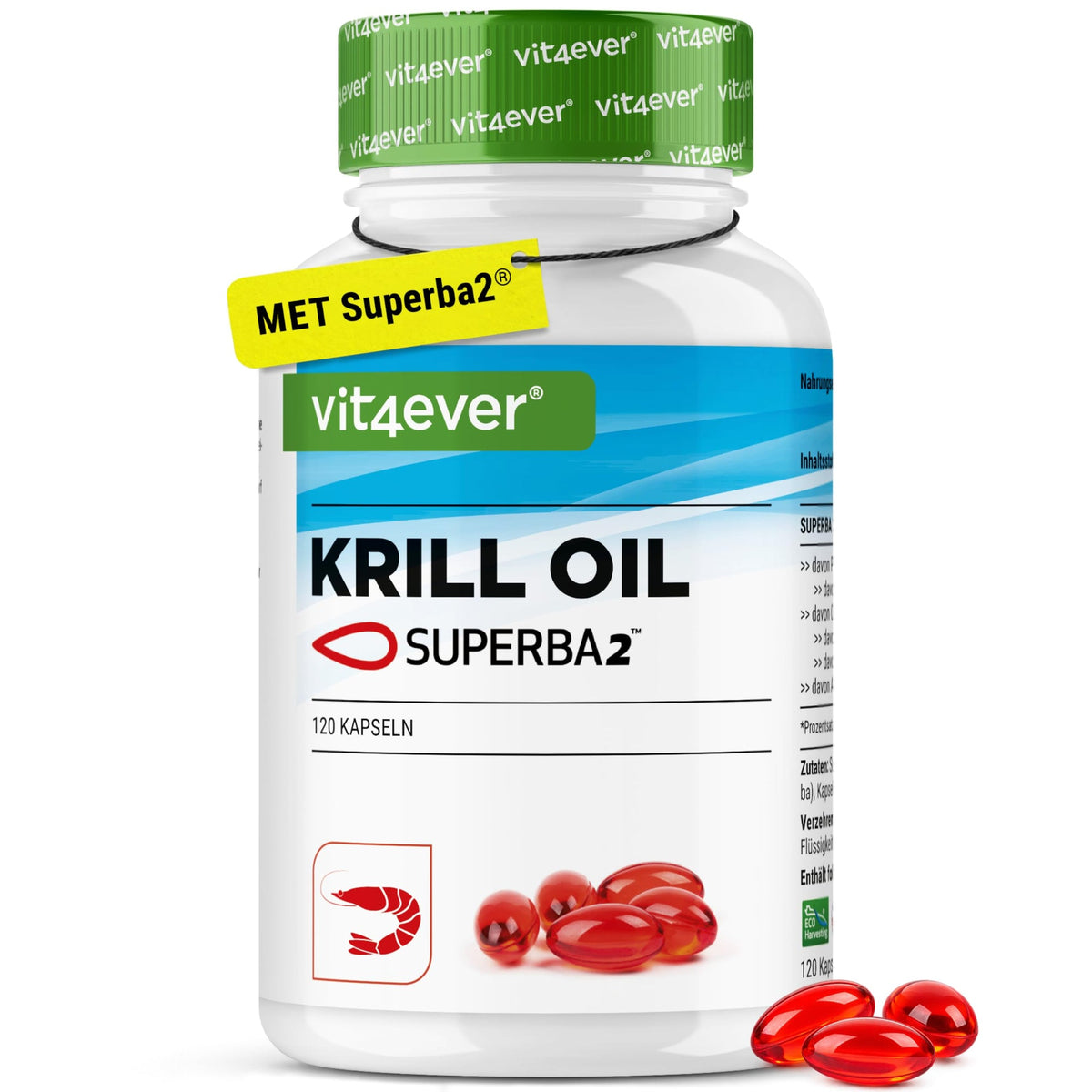
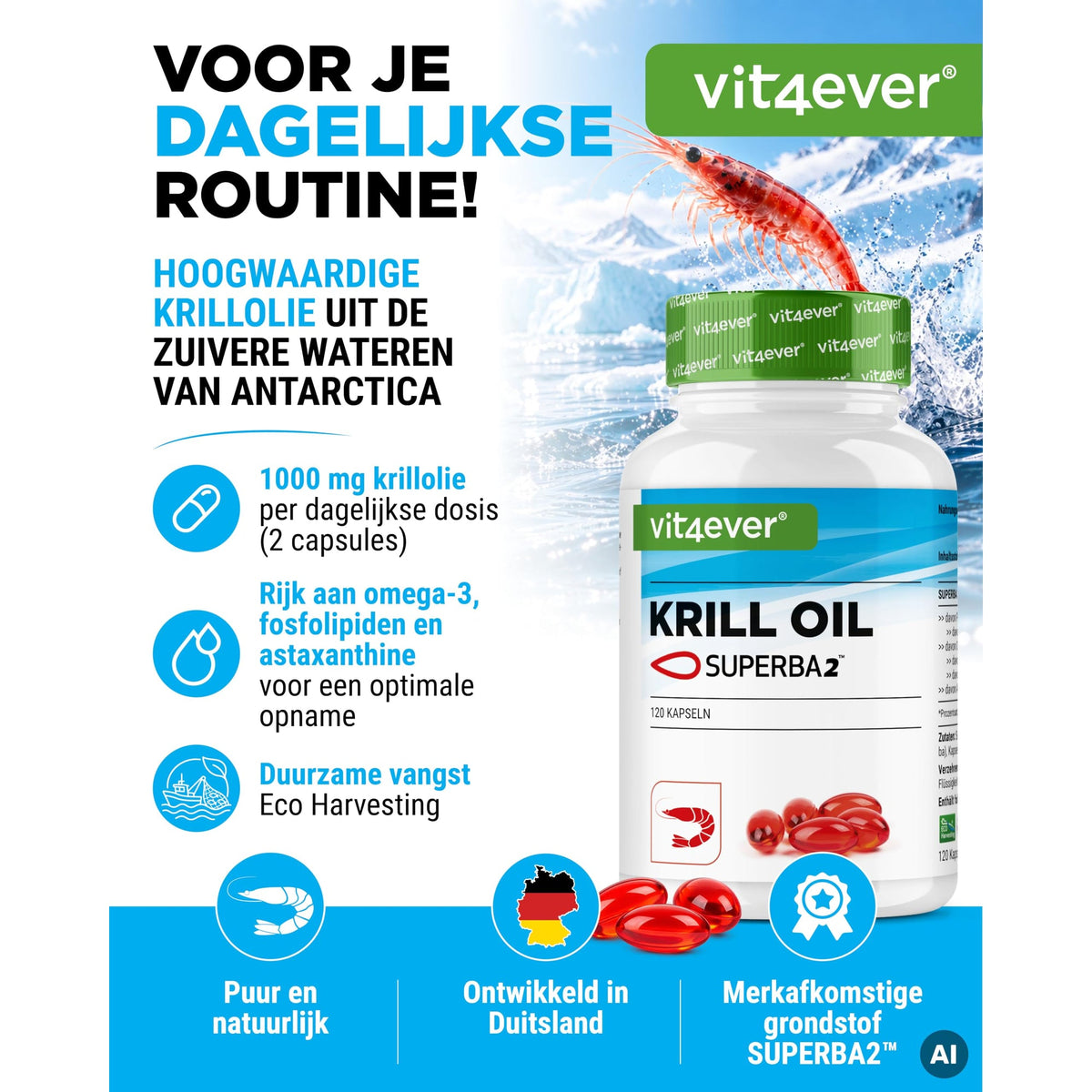
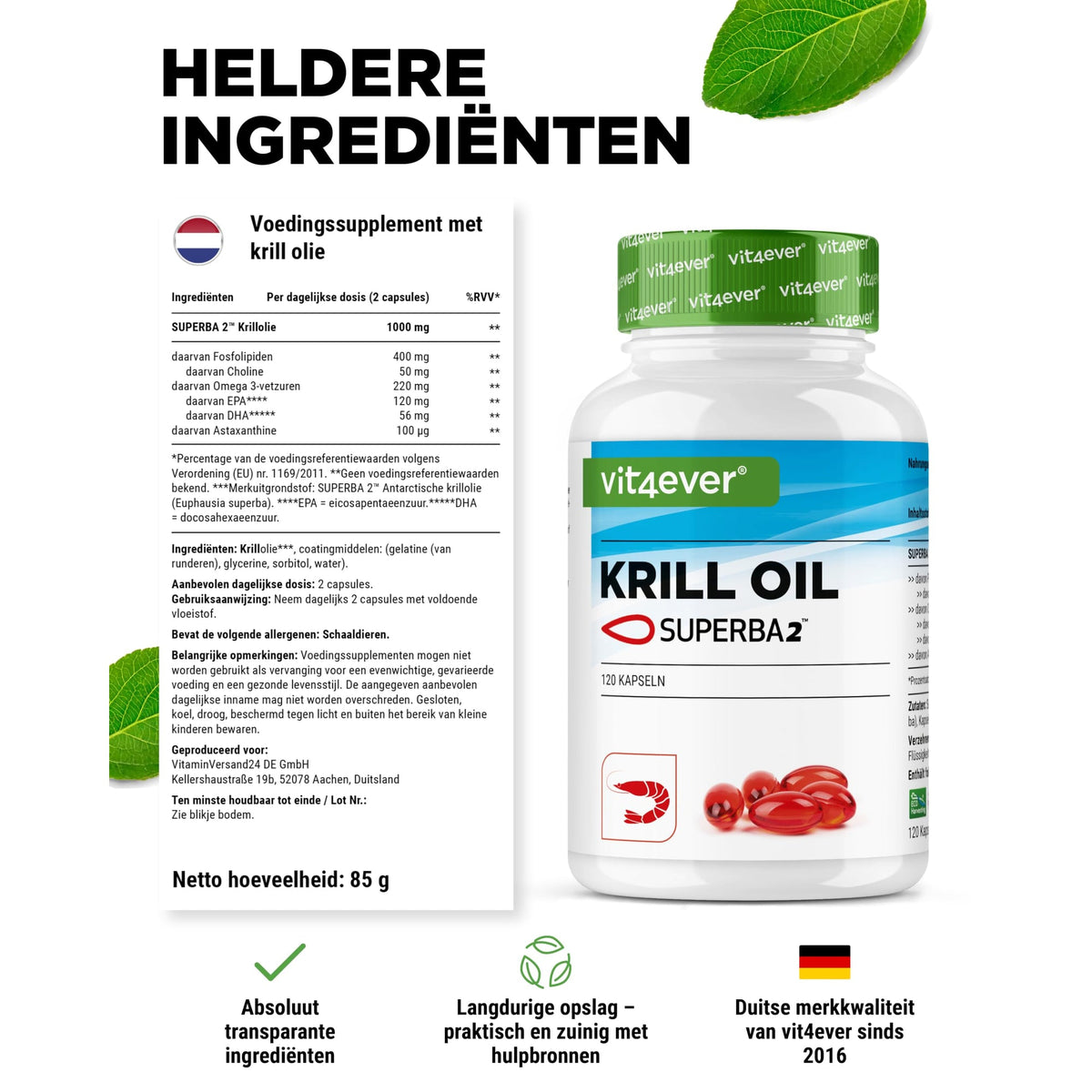
Krill oil is extracted from krill, a shrimp-like crustacean that lives in enormous swarms in the waters around Antarctica. Vit4ever uses Superba2 krill oil, with 1000 mg per daily dose of 2 softgels. Krill oil naturally contains omega 3, phospholipids and the red pigment astaxanthin. One bottle contains 120 softgels, enough for 60 days at the recommended dosage.
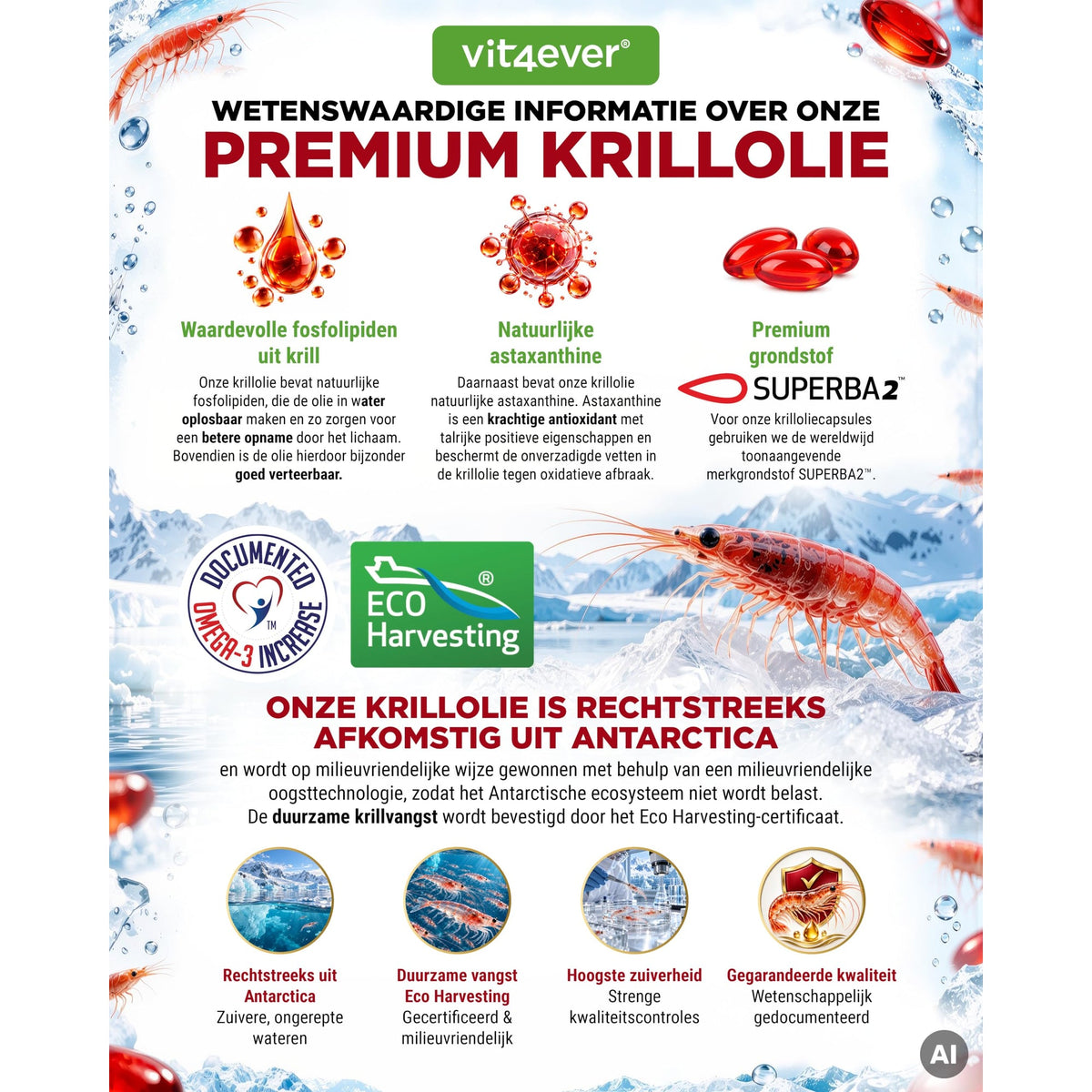
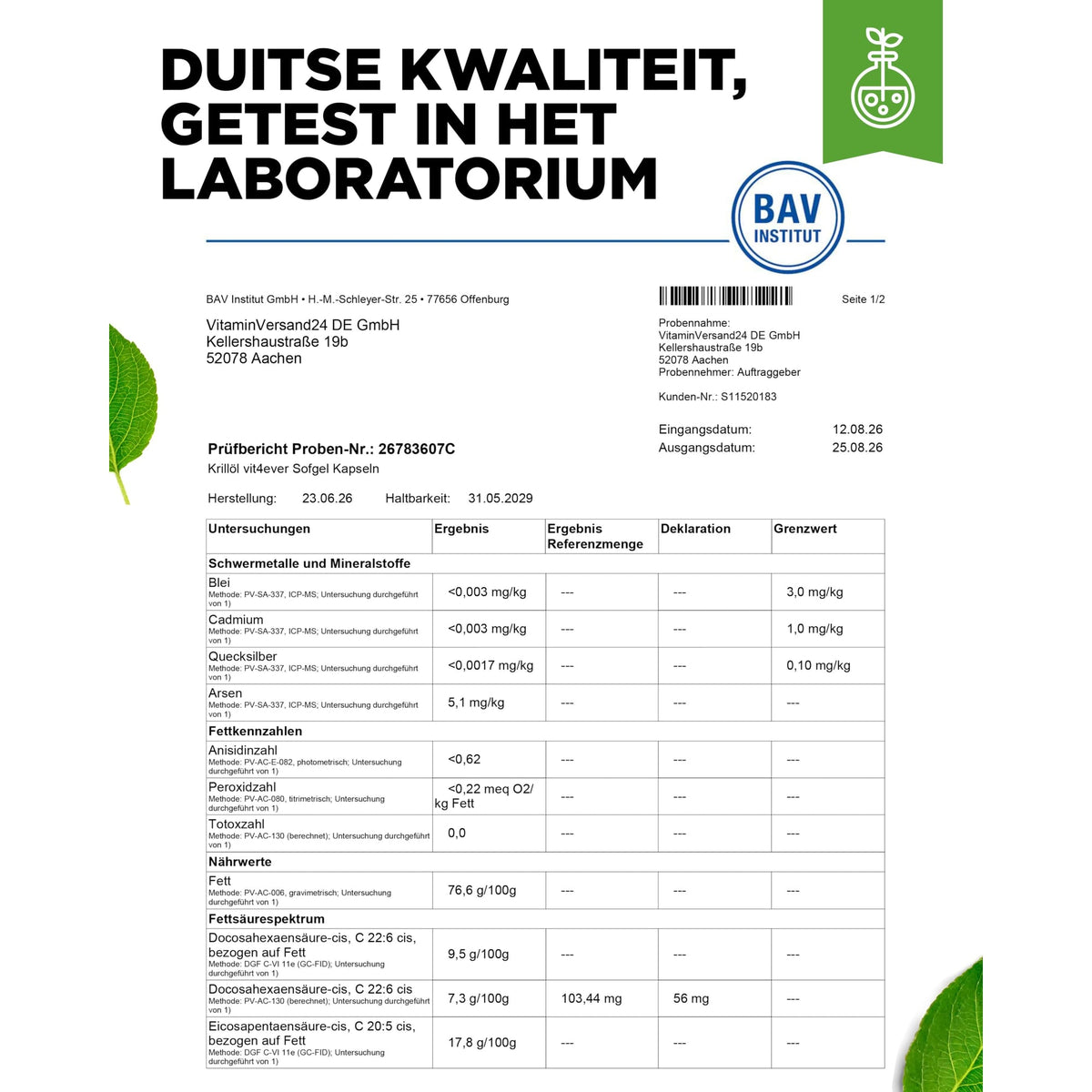
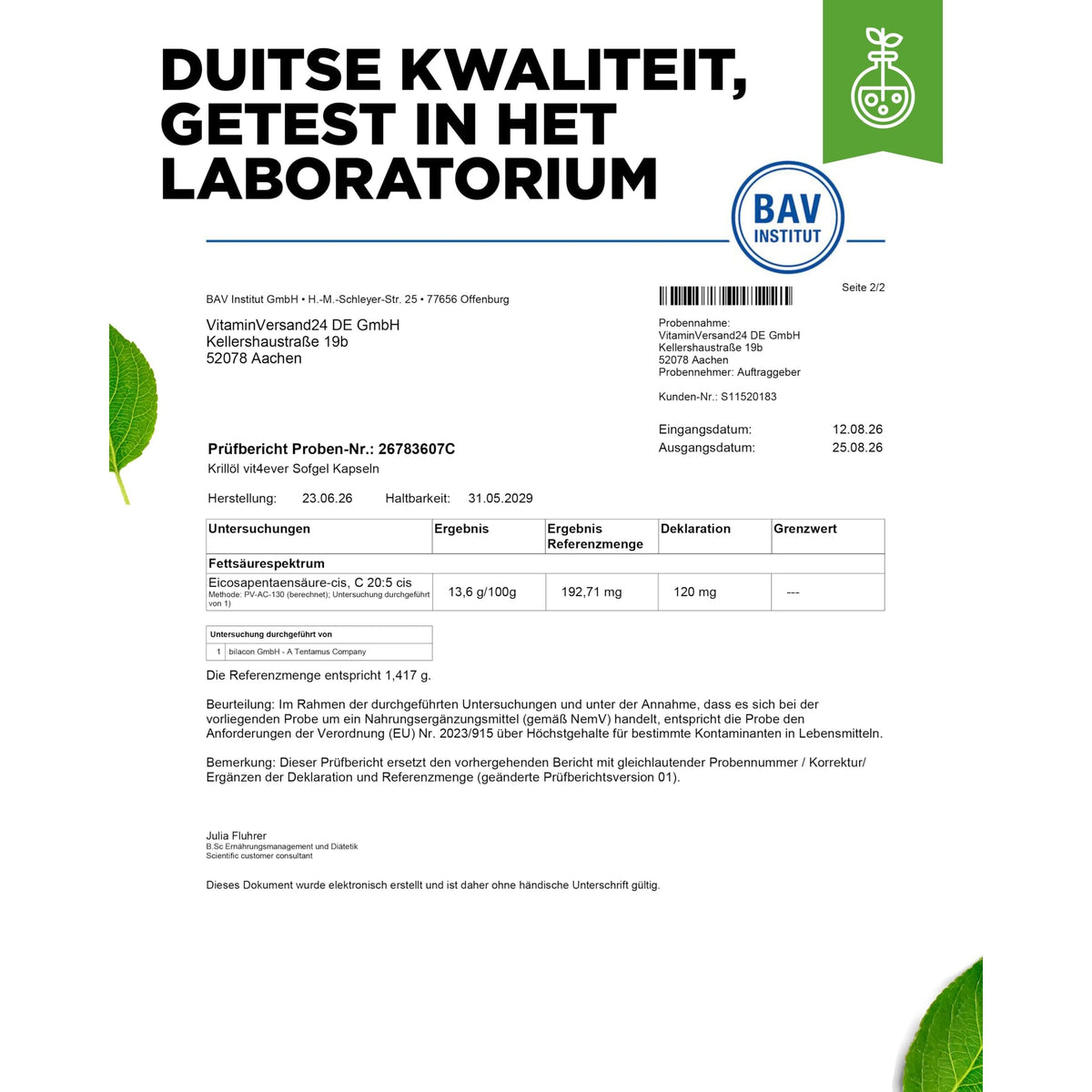
The krill oil in this product comes from sustainably caught krill (Euphausia superba) and is extracted via certified Eco Harvesting, a fishing method that limits bycatch and monitors the krill population. Krill lives low in the food chain and feeds mainly on plankton and algae. The oil is independently tested for heavy metals and other contaminants, so you know what you are taking. Krill is caught in the Antarctic region, one of the few places where fishing is still relatively new and strictly regulated by international agreements. These agreements determine, among other things, how much krill can be caught annually relative to the estimated total population, with the aim that the food chain in that area remains intact for other animals such as penguins, seals and whales that also hunt krill themselves. That makes krill a special raw material: the catch must take into account a complete ecosystem, not just its own fishery.
The difference with most fish oil supplements is the form in which the fatty acids are. In krill oil, the omega 3 fatty acids are largely bound to phospholipids, a building block that is also found in cell membranes. In fish oil, the same fatty acids are usually bound to triglycerides. A daily dose of 2 softgels provides 220 mg of omega 3, of which 120 mg is EPA and 56 mg is DHA, plus 400 mg of phospholipids of which 50 mg is choline. That makes krill oil a different approach than a concentrated fish oil supplement: the total omega 3 amount per dose is generally lower than with high-dose fish oil, while the phospholipid form and the presence of astaxanthin and choline are characteristic of krill oil. What many people do not know: phospholipids are the same building blocks from which cell membranes are made, which explains why krill oil forms a slightly different structure in water than pure fish oil, which itself mixes less well with water. In practice, you do not immediately notice that difference when taking the softgel, but it is the reason why manufacturers sometimes market krill oil separately from regular fish oil, as its own category within omega 3 supplements.
Krill oil naturally contains astaxanthin, the same pigment that gives shrimp, salmon and flamingos their color. Krill gets astaxanthin through the algae it feeds on, and stores this pigment in its tissue. A daily dose provides 100 micrograms of astaxanthin. Astaxanthin belongs to the carotenoids, the same substance group as beta-carotene, and is responsible for the pink to red color of the oil itself. That color is immediately a practical feature: where fish oil is usually light yellow to amber, you recognize krill oil by its striking red tint. Some people also taste a slightly different, less pronounced aroma than with fish oil capsules, although that naturally varies from product to product and from person to person.
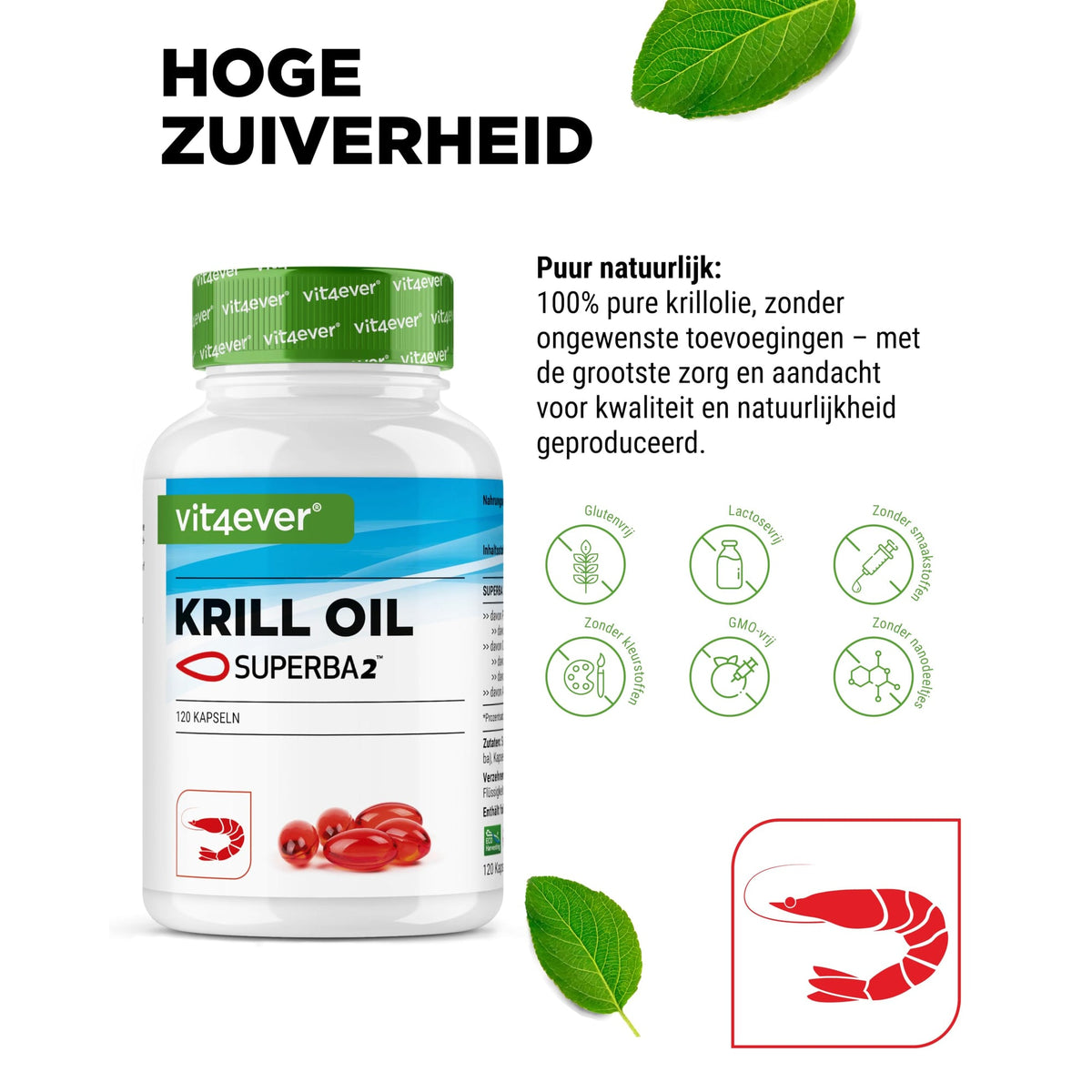
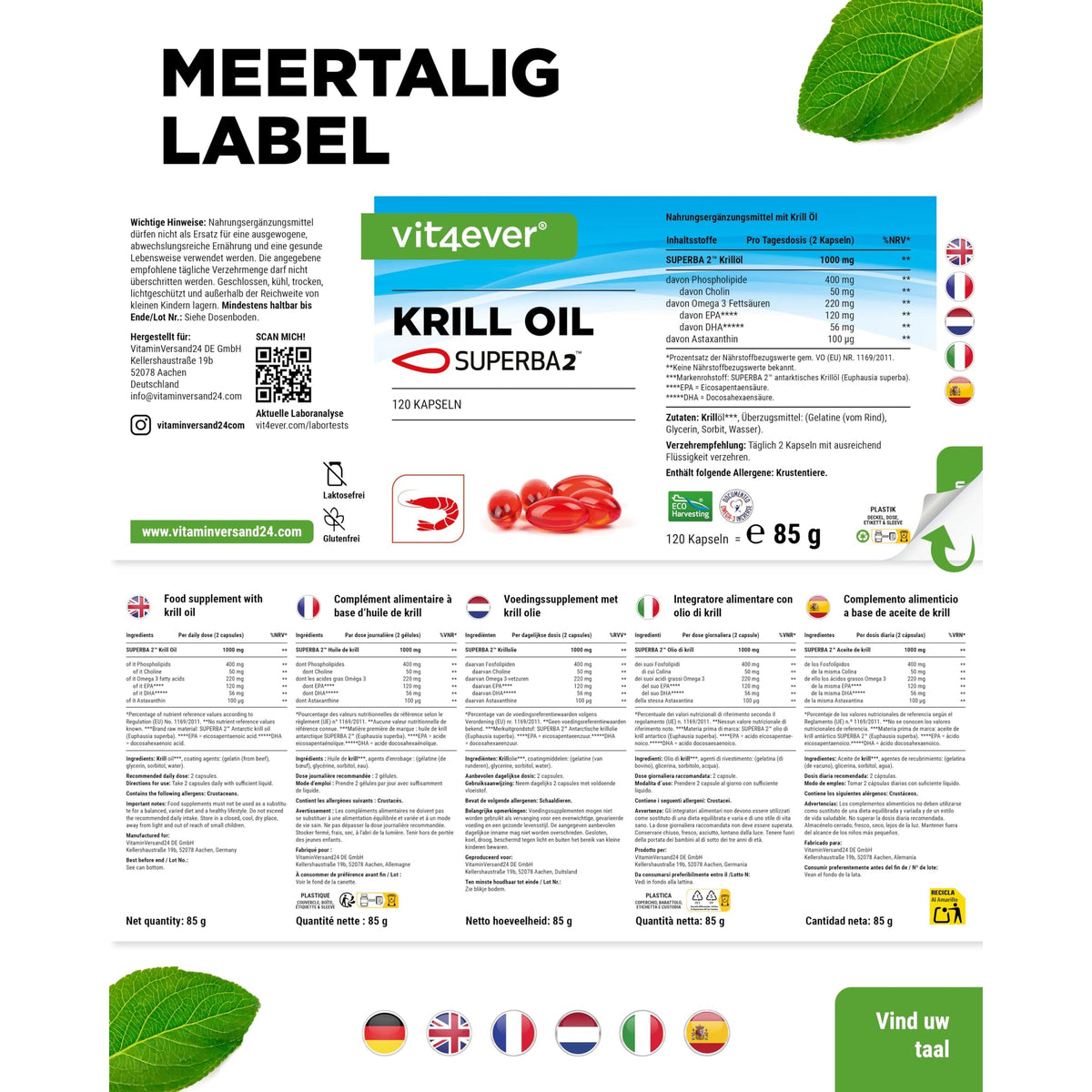
Good to know: krill oil contains crustaceans and the softgel is made of beef gelatin. This product is therefore not suitable for those who eat vegan or vegetarian, and also not for those who have a crustacean allergy. The softgel itself consists of glycerin, sorbitol and water in addition to gelatin, materials that provide the flexible, transparent capsule wall where the oil is in. For people who prefer to use a plant-based alternative, there are algae oil supplements, although their composition differs substantially from krill oil. Algae oil usually contains only DHA or a combination of DHA and EPA in triglyceride form, without the phospholipids, choline and astaxanthin that krill oil naturally brings. Every batch of this product is independently tested, so that the composition matches what is on the label and you know what is in every softgel. Two softgels per day with enough water is the recommended intake, divided or all at once, depending on what feels most comfortable for you.
A daily dose of 2 softgels provides 1000 mg of krill oil, with omega 3 largely bound to phospholipids.
100 micrograms of astaxanthin per daily dose, the red pigment krill obtain from algae.
Harvested using certified Eco Harvesting from the waters around Antarctica, tested for heavy metals.
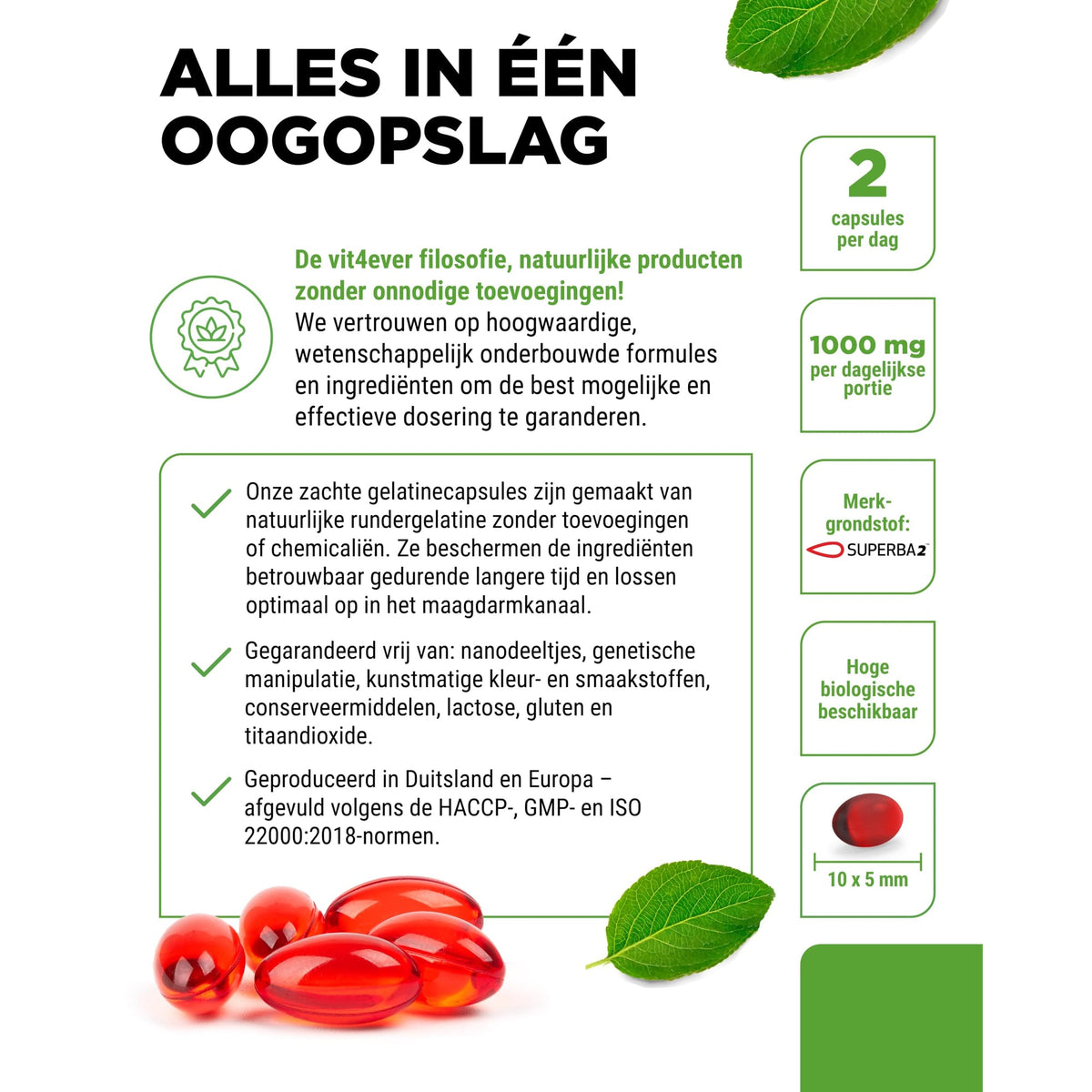
With 2 softgels per day, one jar will last you 60 days. Each batch is independently tested.
* Percentage van de referentie inname volgens Verordening (EU) Nr. 1169/2011.
** Reference intake unknown.
Response within one working day
Our customer service is open on weekdays from 09:00 to 17:00.

Krill oil is extracted from krill, a shrimp-like crustacean found in the waters around Antarctica. It naturally contains omega-3, phospholipids, and astaxanthin.
A daily dose of 2 softgels provides 1000 mg Superba2 krill oil, with 220 mg omega 3 (120 mg EPA and 56 mg DHA), 400 mg phospholipids of which 50 mg choline, and 100 micrograms astaxanthin.
In krill oil, the omega-3 fatty acids are largely bound to phospholipids, whereas in fish oil they are usually bound to triglycerides. Additionally, krill oil naturally contains astaxanthin, which fish oil does not.
Yes, krill oil contains shellfish. Do not use this product if you have a known shellfish allergy.
No, krill oil is of animal origin and the softgel is made from bovine gelatine. This product is not suitable for those on a vegan or vegetarian diet.
One pot contains 120 softgels. With the recommended 2 softgels per day, you get 60 daily doses, which means two months of use.