













































When do you take L-glutamine?
Preferably between meals, as advised on the label. This way, it does not have to compete with amino acids from a high-protein meal. Take 1 capsule, 1 to 3 times a day, with a glass of water.
Bestsellers
Bekijk allesWinkelwagen
Je winkelwagen is leeg
Out of stock.
Not valid with discount codes.
Vragen? We helpen je graag!
Chat met ons of bel 038 303 2160
Snel bezorgd
Besteld voor 17:00, morgen in huis*
Achteraf betalen
met Klarna
Kies opties
Not valid with discount codes.
Vragen? We helpen je graag!
Chat met ons of bel 038 303 2160
Snel bezorgd
Besteld voor 17:00, morgen in huis*
Achteraf betalen
met Klarna
Not valid with discount codes.
Vragen? We helpen je graag!
Chat met ons of bel 038 303 2160
Snel bezorgd
Besteld voor 17:00, morgen in huis*
Achteraf betalen
met Klarna
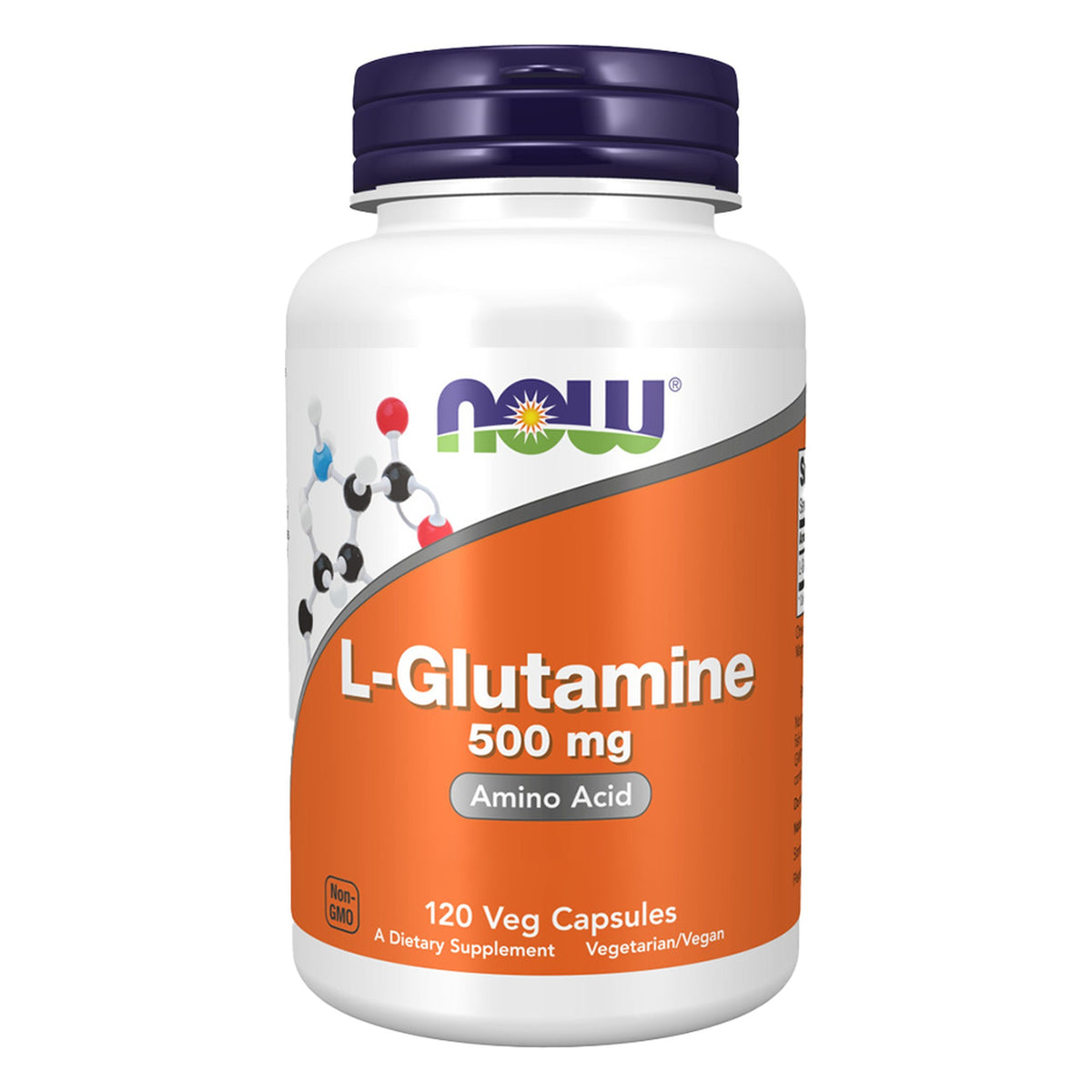
This bottle contains 120 plant-based capsules, each containing 500mg of free-form L-glutamine. No powder to weigh out and dissolve, but a capsule you can take with a sip of water. The label recommends 1 capsule 1 to 3 times a day. Depending on how often you take one, a bottle will last six weeks to four months.
Glutamine is the amino acid (a building block of protein) that is most abundant in your blood and muscles. About 60% of the free amino acids in your skeletal muscles is glutamine. Your body produces it itself, largely in those muscles, from glutamic acid and ammonia. In addition, you get it through protein-rich foods such as meat, fish, eggs, dairy, tofu, and legumes. An average diet provides about 3 to 6 grams per day. By the way, some of the glutamine in food is lost during heating. The L in L-glutamine stands for the left-handed form, the variant that occurs in nature and in your own proteins. Free form means that the amino acid is loose, so not fixed in a protein chain.
Many people wonder why glutamine in particular is mentioned so often. The answer: it is one of the busiest molecules in your metabolism. Glutamine has two nitrogen atoms, and that makes it an ideal carrier of nitrogen between your organs. Your muscles release it into your blood, and other tissues pick it up again. In addition, glutamine is a raw material for glutathione, for nucleotides (the building blocks of DNA), and for other amino acids. And your kidneys use it to keep the acidity of your blood in balance. In short: glutamine is less of a specialist and more of an all-rounder that stops by everywhere.
The difference between glutamine in capsules and glutamine as powder lies mainly in the amount per time. In sports circles, glutamine is often used in doses of 5 grams or more, and then powder is more practical. If you want a small, fixed amount, without taste or hassle with measuring spoons, then capsules are easier. With 500mg per capsule, you dose exactly, from 500 to 1500mg per day. The label recommends taking the capsules preferably between meals. Good to know: glutamine is one of the less stable amino acids. In a damp environment or dissolved in water, it slowly breaks down. That is why there is a small amount of ascorbyl palmitate in this capsule, an antioxidant that protects the contents. Store the bottle in a cool, dry place after opening.
NOW Foods makes this glutamine in the United States according to GMP guidelines (Good Manufacturing Practice). The capsule is made of hypromellose, a plant-based cellulose, and the formula is not produced with wheat, gluten, soy, milk, egg, or nuts. Anyone looking for L-glutamine in a simple, measured form has a neat bottle with these 120 capsules at home.
Precisely measured, without a measuring scoop. You choose between 500 and 1500mg per day.
Glutamine degrades slowly in the presence of moisture. A small amount of ascorbyl palmitate keeps the contents of the capsule stable.
With 120 capsules and 1 per day, you have a four-month supply. At 3 per day, that lasts six weeks.
The capsule is plant-based. Wheat, gluten, soy, milk, egg, nuts and sesame are not used.
* Percentage van de referentie inname volgens Verordening (EU) Nr. 1169/2011.
** Reference intake unknown.
Response within one working day
Our customer service is open on weekdays from 09:00 to 17:00.

Preferably between meals, as advised on the label. This way, it does not have to compete with amino acids from a high-protein meal. Take 1 capsule, 1 to 3 times a day, with a glass of water.
An average diet provides about 3 to 6 grams of glutamine per day. Meat, fish, eggs, dairy, tofu, and legumes are the main sources. These capsules give you an extra 500 to 1500mg, separate from your meals.
No. Glutamate (glutamic acid) is a different amino acid, and in the form of monosodium glutamate, you know it as a flavor enhancer. Glutamine has an extra nitrogen group. Your body can convert one into the other, but they are two different molecules.
Capsules are especially convenient if you want a small, fixed amount. You don't have to weigh anything, there is no taste, and you can take them anywhere. If you want large servings of several grams, powder is the better choice. So it all depends on how you want to use glutamine.
Glutamine is a nitrogen carrier between your organs and the most common free amino acid in your muscles. It also serves as a raw material for glutathione and for the building blocks of DNA. Your kidneys use glutamine to regulate the acidity of your blood.
L-glutamine is the free amino acid. Glutamine peptides are short protein fragments in which glutamine is bonded to other amino acids, often derived from wheat. They are more stable in liquid, but may contain gluten. This capsule contains only free L-glutamine, not produced with wheat or gluten.