













































How much L-lysine per day?
The label recommends 1 tablet 1 to 2 times a day. That is 1000 to 2000mg of L-lysine per day. Stay within that amount; do not exceed the recommended daily dose.
Bestsellers
Bekijk allesWinkelwagen
Je winkelwagen is leeg
In stock. Order today, delivered Monday by PostNL.
Not valid with discount codes.
Vragen? We helpen je graag!
Chat met ons of bel 038 303 2160
Snel bezorgd
Besteld voor 17:00, morgen in huis*
Achteraf betalen
met Klarna
Kies opties
Not valid with discount codes.
Vragen? We helpen je graag!
Chat met ons of bel 038 303 2160
Snel bezorgd
Besteld voor 17:00, morgen in huis*
Achteraf betalen
met Klarna
Not valid with discount codes.
Vragen? We helpen je graag!
Chat met ons of bel 038 303 2160
Snel bezorgd
Besteld voor 17:00, morgen in huis*
Achteraf betalen
met Klarna
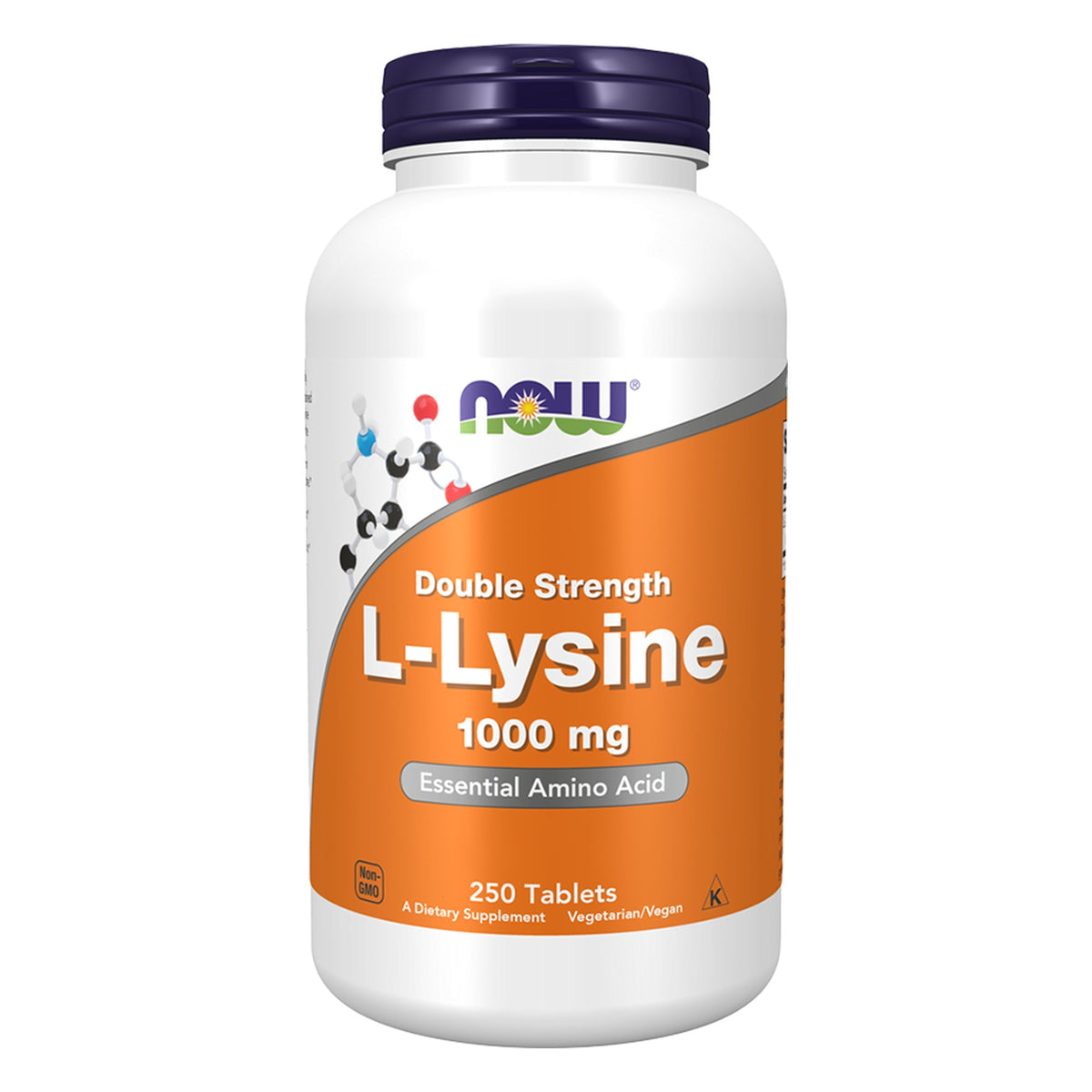
This is the double strength of NOW Foods: 1000mg L-lysine per tablet, twice as much as their standard 500mg version. And in a bottle of 250 tablets. If you take one a day, you have a supply for over eight months. For those who use lysine regularly and don't want to take two capsules at a time, this is the most practical form.
Lysine is one of the nine essential amino acids. This means that your body cannot make it itself: everything you need must come from your diet. Good sources are meat, fish, eggs, dairy, soy, lentils, and chickpeas. Grains, on the other hand, are low in lysine. What many people do not know: in rice, wheat, and corn, lysine is the amino acid that runs out first. Nutritionists call that the limiting amino acid. With a plant-based diet, combining grains with beans and lentils is therefore not for nothing such a well-known piece of advice. According to the WHO, an adult needs about 30mg of lysine per kilogram of body weight per day. For someone weighing 70 kilos, that is over 2 grams. With a varied diet, you usually meet that.
Many people wonder what lysine is actually for. First of all, it is a building block of proteins, just like the other amino acids. But lysine has a few special roles. In collagen, lysine units are modified into hydroxylysine after incorporation. This modified lysine forms cross-links between collagen fibers, a bit like the rungs of a ladder. In addition, lysine, together with methionine, is the raw material from which your liver and kidneys make carnitine. And lysine uses partly the same transporters in your cells as arginine. In short: the ratio between lysine and arginine in your diet determines how much of each your cells let in. That explains why lysine and arginine are so often mentioned in the same breath.
In this tablet, lysine is in the form of L-lysine hydrochloride. That is the salt form of lysine: stable, highly soluble, and the form that is used in almost all lysine supplements. The label already calculates back to pure lysine, so you really get 1000mg of L-lysine per tablet. The label recommends 1 tablet 1 to 2 times a day, so 1000 to 2000mg. Good to know: because this is the double strength, you get the same amount from one tablet as from two capsules of the 500mg variant. The tablet has a plant-based coating, so it slides down smoothly despite its size. If you also take an arginine supplement besides lysine, spread them out over the day, because they compete for the same absorption pathway.
NOW Foods makes these tablets in the United States according to GMP guidelines (Good Manufacturing Practice). Wheat, gluten, soy, milk, egg, fish, and nuts are not used in production. A large bottle with 1000mg of L-lysine per tablet.
Twice the standard 500mg dose. One tablet is enough where you would otherwise need two capsules.
With 1 tablet per day, one bottle lasts over eight months.
The plant-based coating makes the tablet smooth, so that even this size slides down easily.
Egg, fish, shellfish and nuts are also not used in production.
* Percentage van de referentie inname volgens Verordening (EU) Nr. 1169/2011.
** Reference intake unknown.
Response within one working day
Our customer service is open on weekdays from 09:00 to 17:00.

The label recommends 1 tablet 1 to 2 times a day. That is 1000 to 2000mg of L-lysine per day. Stay within that amount; do not exceed the recommended daily dose.
Meat, fish, eggs, dairy, soy and legumes such as lentils and chickpeas. Grains such as rice, wheat and corn, on the other hand, contain little lysine. People who eat a lot of grain products therefore get relatively less lysine.
The label does not specify a particular time. Many people take the tablet between meals with a glass of water, so that lysine does not compete with other amino acids. If you also take arginine, take it at a different time.
It is a large tablet, but it has a smooth plant-based coating. This makes it much easier to swallow. If you still find it difficult, the 500mg capsule is an alternative; however, you will need two of those for the same dose.
Humans lack the enzymes needed to build the carbon chain of lysine. Plants, fungi, and bacteria do have them. That is why lysine is an essential amino acid: everything your body uses comes from your diet or from a supplement.
L-lysine hydrochloride is the salt form of L-lysine, combined with hydrochloric acid. This form is more stable and dissolves well. Approximately 80% of the weight is pure lysine. The label of this tablet already states the amount of pure lysine: 1000mg.