













































What does l-theanine do in your body?
L-theanine is an amino acid found in tea leaves. Your body does not use it to build proteins. In terms of structure, it resembles glutamate. There are no authorized EU health claims for theanine.
Bestsellers
Bekijk allesWinkelwagen
Je winkelwagen is leeg
In stock. Order today, delivered Monday by PostNL.
Not valid with discount codes.
Vragen? We helpen je graag!
Chat met ons of bel 038 303 2160
Snel bezorgd
Besteld voor 17:00, morgen in huis*
Achteraf betalen
met Klarna
Kies opties
Not valid with discount codes.
Vragen? We helpen je graag!
Chat met ons of bel 038 303 2160
Snel bezorgd
Besteld voor 17:00, morgen in huis*
Achteraf betalen
met Klarna
Not valid with discount codes.
Vragen? We helpen je graag!
Chat met ons of bel 038 303 2160
Snel bezorgd
Besteld voor 17:00, morgen in huis*
Achteraf betalen
met Klarna
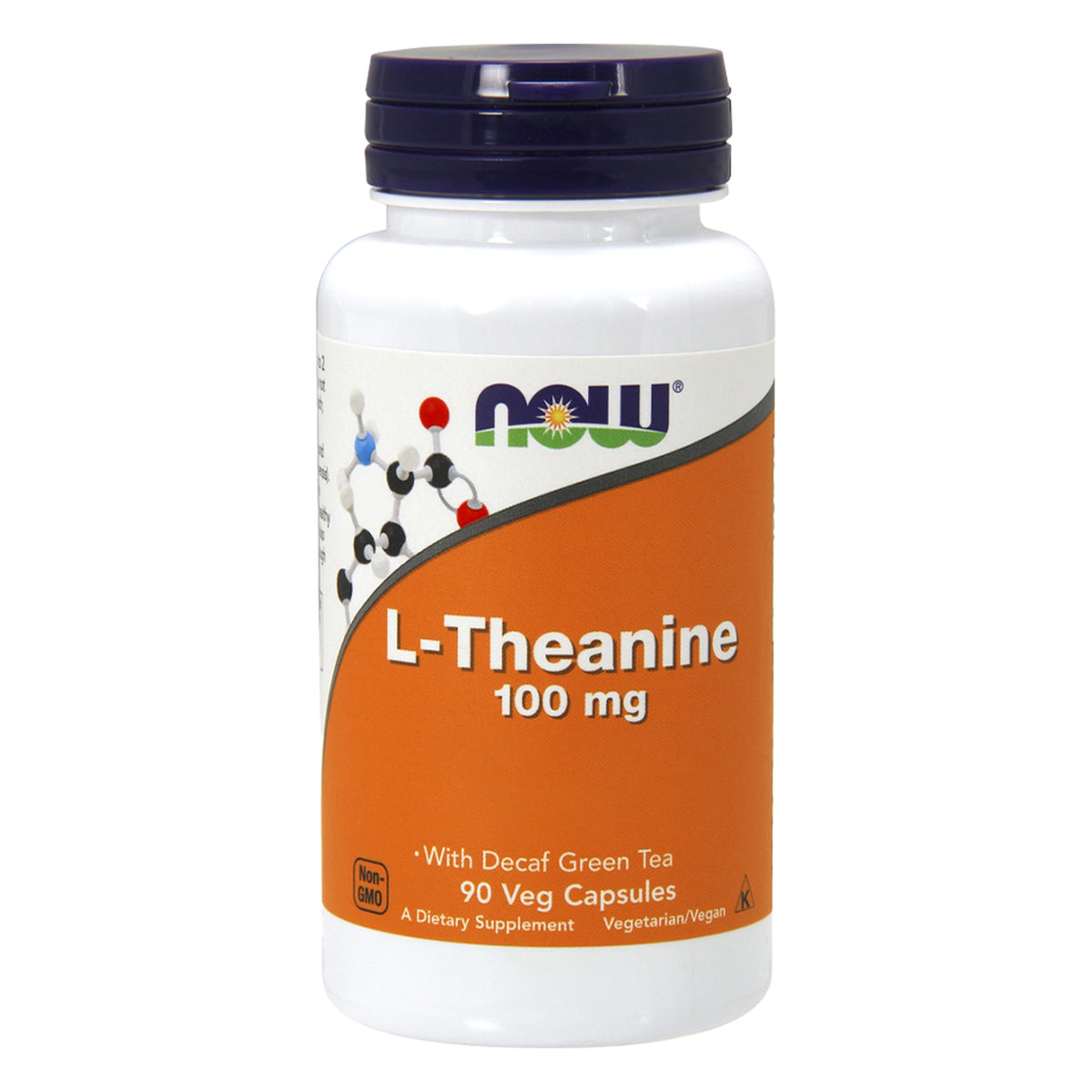
Do you like drinking green tea, but prefer it without the caffeine? Then this is an interesting capsule. Each capsule contains 100mg of l-theanine, the amino acid that occurs naturally in tea leaves, plus 250mg of decaffeinated green tea leaf.
L-theanine is an amino acid (a small molecule from the family of protein building blocks) that you mainly find in the tea plant Camellia sinensis. Green tea contains a relatively large amount of it, but an average cup only provides about 8 to 30mg. What many people do not know: your body does not use theanine to build proteins. In terms of shape, it looks very similar to glutamate, a signaling substance that your nerve cells use to transmit stimuli. The molecule itself has not been known for very long, however. Japanese researchers isolated it in 1949 from the leaves of gyokuro, an expensive shade-grown tea. Since then, theanine has been a familiar ingredient in beverages and confectionery in Japan.
NOW Foods combines the amino acid with 250mg of ground green tea leaf from which the caffeine has been removed. The difference lies in the rest of the leaf. In addition to theanine, tea leaves also contain polyphenols such as catechins, plant substances that give green tea its typical, slightly bitter taste. By adding the leaf itself, you get something of the whole and not just a single amino acid. Because the leaf is decaffeinated, the amount of caffeine per capsule remains negligible. This also makes the capsule usable later in the day, or for people who react sensitively to coffee and tea. Good to know: shade-grown tea such as matcha contains more theanine than regular green tea. The plant is placed in the shade just before harvest, and with less sunlight, the leaf converts less theanine into catechins.
Each capsule contains 100mg of theanine. According to the label, you take 1 capsule, 1 to 2 times per day, with a meal. Compared to regular tea, the difference is large. For 100mg, you would quickly have to drink four to ten cups of green tea, including all the caffeine that comes with it. And that is exactly what this capsule saves you.
NOW Foods is an American family business that has been making supplements and testing raw materials in its own laboratories since 1968. This capsule is simply composed: the two main ingredients, a cellulose capsule, rice flour as a filler, and small amounts of magnesium stearate and silicon dioxide, so that the powder flows smoothly in the capsule. Now makes this product without wheat, gluten, soy, milk, egg, fish, or nuts. Production is carried out according to GMP, which stands for Good Manufacturing Practice: an international quality standard for production processes. By the way, the rice flour is simply finely ground rice, which only serves to fill every capsule evenly.
This way you get theanine as it occurs in tea leaves, in a measured amount and without the caffeine from your daily cups. A simple formula with a clear origin, and a dosage that you build up yourself.
You get the free amino acid and the leaf it naturally occurs in. This way, each capsule combines a fixed dose of theanine with the other compounds found in green tea.
The tea leaves are made caffeine-free beforehand. This means the capsule is also suitable for the afternoon or evening, and for people who prefer to avoid caffeine.
With 100mg per capsule, you choose between 100 and 200mg per day. A bottle therefore lasts 45 to 90 days.
The capsule is plant-based and Now makes the product without wheat, gluten, soy, milk or egg, in a GMP-certified factory.
* Percentage van de referentie inname volgens Verordening (EU) Nr. 1169/2011.
** Reference intake unknown.
Response within one working day
Our customer service is open on weekdays from 09:00 to 17:00.

L-theanine is an amino acid found in tea leaves. Your body does not use it to build proteins. In terms of structure, it resembles glutamate. There are no authorized EU health claims for theanine.
Quickly: the highest concentration in your blood usually occurs 30 to 60 minutes after ingestion. Take the capsule with a meal, as Now recommends.
Yes, the manufacturer recommends 1 to 2 capsules daily with a meal. Do not exceed this maximum. If you are taking medication, have a liver condition, or are pregnant, consult your doctor first.
The label recommends 1 capsule, 1 to 2 times a day, with a meal. That is 100 to 200mg of theanine per day.
No, not in significant amounts. The green tea leaves are made caffeine-free beforehand. L-theanine itself is not a stimulant but an amino acid, so you do not get the caffeine that is in a cup of tea.
L-theanine is a single amino acid. People usually choose green tea extract for the catechins (plant compounds such as EGCG), and it often also contains caffeine. This capsule is somewhere in between: a fixed dose of theanine with a small amount of decaffeinated tea leaves. If you are looking for a high dose of catechins, a standardized extract is a different product.