


































What exactly is gamma-linolenic acid (GLA)?
GLA is a polyunsaturated omega-6 fatty acid that your body does not produce on its own. It is found in few food sources. Evening primrose oil is one of the best-known sources.
Bestsellers
Bekijk allesWinkelwagen
Je winkelwagen is leeg
In stock. Order today, delivered Monday by PostNL.
Not valid with discount codes.
Vragen? We helpen je graag!
Chat met ons of bel 038 303 2160
Snel bezorgd
Besteld voor 17:00, morgen in huis*
Achteraf betalen
met Klarna
Kies opties
Not valid with discount codes.
Vragen? We helpen je graag!
Chat met ons of bel 038 303 2160
Snel bezorgd
Besteld voor 17:00, morgen in huis*
Achteraf betalen
met Klarna
Not valid with discount codes.
Vragen? We helpen je graag!
Chat met ons of bel 038 303 2160
Snel bezorgd
Besteld voor 17:00, morgen in huis*
Achteraf betalen
met Klarna
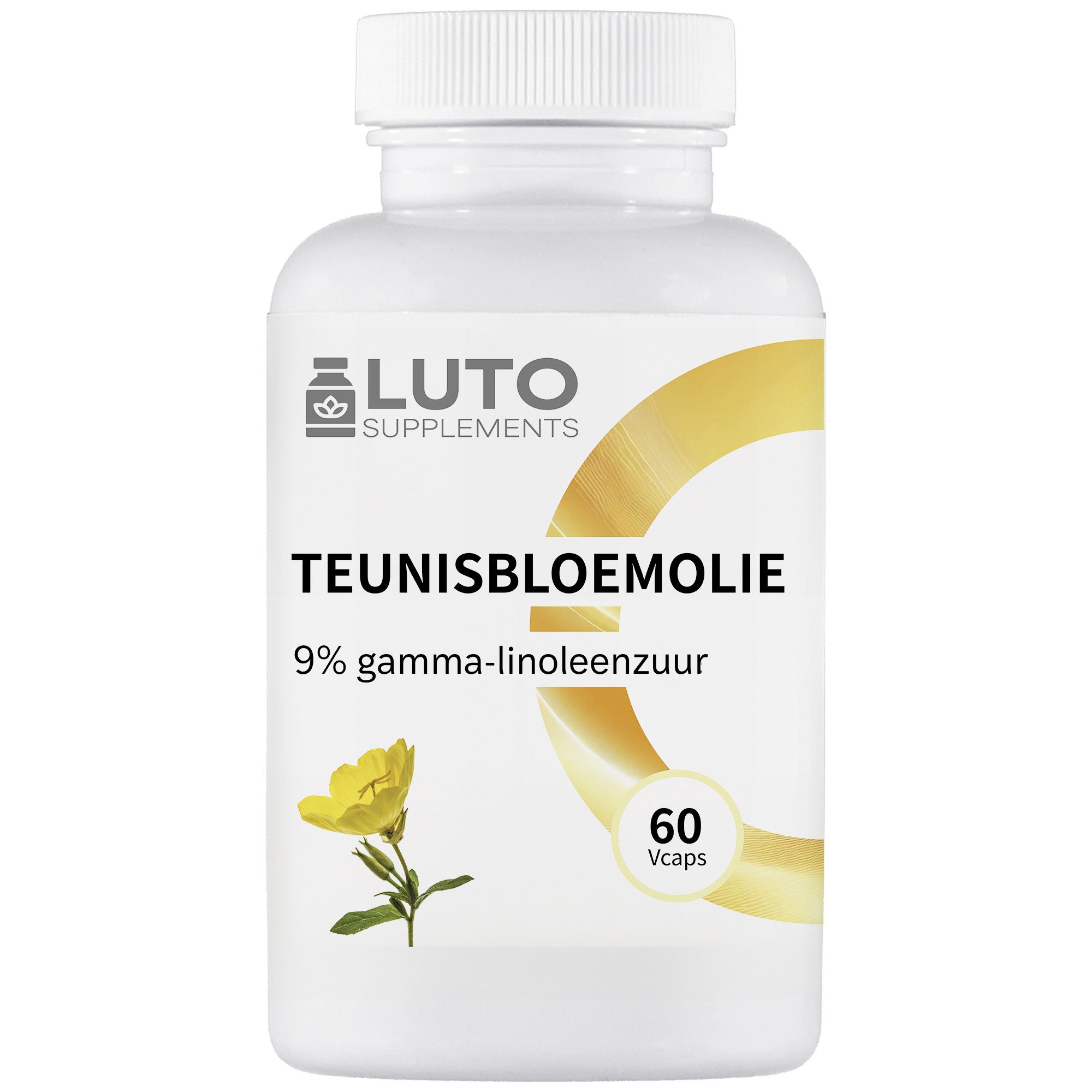
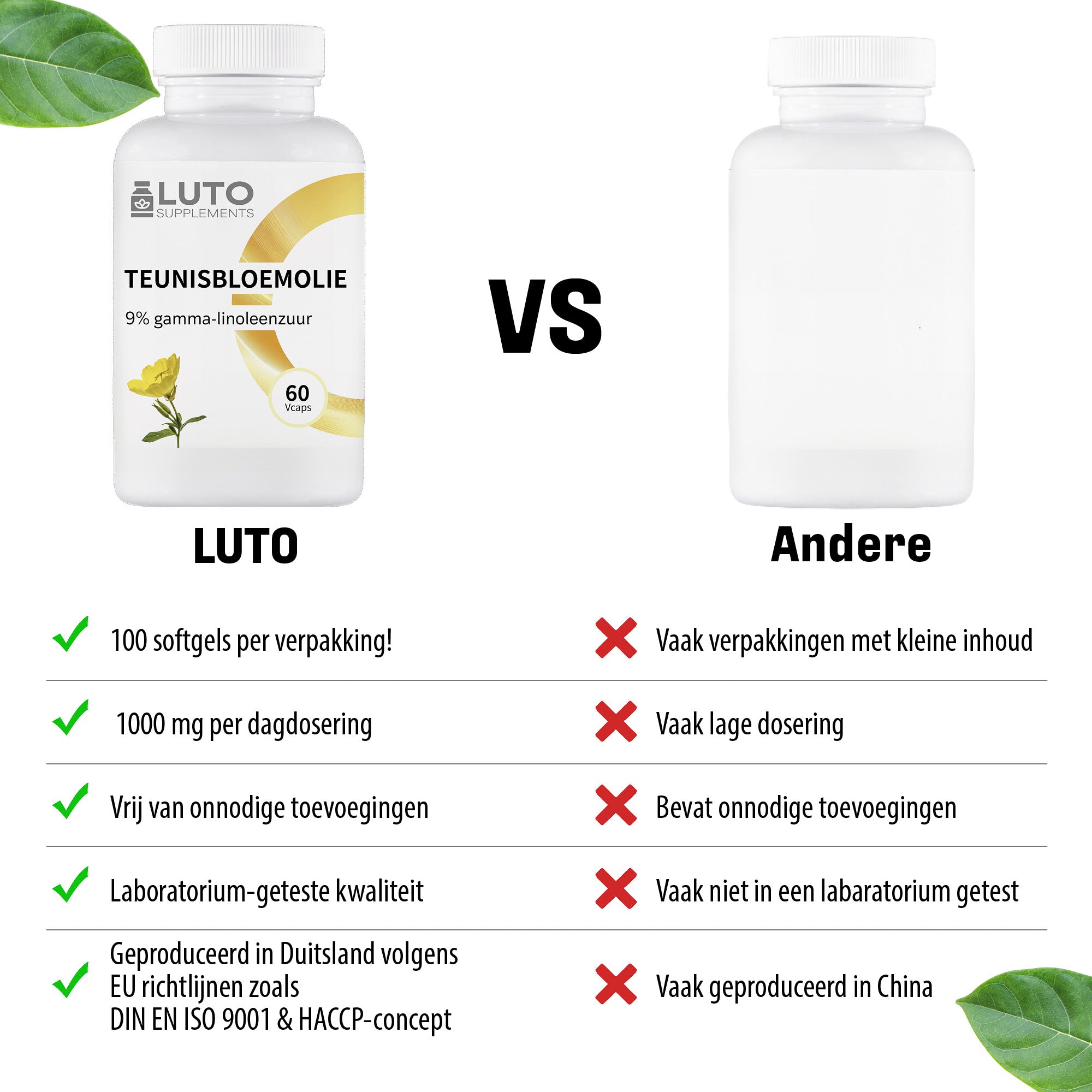
Looking for evening primrose oil in softgel form? These softgels from LUTO Supplements contain 1000 mg of cold-pressed evening primrose oil per two capsules, extracted from evening primrose seeds. This contains, among other things, gamma-linolenic acid (GLA), an omega 6 fatty acid that your body does not produce itself. Each package contains 60 softgels, enough for at least two weeks of use.
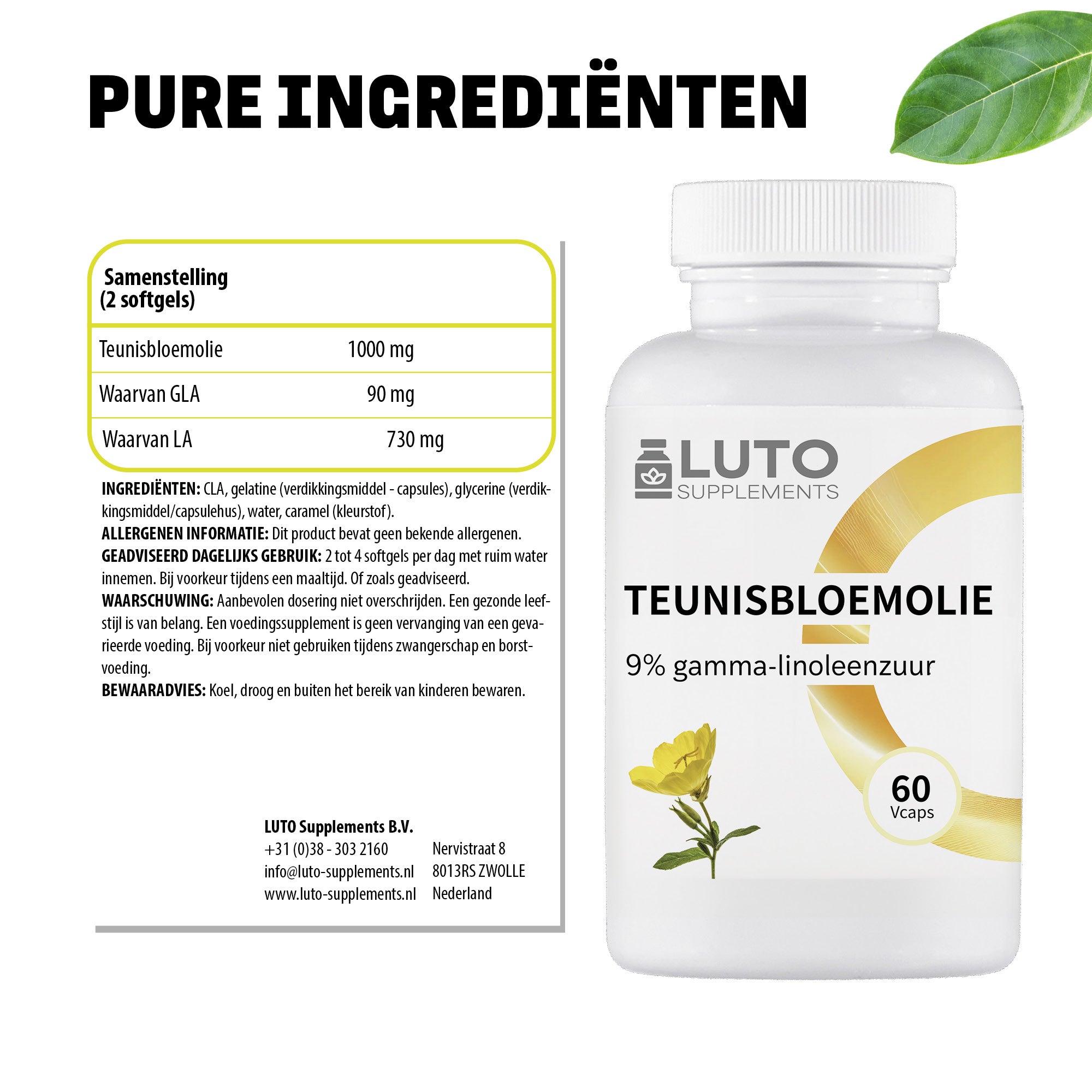
Evening primrose oil is not an isolated substance. It is a natural oil with a complete fatty acid profile. The two most important fatty acids in it are linoleic acid (LA) and gamma-linolenic acid (GLA). Linoleic acid is an important omega 6 fatty acid that you must obtain through your diet. It is also found in nuts, seeds, and vegetable oils. GLA is more unusual. This fatty acid is found in far fewer food sources. Evening primrose oil is one of the few sources of GLA. Every two softgels contain 730 mg of linoleic acid and 90 mg of GLA in this product. The GLA content is 9% of the total oil.
In the body, linoleic acid can be converted into GLA, and GLA then into DGLA (dihomo-gamma-linolenic acid). Evening primrose oil contains both linoleic acid and GLA.
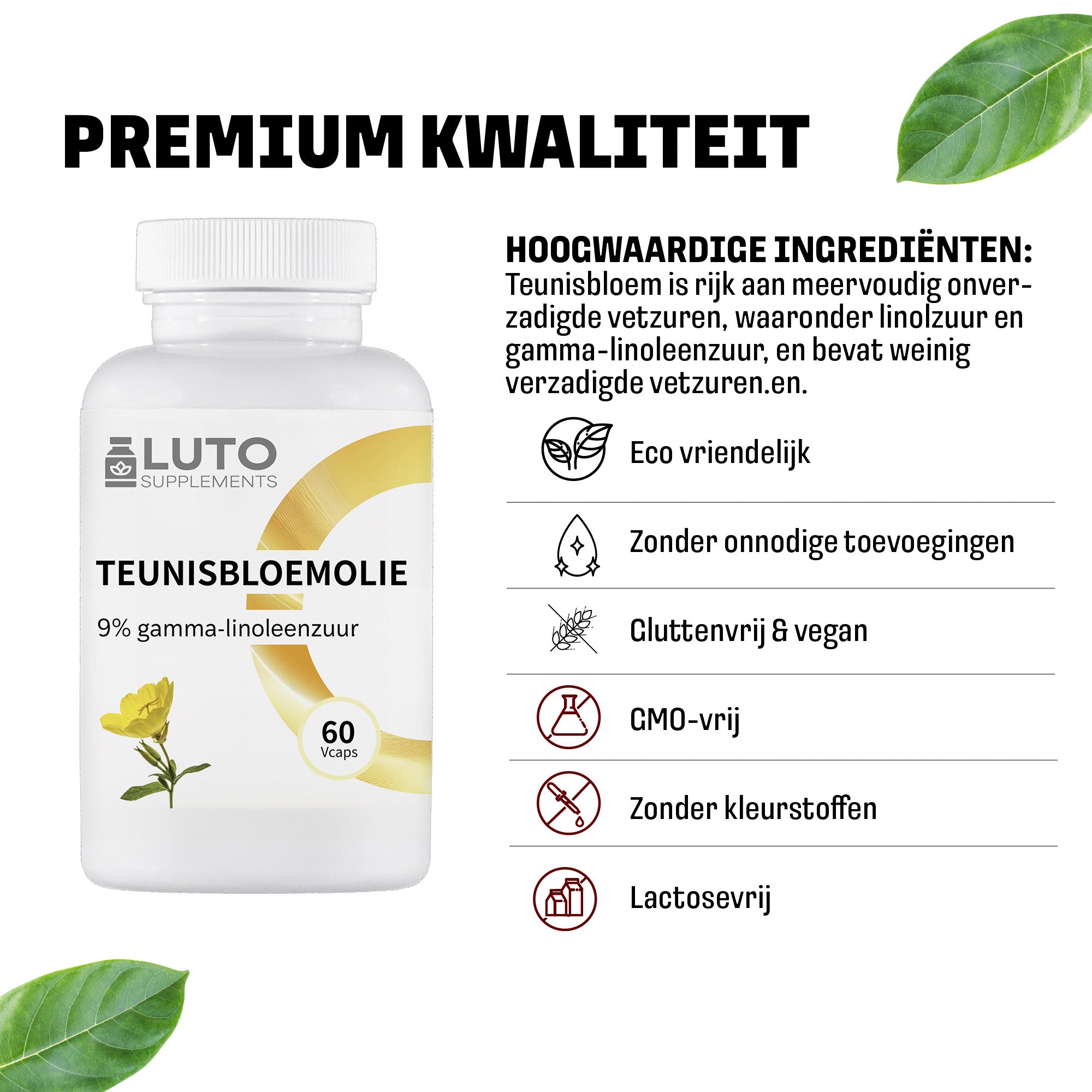
LUTO Supplements uses cold-pressed evening primrose oil. This means that the oil is pressed from the seeds without heating, which keeps the fatty acid structure intact. Fatty acids are sensitive to heat. The oil is in a softgel made of gelatin and glycerin. According to the recommended use, you should preferably take the softgels during a meal. By the way, the softgels contain only water and a little caramel as a coloring agent. No artificial fragrances or flavorings.
Evening primrose oil is not the only source of GLA. Borage oil (burdock oil), for example, contains more GLA per gram of oil, sometimes as much as 20 to 24 percent. Evening primrose oil contains 9% GLA, which is lower. Yet many people consciously choose evening primrose oil. The reason? The fatty acid profile is broader and the oil has a long tradition of use. With 90 mg of GLA per two softgels, the dosage in this product is modest. Do you want more GLA per day? Then you can increase the intake to four capsules, which provides 180 mg of GLA. As a daily supplement to your diet, it is a manageable amount.
This evening primrose oil from LUTO Supplements is a simple, clean product. No long list of additives, no complicated formula. Just cold-pressed oil from evening primrose in a softgel. For those who want to specifically add GLA to their diet, it is an accessible choice with a clear fatty acid profile.
The evening primrose oil in these softgels is cold-pressed from the seeds of Oenothera biennis. This means that no heat is involved in the pressing process, which ensures that the structure of the fatty acids remains intact. Fatty acids are sensitive to heat.
Per two softgels, you get 1000 mg of evening primrose oil with a guaranteed GLA content of 9%. This provides 90 mg of gamma-linolenic acid, a fatty acid that your body does not produce itself and is found in few food sources.
The oil is encapsulated in liquid form in a softgel made of gelatin and glycerin. No measuring required, simply take with water during a meal.
The ingredient list is short: evening primrose oil, gelatin, glycerin, water, and a little caramel as a coloring agent. Nothing else. No artificial additives, no long list of excipients.
* Percentage van de referentie inname volgens Verordening (EU) Nr. 1169/2011.
** Reference intake unknown.
Response within one working day
Our customer service is open on weekdays from 09:00 to 17:00.

GLA is a polyunsaturated omega-6 fatty acid that your body does not produce on its own. It is found in few food sources. Evening primrose oil is one of the best-known sources.
That varies per product. These softgels from LUTO Supplements contain 9% GLA, which amounts to 90 mg per two capsules. For comparison: borage oil often contains 20 to 24% GLA per gram of oil, but evening primrose oil has a broader fatty acid profile with an additional 730 mg of linoleic acid per dose.
The recommended use advises taking it during a meal. Evening primrose oil is an oil and therefore pairs well with a meal.
With 2 softgels you get 90 mg of GLA, with 4 softgels you get 180 mg. According to the recommended use, you take 2 to 4 softgels per day. As a daily supplement to your diet, that is a manageable amount.
Linoleic acid (LA) and gamma-linolenic acid (GLA) are both omega-6 fatty acids. Linoleic acid is found in many foods, such as nuts, seeds, and vegetable oils; GLA is found in far fewer sources. Evening primrose oil contains both: 730 mg of linoleic acid and 90 mg of GLA per two softgels.
The biggest difference lies in the GLA content. Borage oil contains 20 to 24% GLA per gram of oil, while evening primrose oil contains around 9%. Nevertheless, many people deliberately choose evening primrose oil due to its broader fatty acid profile and long tradition of use. With borage oil, you need fewer capsules for the same amount of GLA, but evening primrose oil also provides a significant portion of linoleic acid.