



































What exactly is magnesium citrate?
Magnesium citrate is the compound of magnesium with citric acid. This product involves trimagnesium dicitrate, a salt form that dissolves well in liquid.
Bestsellers
Bekijk allesWinkelwagen
Je winkelwagen is leeg


In stock. Order today, delivered Monday by PostNL.
Not valid with discount codes.
Shape
Vragen? We helpen je graag!
Chat met ons of bel 038 303 2160
Snel bezorgd
Besteld voor 17:00, morgen in huis*
Achteraf betalen
met Klarna
Kies opties
Not valid with discount codes.
Shape
Vragen? We helpen je graag!
Chat met ons of bel 038 303 2160
Snel bezorgd
Besteld voor 17:00, morgen in huis*
Achteraf betalen
met Klarna
Not valid with discount codes.
Shape
Vragen? We helpen je graag!
Chat met ons of bel 038 303 2160
Snel bezorgd
Besteld voor 17:00, morgen in huis*
Achteraf betalen
met Klarna
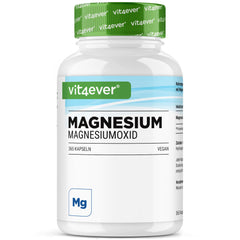
Why do so many people choose the citrate form of magnesium rather than oxide or another variant? Magnesium citrate is the compound of magnesium and citric acid, the acid that is also naturally found in citrus fruits. This combination makes the salt highly soluble in water, which is exactly why this form is so frequently used in supplements. Vit4ever uses trimagnesium dicitrate, with 360 mg of elemental magnesium per daily dose of three capsules. The capsules are vegan and the bottle contains 365 pieces, enough for over four months.
The name sounds complicated, but the principle behind this magnesium citrate is simple. Trimagnesium dicitrate consists of three magnesium ions bonded to two citrate molecules, hence the prefixes 'tri' and 'di'. The difference with free citric acid or ordinary table salt-like magnesium compounds lies in the structure: citrate is an organic acid residue, not an inorganic salt like magnesium oxide. Because of this, it dissolves more easily in moisture. Each capsule of Vit4ever contains 750 mg of trimagnesium dicitrate, of which 120 mg is elemental magnesium; the rest is the citrate part of the compound itself. Anyone looking for a concentrated form of magnesium citrate will quickly come across this compound.
Magnesium oxide is the cheapest and most common form in supplements, simply because you get more elemental magnesium per gram with it. Oxide dissolves poorly in water, while citrate dissolves well. Per capsule, you get less elemental magnesium with citrate than with oxide; therefore, the amount of elemental magnesium is always stated on the label, so that you can fairly compare products.
Magnesium contributes to the normal functioning of the nervous system and to the normal functioning of the muscles. In addition, magnesium contributes to the reduction of tiredness and fatigue and to normal psychological function. The mineral also contributes to normal energy-yielding metabolism, to the maintenance of normal bones and teeth, to normal protein synthesis and to the electrolyte balance, and it plays a role in the cell division process. Many people wonder how much magnesium is in a daily dose; three capsules of this magnesium citrate provide 96 percent of the reference intake.
Preferably take the three capsules spread throughout the day, for example, one with breakfast, one with lunch and one with dinner. Always take the capsules with a generous amount of water; it makes little difference whether you take them with or without food, although many users prefer taking them during a meal. The capsule shell of this product is made of hydroxypropyl methylcellulose, a plant-based raw material that encapsulates the magnesium citrate without using animal gelatin. There are no colorings or flavorings. Each production batch is independently tested in a laboratory for content and purity, so you know that every capsule actually contains what is stated on the label. You can find the full list of ingredients further down on this page. By the way, for those who prefer not to swallow capsules, the same magnesium citrate compound is also available in tablet form from Vit4ever, so you can choose what is most comfortable for you.
Trimagnesium dicitrate thus remains one of the most commonly used forms in magnesium supplements, and with 365 capsules per bottle, you have a generous supply at home at once.
Three capsules provide 360 mg of elemental magnesium, which is 96 percent of the reference intake.
Trimagnesium dicitrate dissolves well in liquid, unlike less soluble forms such as magnesium oxide.
At the recommended dosage of three capsules per day, one jar provides a supply for over four months.
The formula consists of only trimagnesium dicitrate and a plant-based capsule shell, without colorants or flavorings.
* Percentage van de referentie inname volgens Verordening (EU) Nr. 1169/2011.
** Reference intake unknown.
Response within one working day
Our customer service is open on weekdays from 09:00 to 17:00.

Magnesium citrate is the compound of magnesium with citric acid. This product involves trimagnesium dicitrate, a salt form that dissolves well in liquid.
Three capsules together provide 2250 mg trimagnesium dicitrate, of which 360 mg is elemental magnesium. This is 96 percent of the reference intake.
You can, but dividing them throughout the day is often preferred, especially if you have a sensitive stomach. Take the capsules with plenty of water and preferably with a meal.
Trimagnesium dicitrate is more expensive to produce than magnesium oxide, but it dissolves better in liquids. As a result, manufacturers of quality supplements more often opt for citrate, even though oxide contains more elemental magnesium per gram on paper.
Magnesium contributes to the normal functioning of the nervous system and muscles, to the reduction of tiredness and fatigue, and to normal energy-yielding metabolism. It also contributes to the maintenance of normal bones and teeth and to normal psychological function.
The difference lies in solubility and how the mineral is bound to another substance. Magnesium oxide is an inorganic salt that dissolves poorly in water, making it harder for it to pass through the intestinal wall. Magnesium citrate dissolves better because it is bound to citric acid. Magnesium bisglycinate is a different approach: here, magnesium is linked to the amino acid glycine in a chelate form, which follows a slightly different absorption pathway. All three deliver elemental magnesium, but the form determines how easily your body can process it.