



































What is magnesium malate?
Magnesium malate is a compound of magnesium and malic acid (malate). The malic acid ensures relatively good solubility, causing this form to react differently in your digestion than, for example, magnesium oxide.
Bestsellers
Bekijk allesWinkelwagen
Je winkelwagen is leeg




In stock. Order today, delivered Monday by PostNL.
Not valid with discount codes.
Vragen? We helpen je graag!
Chat met ons of bel 038 303 2160
Snel bezorgd
Besteld voor 17:00, morgen in huis*
Achteraf betalen
met Klarna
Kies opties
Not valid with discount codes.
Vragen? We helpen je graag!
Chat met ons of bel 038 303 2160
Snel bezorgd
Besteld voor 17:00, morgen in huis*
Achteraf betalen
met Klarna
Not valid with discount codes.
Vragen? We helpen je graag!
Chat met ons of bel 038 303 2160
Snel bezorgd
Besteld voor 17:00, morgen in huis*
Achteraf betalen
met Klarna
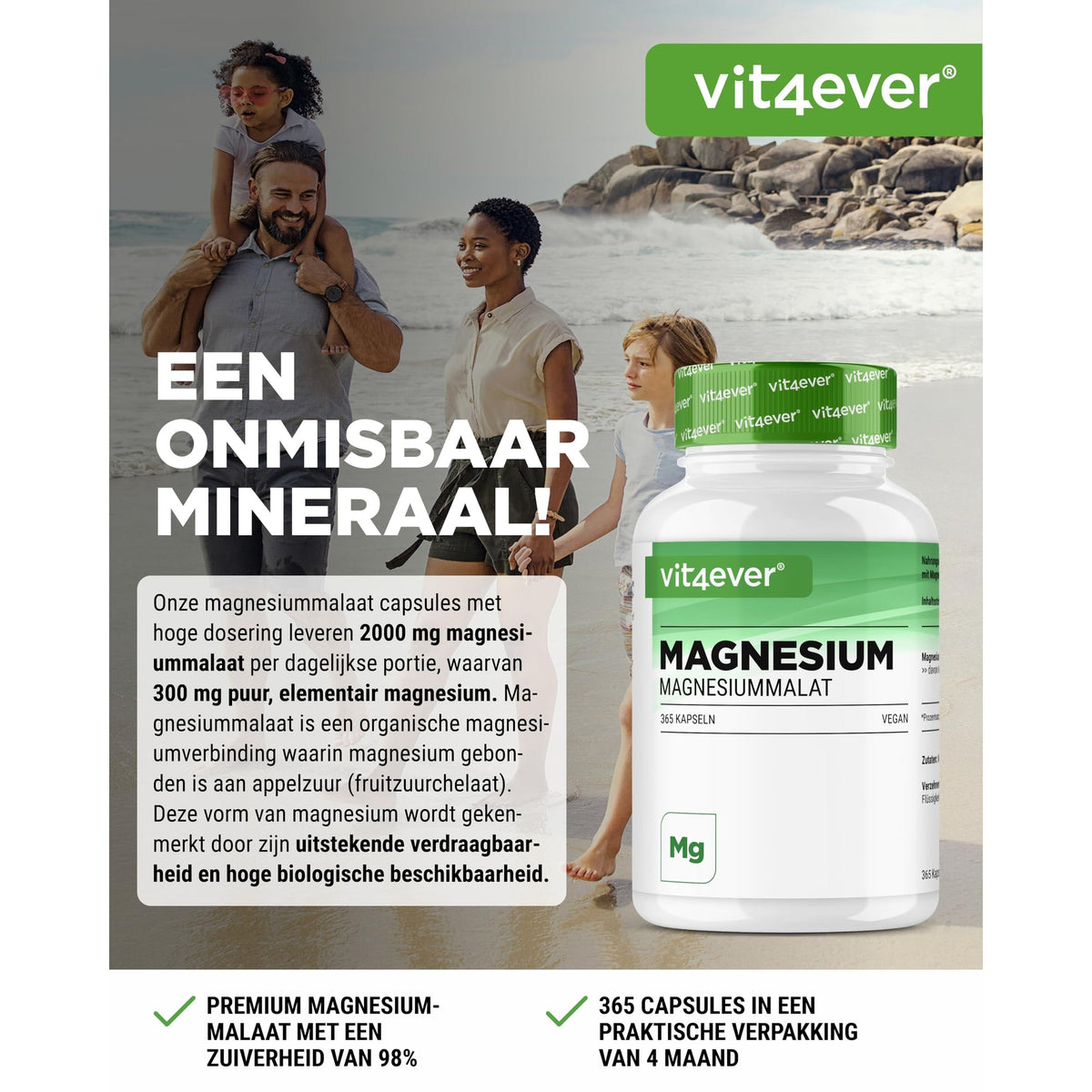
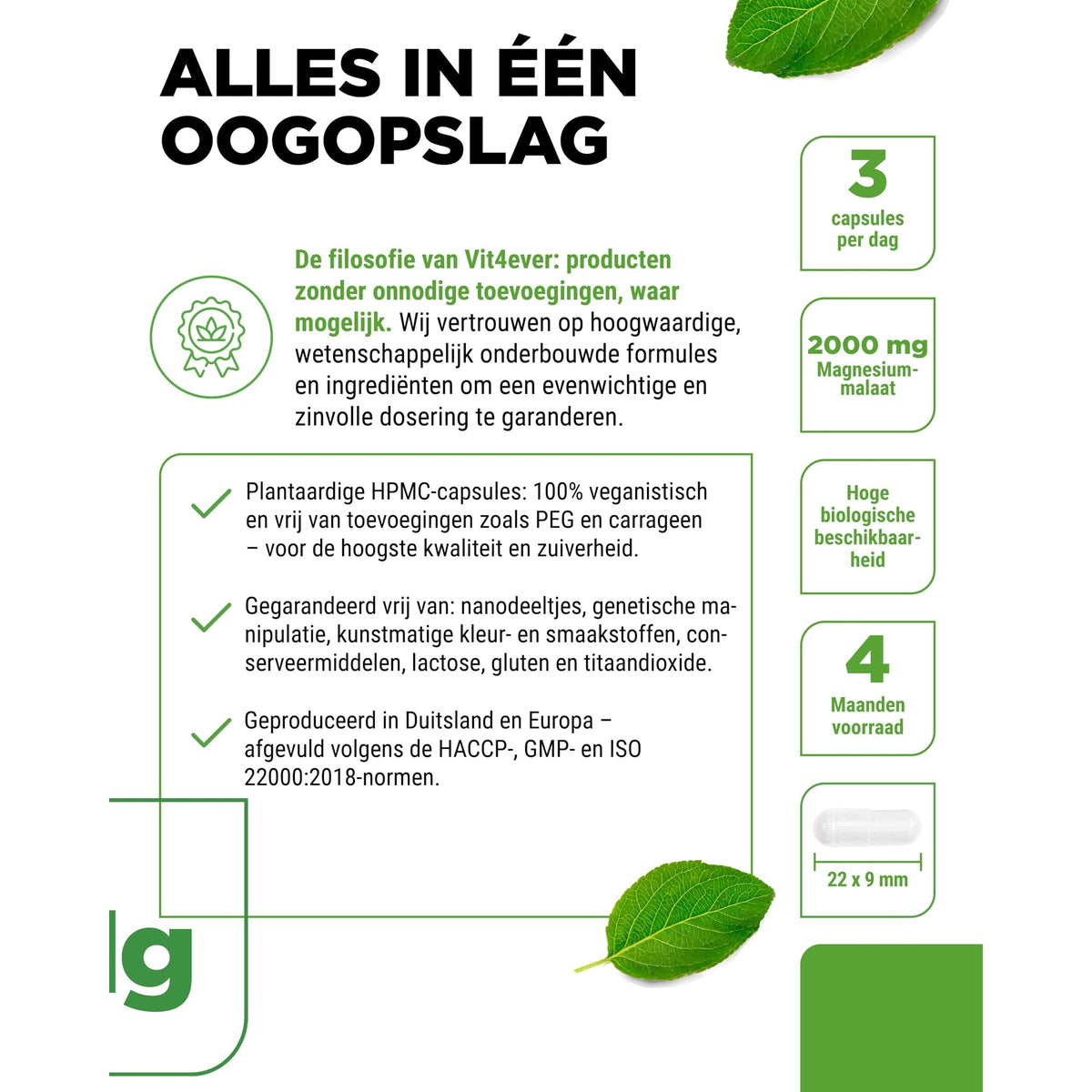
Those who choose magnesium malate in capsule form often do so for a simple reason: they prefer a capsule to a compressed tablet. Magnesium malate is a compound of magnesium and malic acid (malate). Vit4ever's magnesium malate is contained in a capsule with a plant-based hydroxypropyl methylcellulose (HPMC) shell, without the binders and pressing powder used to compress a tablet. A daily dose of 3 capsules provides 300 mg of elemental magnesium, 80% of the reference intake.
Each bottle contains 365 capsules, enough for over four months at the recommended dosage of 3 per day.
The difference lies not in the contents, but in the form surrounding them. A tablet is made by compressing powder under high pressure, often with binders such as microcrystalline cellulose to help the tablet retain its shape. This is not necessary with a capsule: the magnesium malate is loosely dosed in a shell without any pressing force. Vit4ever's shell is entirely plant-based (HPMC), making it suitable for those who prefer not to use gelatin. For people who have difficulty swallowing larger, harder tablets, a capsule is often easier to take: the surface is smoother, the shape flexes slightly during swallowing, and there are no sharp edges like those on an oval tablet. The swallowing process itself is also different: a capsule slides down whole with a sip of water, while a tablet sometimes sticks to the tongue or palate before moving further down.
In magnesium malate, the magnesium is bonded to malate, the salt of malic acid. Malic acid occurs naturally in apples and other fruits. By bonding magnesium to this molecule, a salt is created that is relatively soluble in water. Vit4ever processes this form into a capsule so that you can take magnesium and malic acid at once, without additional pressing or tablet coating. Some tablets are also given a thin coating to mask the taste or make the tablet firmer; with a capsule, this coating is unnecessary because the shell itself is already neutral in taste. Magnesium contributes to normal energy-yielding metabolism.
A daily dose of 3 capsules provides a total of 2000 mg of magnesium malate, of which 300 mg is elemental magnesium. Calculated individually, each capsule provides approximately 100 mg of elemental magnesium. Many people wonder why manufacturers calculate with "elemental" magnesium instead of the total salt weight. In short: the salt (malate) does not count as magnesium; only the metal itself does. 300 mg of elemental magnesium corresponds to 80% of the reference intake. Because the dose is divided among 3 capsules, you can easily spread the intake throughout the day instead of taking everything at once.
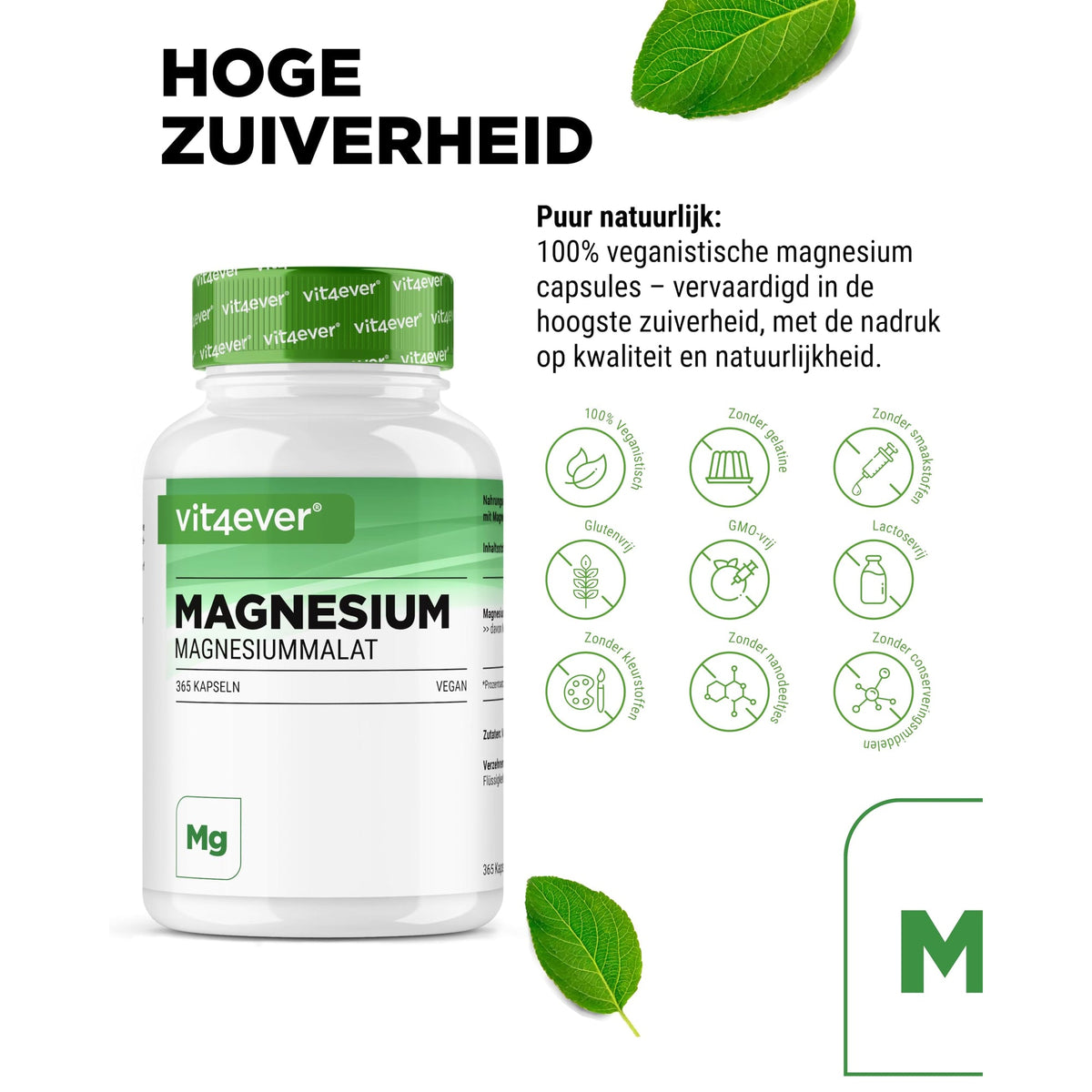
In addition to magnesium malate, this capsule contains a plant-based HPMC shell, rice flour as a bulking agent, and stearic acid as an anti-caking agent. It contains no tablet binders, no glazing agents for a smooth tablet coating, and no pressing powder—ingredients that are often found in compressed tablets to help the product retain its shape. This makes the ingredient list short and clear. For those who always read the ingredient list of a supplement, this is a welcome feature.
For those torn between a capsule and a tablet: the contents, magnesium malate, are identical. Only the way you take it differs. A capsule is a practical choice if you prefer not to swallow a compressed tablet, have difficulty with larger tablets, or simply appreciate the shorter ingredient list that comes with capsules. And if you happen to forget a capsule one day: do not take a double dose the next time, but simply take the next day's dose as usual.
No gelatin and no tablet binders, just a neutral plant-based shell around the magnesium malate.
A daily serving of 3 capsules provides 80% of the reference intake for magnesium.
Magnesium malate combines magnesium with malate (malic acid) in a highly soluble salt.
More than four months' supply at the recommended daily dosage of 3 capsules.
* Percentage van de referentie inname volgens Verordening (EU) Nr. 1169/2011.
** Reference intake unknown.
Response within one working day
Our customer service is open on weekdays from 09:00 to 17:00.

Magnesium malate is a compound of magnesium and malic acid (malate). The malic acid ensures relatively good solubility, causing this form to react differently in your digestion than, for example, magnesium oxide.
A daily serving of 3 capsules provides 300 mg of elemental magnesium, which is 80% of the reference intake. This amounts to approximately 100 mg of magnesium per capsule.
Yes, the capsule shell is entirely plant-based and made from hydroxypropyl methylcellulose (HPMC), without gelatin or other animal binders.
In addition to magnesium malate, a capsule contains a shell, rice flour, and stearic acid, without the binders and pressing powder needed to give a tablet its shape. This makes the ingredient list shorter and easier to swallow for some users, as a capsule has a smooth surface and slides down easily.
Malic acid is a substance that naturally plays a role in the citric acid cycle, the process by which cells release energy. Binding magnesium to malate creates a highly soluble salt, combining magnesium and malic acid in one capsule.
The active ingredient, magnesium malate, is identical in both versions. The difference lies in the form: the tablet version is compressed with tablet binders, while these capsules have a plant-based HPMC shell without pressing powder. The choice mainly depends on personal preference when swallowing.