































What is shilajit mumijo?
Shilajit, also known as mumijo, is a natural mineral resin from the Himalayas. It naturally contains fulvic acid and humic acid.
Bestsellers
Bekijk allesWinkelwagen
Je winkelwagen is leeg

In stock. Order today, delivered Monday by PostNL.
Not valid with discount codes.
Vragen? We helpen je graag!
Chat met ons of bel 038 303 2160
Snel bezorgd
Besteld voor 17:00, morgen in huis*
Achteraf betalen
met Klarna
Kies opties
Not valid with discount codes.
Vragen? We helpen je graag!
Chat met ons of bel 038 303 2160
Snel bezorgd
Besteld voor 17:00, morgen in huis*
Achteraf betalen
met Klarna
Not valid with discount codes.
Vragen? We helpen je graag!
Chat met ons of bel 038 303 2160
Snel bezorgd
Besteld voor 17:00, morgen in huis*
Achteraf betalen
met Klarna
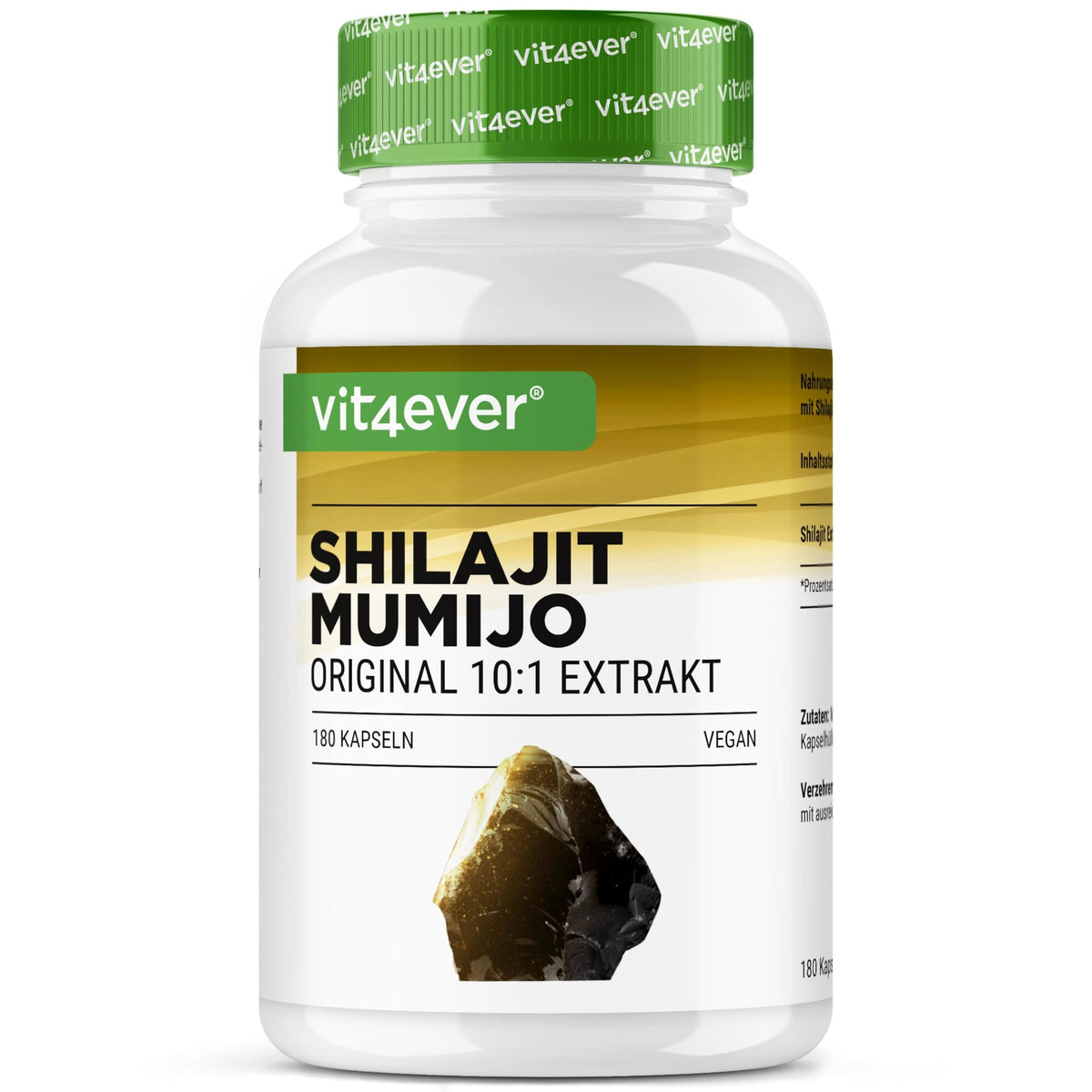
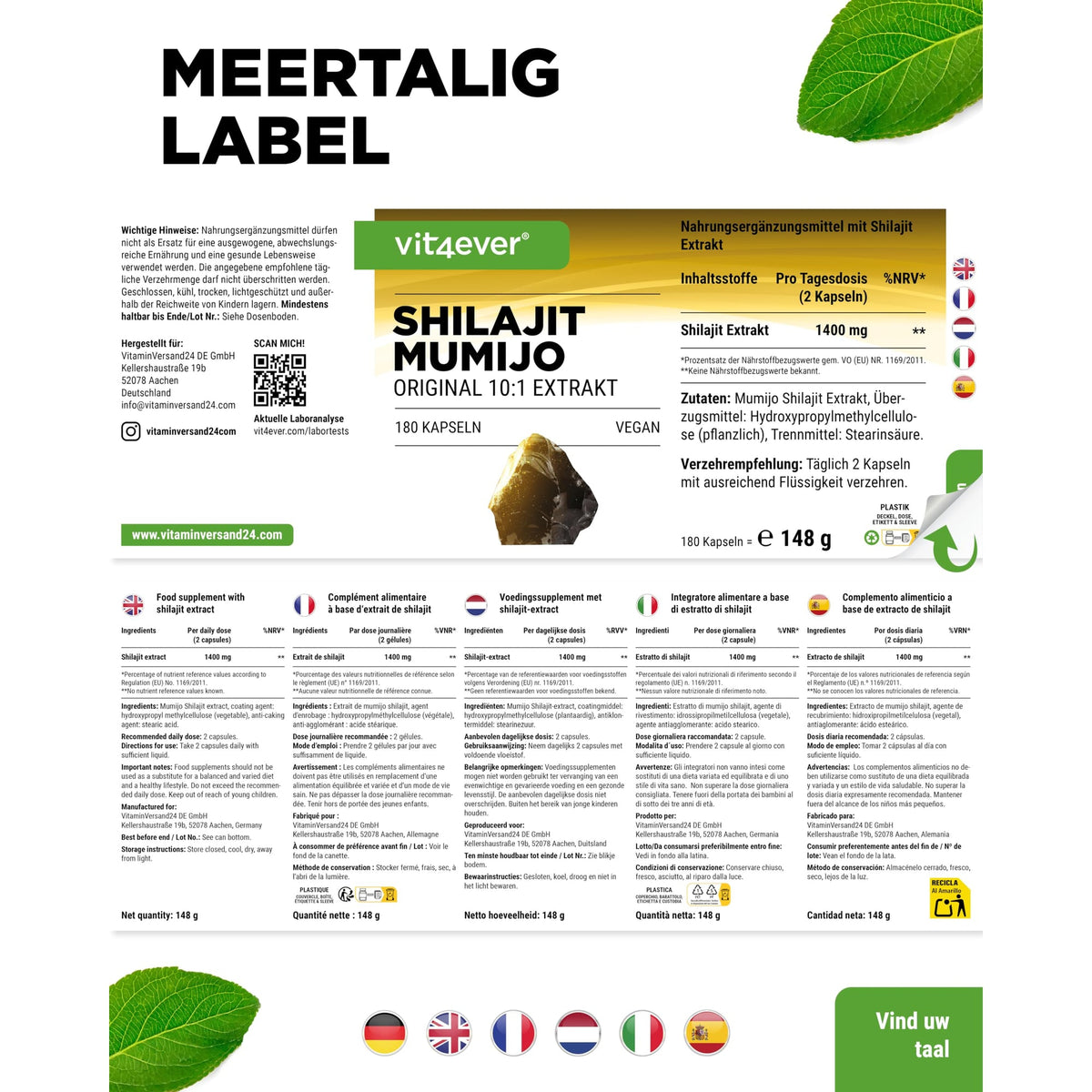
Shilajit, also known as mumijo, is a dark mineral resin that seeps from rock crevices in the high mountains of the Himalayas. It is not a herb or a vitamin, but a natural deposit that has formed in the rock over thousands of years. Vit4ever processes this resin into a concentrated 10:1 extract in capsule form, so you do not have to work with a sticky lump of resin. Three capsules per day provide a total of 1500 mg of extract, which is equivalent to 15000 mg of raw mumijo. One jar contains 180 capsules, which is about two months at the recommended dosage. The capsules are vegan and contain no colorings, flavorings, or unnecessary fillers.
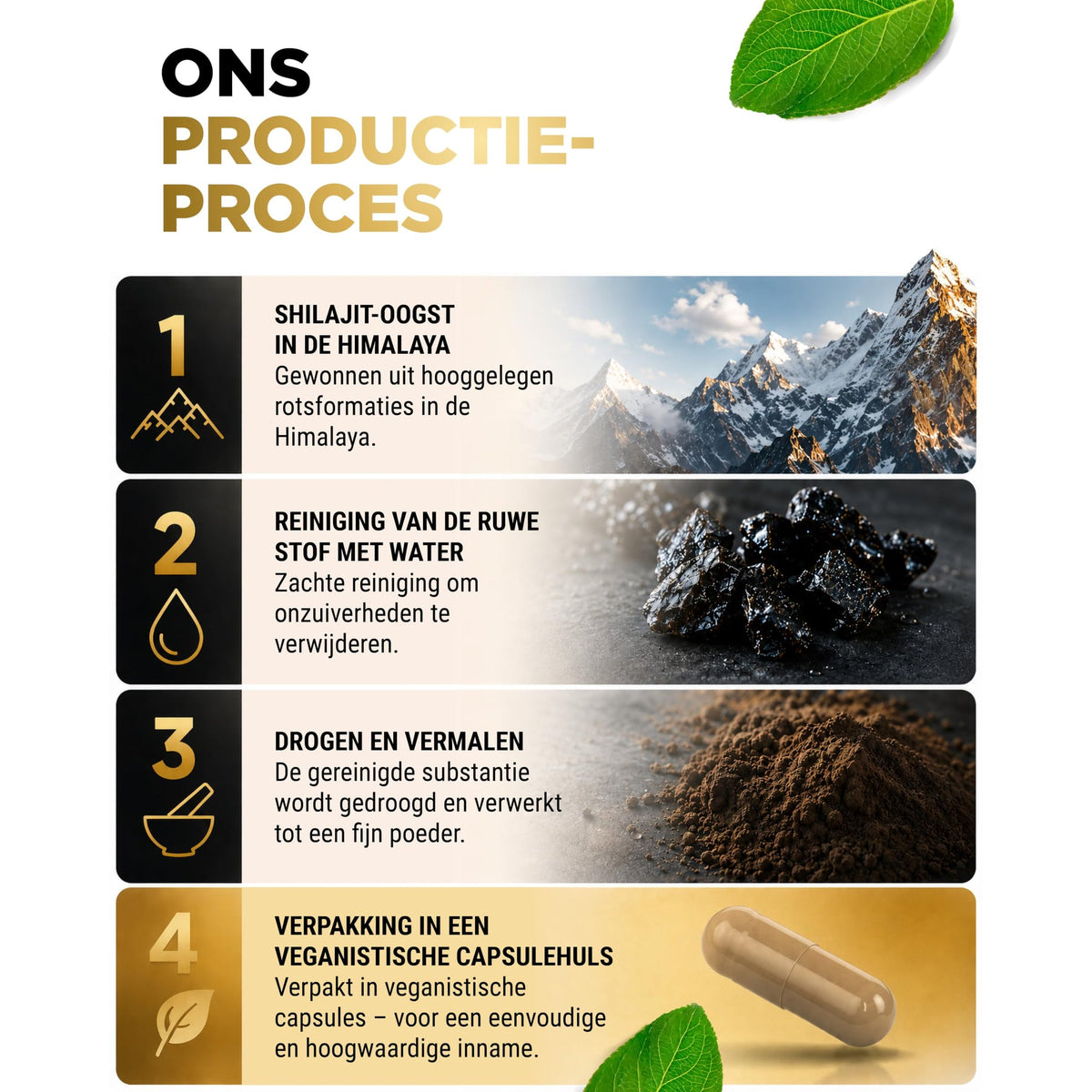
In summer, as the sun warms the rock faces, shilajit seeps out as a sticky substance from crevices in the high mountains. The material is the result of a very slow process: plant material is converted into a dark, resinous substance in the rock layers under pressure and temperature, with the help of microorganisms. Mountain peoples in the region have been collecting it by hand for centuries during the warm months, usually with simple tools because mechanical extraction would damage the fragile material. When dried, mumijo looks like a kind of amber and has a distinctive, earthy smell, similar to wet slate.
Many people looking for shilajit wonder why there is suddenly an extract instead of the raw resin you see on travel blogs about Nepal or Tibet. The answer: ten parts raw material are reduced to one part concentrated extract. Therefore, 1500 mg of extract provides the equivalent of 15000 mg of raw shilajit, roughly ten times as much as you would expect based on weight alone. The raw material comes from the southern foothills of the Himalayas and is purified and standardized after collection. The latter is important: raw mumijo varies greatly from location to location, while a standardized extract guarantees an equal composition from capsule to capsule. This way, you know what you are getting with each capsule, instead of guessing with a piece of unprocessed resin that you would have to weigh yourself and dissolve in water or milk, as is customary in the traditional method of use.
Shilajit naturally contains two characteristic groups of substances: fulvic acid and humic acid. These are organic compounds that form during the slow decomposition of plant material in the rock layers, and they are characteristic of this type of mineral resin. Fulvic acid is a relatively small molecule that naturally forms during this type of decomposition process and is also found in humus-rich soil and peat, albeit in different concentrations. The Vit4ever extract is pure: no separate minerals or vitamins have been added, everything in it comes directly from the resin itself. The exact composition of shilajit may vary slightly from batch to batch within the quality margins that apply to this extract.
Raw mumijo that comes directly from the rocks contains, in addition to fulvic acid and humic acid, impurities such as stone dust and plant residues. Before it ends up as an extract in a capsule, the raw material therefore undergoes a purification process in which these impurities are removed and the material is concentrated into the 10:1 extract. Each batch is then checked, so that the final capsule has a predictable, standardized composition instead of the natural variation of the raw resin. That process is exactly why a shilajit extract is easier to dose in practice than the raw material: you know what you are getting, without always having to weigh or estimate how much resin you are using.
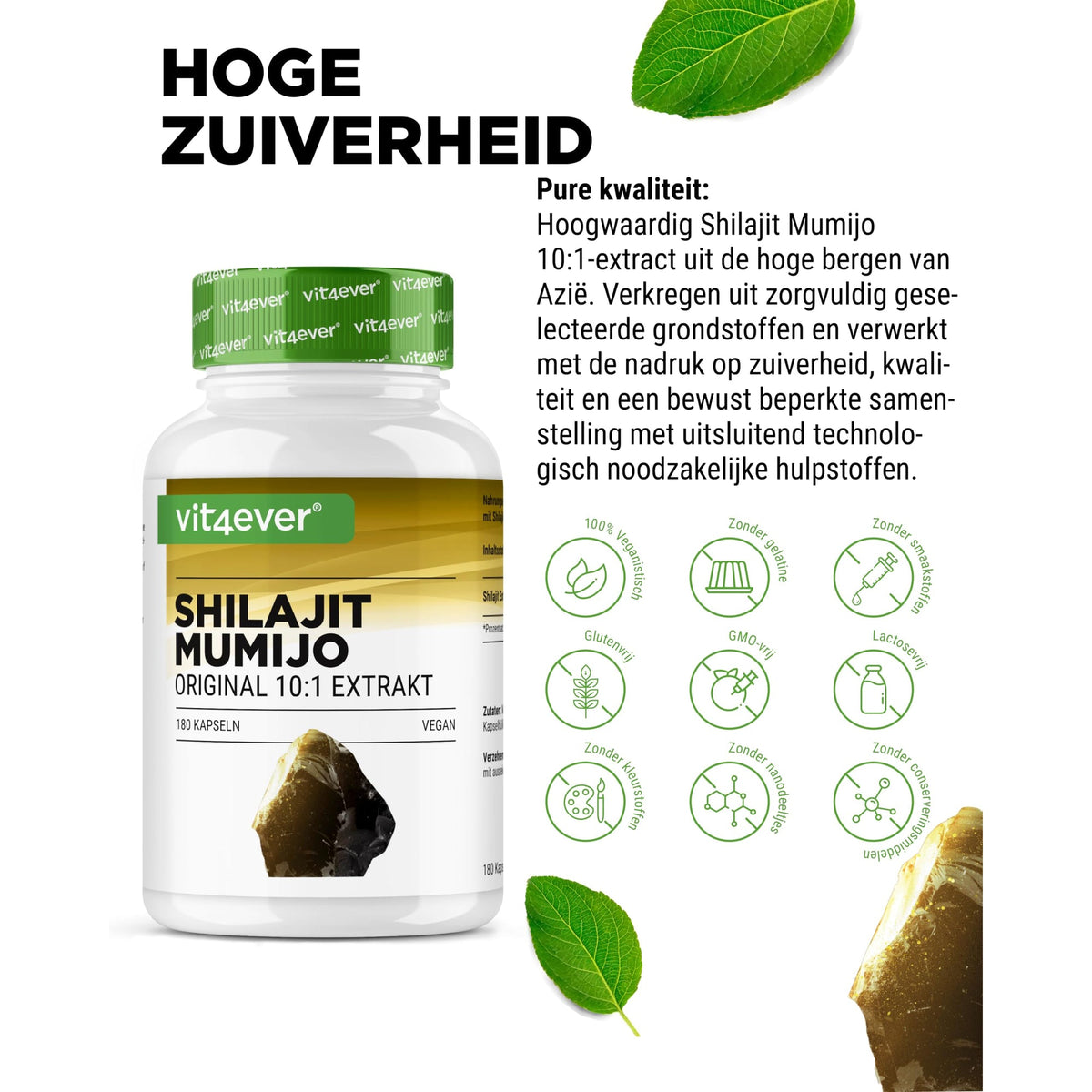
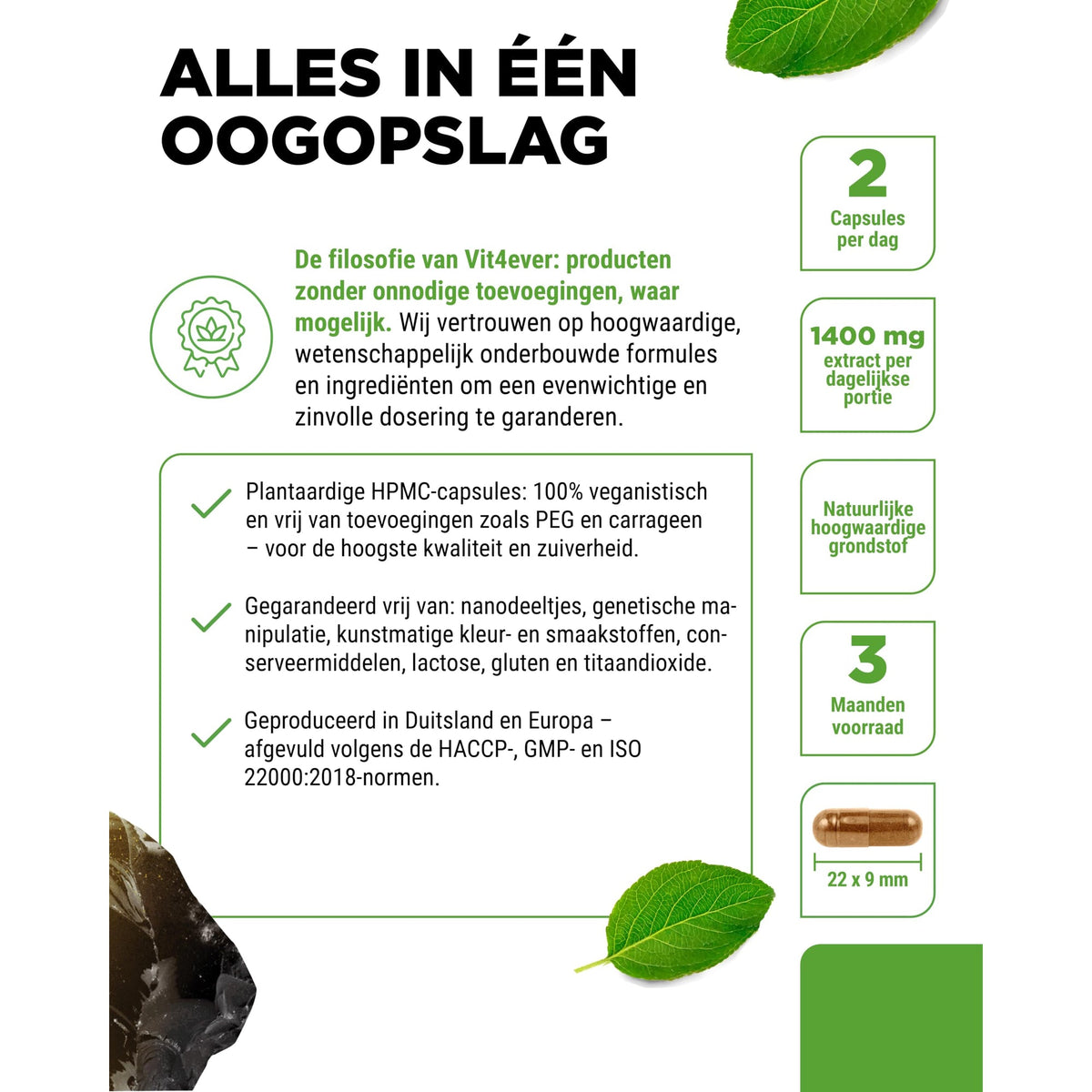
Thus, shilajit mumijo extract remains essentially a natural product with a short list of ingredients. No synthetic additives, no unnecessary fillers, only the purified 10:1 extract in a plant-based capsule. For those who prefer not to weigh or taste raw resin, the capsule form is a practical way to get a fixed amount of mumijo daily.
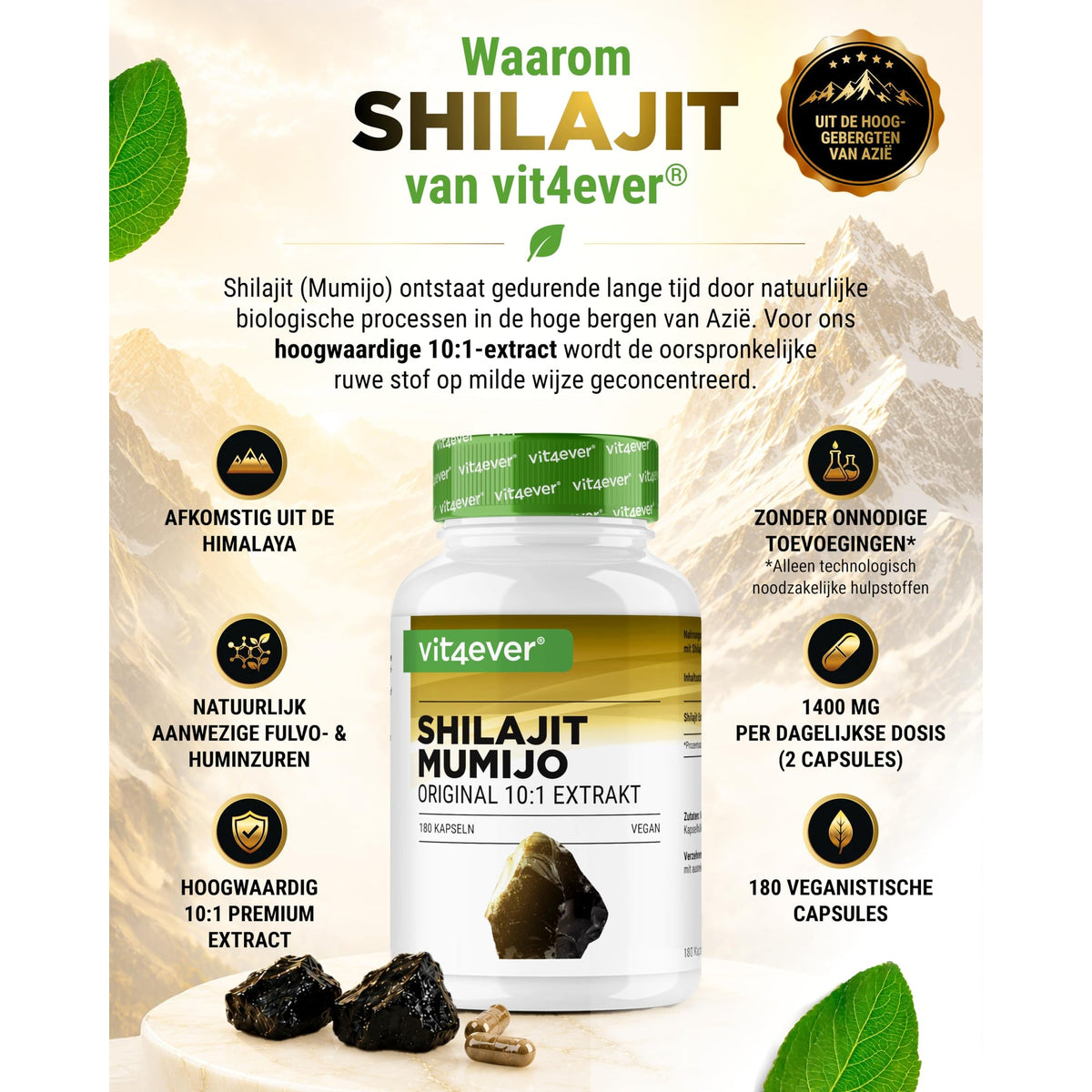
1500 mg extract per daily dose, equivalent to 15000 mg crude mumijo.
The raw material is extracted from the southern foothills of the Himalayas and then purified.
Naturally contains fulvic acid and humic acid, with no additives.
180 plant-based capsules per bottle, enough for about two months with daily use.
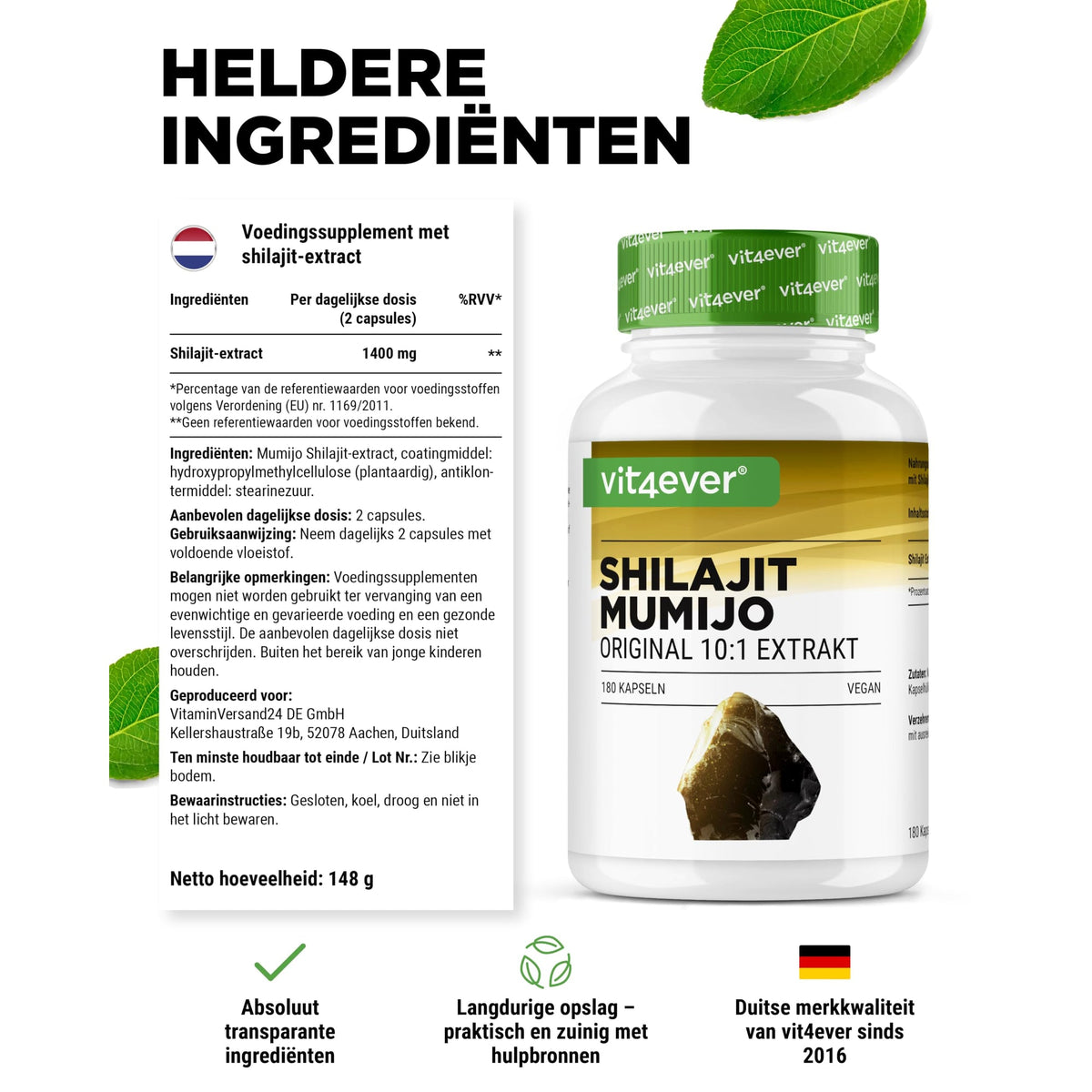
* Percentage van de referentie inname volgens Verordening (EU) Nr. 1169/2011.
** Reference intake unknown.
Response within one working day
Our customer service is open on weekdays from 09:00 to 17:00.

Shilajit, also known as mumijo, is a natural mineral resin from the Himalayas. It naturally contains fulvic acid and humic acid.
A 10:1 extract means that ten parts of raw mumijo have been reduced to one part of extract. Therefore, 1500 mg of extract is equivalent to 15000 mg of raw shilajit per daily dose.
Three capsules per day, taken together with sufficient water. One bottle contains 180 capsules, which is enough for approximately two months.
Yes. The product contains only shilajit extract and a plant-based HPMC capsule shell. No additives, colourings or flavourings.
The raw material is extracted from the southern foothills of the Himalayas and then purified into a standardized 10:1 extract.
At three capsules per day, a bottle of 180 capsules lasts 60 days, so about two months.