


































What is NAC?
NAC stands for N-acetyl-L-cysteine, a stable form of the sulfur-containing amino acid cysteine. In your cells, your body converts it into regular cysteine. Your body uses that, among other things, as a building block for glutathione.
Bestsellers
Bekijk allesWinkelwagen
Je winkelwagen is leeg
In stock. Order today, delivered Monday by PostNL.
Not valid with discount codes.
Vragen? We helpen je graag!
Chat met ons of bel 038 303 2160
Snel bezorgd
Besteld voor 17:00, morgen in huis*
Achteraf betalen
met Klarna
Kies opties
Not valid with discount codes.
Vragen? We helpen je graag!
Chat met ons of bel 038 303 2160
Snel bezorgd
Besteld voor 17:00, morgen in huis*
Achteraf betalen
met Klarna
Not valid with discount codes.
Vragen? We helpen je graag!
Chat met ons of bel 038 303 2160
Snel bezorgd
Besteld voor 17:00, morgen in huis*
Achteraf betalen
met Klarna
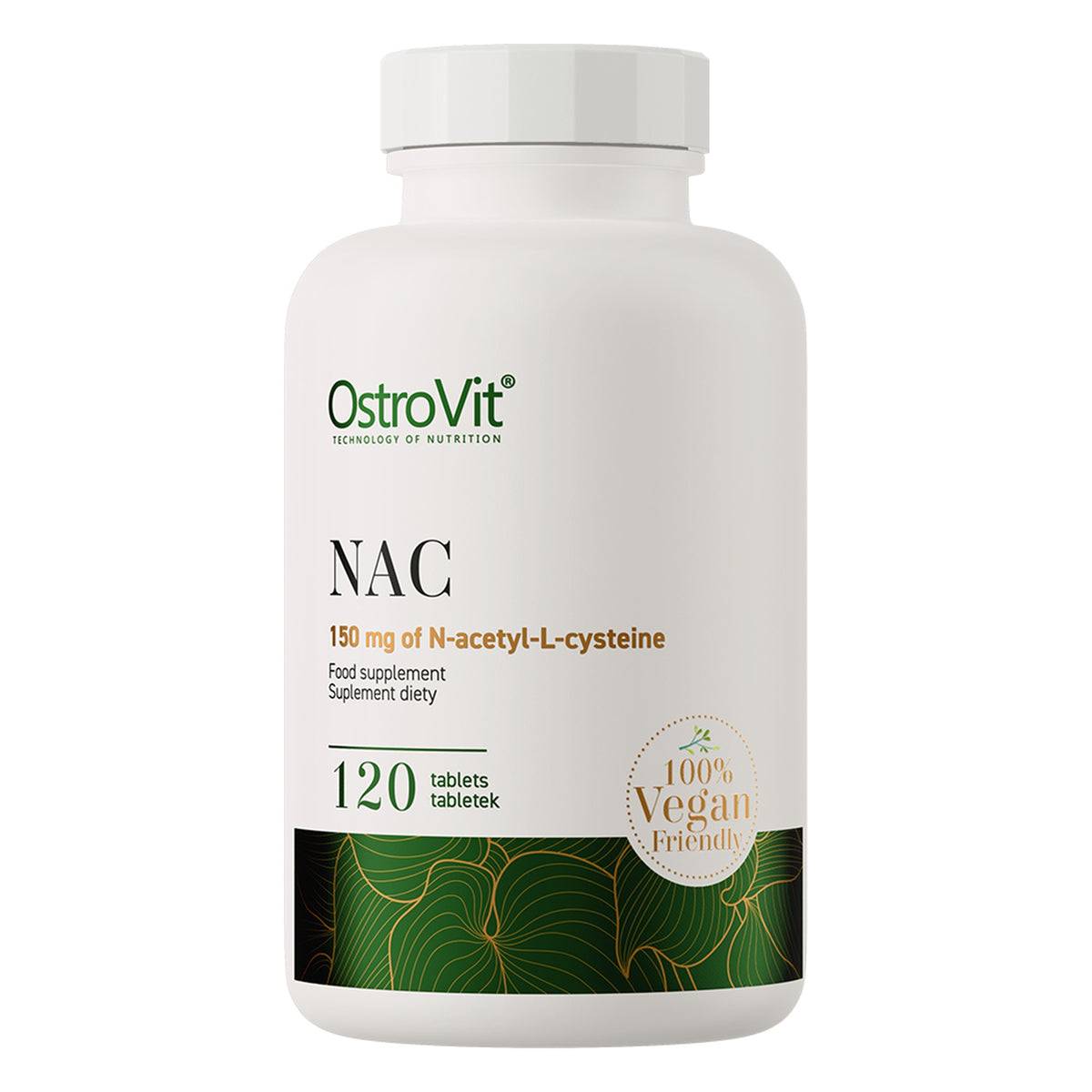
Are you looking for NAC in a low, easy-to-manage dose? These tablets by OstroVit each contain 150 mg of N-acetyl-L-cysteine. You take one per day, no more. With 120 tablets in the bottle, you have a four-month supply without having to think about reordering every week.
NAC is the abbreviation for N-acetyl-L-cysteine. It is a modified form of cysteine, a sulfur-containing amino acid. An acetyl group, a small chemical appendage, has been attached to the cysteine molecule. That sounds technical, but the difference is practical: ordinary cysteine is quite unstable in the intestine and blood and reacts quickly with other substances. The acetyl group protects the molecule during its journey through your body. In your cells, your body removes that appendage again, leaving ordinary cysteine behind. You also get cysteine from protein-rich foods such as eggs, chicken, dairy, legumes, garlic, and onions. In contrast, NAC is hardly found in food.
Many people wonder why NAC is so often mentioned together with glutathione. In short: cysteine is one of the three building blocks of glutathione, along with glutamine and glycine. Glutathione is a small protein that is produced by almost every cell in your body.
Many NAC products contain 600 mg per capsule. This tablet contains 150 mg, and OstroVit recommends 1 tablet per day. NAC has a slightly sulfurous smell, a bit like rotten eggs. What many people do not know is that this is normal and says nothing about the quality. In a tablet with cellulose and starch, you will hardly notice it. The tablet is small enough to be easily swallowed with a glass of water. This product is intended for adults only.
A simple tablet for those who want to incorporate NAC gradually into their daily routine, with 150 mg per tablet.
Many products start at 600 mg. With 150 mg per tablet, you start low and keep control over the total amount yourself.
120 tablets at one tablet per day means a supply for about four months.
The acetyl group makes the cysteine molecule more stable. That group is removed again in your cells.
No powder with a sulfur smell and no large capsules. One small tablet with a glass of water and you're done.
* Percentage van de referentie inname volgens Verordening (EU) Nr. 1169/2011.
** Reference intake unknown.
Response within one working day
Our customer service is open on weekdays from 09:00 to 17:00.

NAC stands for N-acetyl-L-cysteine, a stable form of the sulfur-containing amino acid cysteine. In your cells, your body converts it into regular cysteine. Your body uses that, among other things, as a building block for glutathione.
OstroVit recommends 1 tablet of 150 mg per day. Do not exceed the recommended daily dose.
The timing is flexible, as long as you take it daily. Some people take it on an empty stomach, while others take it with breakfast to reduce the slight sulfur taste. Always take the tablet with a glass of water.
It is a low dose, deliberately intended as an entry point. Compared to products of 600 mg per capsule, you get a quarter per tablet. For those who want to combine NAC with other supplements or want to start cautiously, that is actually convenient.
Glutathione consists of three amino acids: glutamine, glycine, and cysteine. NAC is a form of cysteine.
L-cysteine is the amino acid itself, NAC is the same substance with an additional acetyl group. That group makes the molecule more stable.