Rutin from Sophora Japonica by Vit4ever
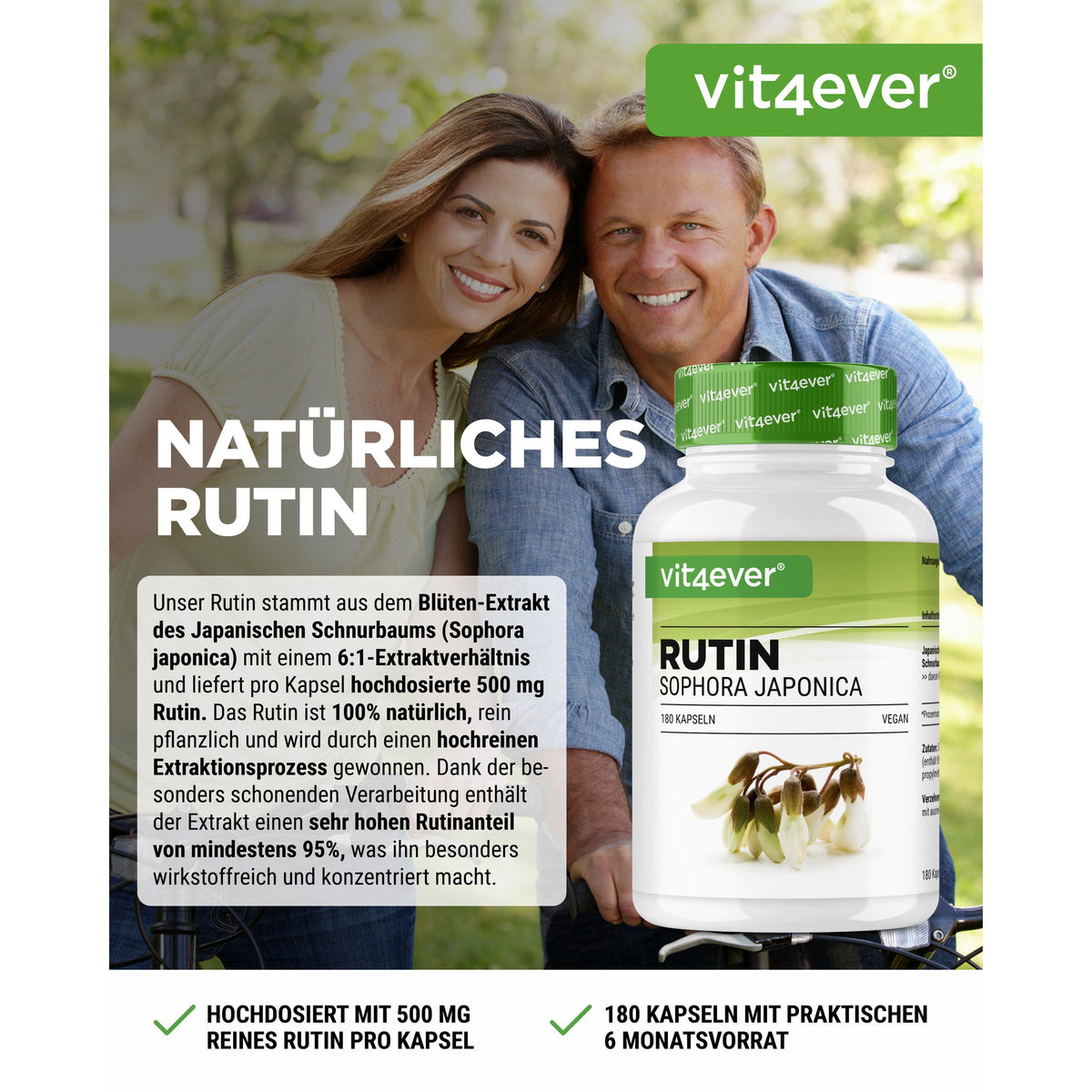
Rutin is a plant compound from the large family of flavonoids, the same group to which quercetin belongs. Rutin is naturally found in buckwheat, apple peel, and black tea, but the richest source is the flower buds of the Japanese pagoda tree, Sophora japonica. Vit4ever extracts rutin from precisely these buds and processes it into an extract of 95 percent purity. Each capsule contains 500 mg of pure rutin, with a dosage of one capsule per day. For those who prefer a fixed, measurable amount instead of a cup of tea with varying strength, this makes a practical difference.
A flavonoid with its own place in the plant
Rutin belongs to the flavonoids, a group of more than six thousand plant compounds that plants produce themselves. Within that group, rutin is related to quercetin: rutin is in fact quercetin with a sugar group attached, which makes the substance soluble differently. Many people wonder why Sophora japonica is used as a source. The answer lies in the concentration: the flower buds of this tree, which originates in East Asia, naturally contain one of the highest rutin levels known in the plant world. In the traditional herbal medicine of East Asia, the bud of this tree has long been used, although this product is a modern standardized extract and not the dried herb itself. The buds are picked before the flower fully opens, as this is when the rutin content in the bud is highest. After picking, they are dried and processed into the raw material for the extract, a step that has been part of how this raw material is obtained for centuries.
How the extract is produced
From dried flower bud to standardized extract involves several steps. First, the rutin is extracted from the buds with water or a mixture of water and alcohol, after which the remaining plant parts are filtered. What remains is a concentrated solution that is then thickened and dried into a powder. This powder is then tested and, if necessary, adjusted to the 95 percent rutin content stated on the label. The difference with a tea made from dried Sophora japonica buds lies in that concentration step: a cup of tea contains a variable, relatively low amount of rutin, while this extract is specifically made to guarantee a fixed, high percentage. Also, compared to buckwheat or apple peel, two other well-known sources of rutin, the content in the Sophora japonica flower bud is significantly higher, which explains why manufacturers choose this route instead of extraction from buckwheat grains or peels.
500 mg per capsule, always the same content
An unprocessed plant extract can vary quite a bit in strength, depending on harvest and climate. Therefore, Vit4ever standardizes the Sophora japonica extract to 95 percent rutin. Each capsule contains 526 mg of that extract, of which 500 mg is pure rutin. The difference with an unstandardized herbal powder lies in predictability: you know exactly what you are getting with every capsule, instead of a fluctuating content per batch. No fillers have been added to supplement the capsule volume, meaning the capsule consists almost entirely of the extract itself. In cheaper herbal preparations, the volume is sometimes supplemented with starch or cellulose to fill the capsule; this is not necessary here because the extract itself already forms the entire content of the capsule. For comparison: where a loose herbal powder from buckwheat hull can quickly consist of half fiber material in addition to the rutin itself, this capsule contains almost exclusively the standardized extract.
Vegan capsule without unnecessary substances
The capsule consists of the rutin extract and a shell made of HPMC (hydroxypropylmethylcellulose), a plant-based raw material. Magnesium stearate, colorants, flavorings, and preservatives are not included. The product is also gluten- and lactose-free. Vit4ever has every produced batch independently tested for purity and for unwanted substances such as heavy metals. This ensures that the contents of each jar match what is on the label, batch after batch. This is particularly relevant for a plant extract, where the composition can naturally vary more than with a synthetically produced substance. Because the capsule is plant-based and not made of gelatin, this product is also suitable for a vegetarian or vegan diet, something that is not self-evident with a classic gelatin capsule.
With 180 capsules in a jar and a daily intake of one, you have a fixed, standardized source of this flavonoid for half a year. For those looking for a consistent dosage without fluctuating extract strengths, this is a practical fact. And because the capsule contains nothing more than the extract and the shell, you know exactly what you are taking without unnecessary additives.