





























How many soy isoflavones are in a tablet?
One tablet contains 137.5 mg of soy extract with 40% isoflavones. That comes down to approximately 55 mg of isoflavones per tablet, of which 15% is genistein and 14% is daidzein.
Bestsellers
Bekijk allesWinkelwagen
Je winkelwagen is leeg
In stock. Order today, delivered Monday by PostNL.
Not valid with discount codes.
Vragen? We helpen je graag!
Chat met ons of bel 038 303 2160
Snel bezorgd
Besteld voor 17:00, morgen in huis*
Achteraf betalen
met Klarna
Kies opties
Not valid with discount codes.
Vragen? We helpen je graag!
Chat met ons of bel 038 303 2160
Snel bezorgd
Besteld voor 17:00, morgen in huis*
Achteraf betalen
met Klarna
Not valid with discount codes.
Vragen? We helpen je graag!
Chat met ons of bel 038 303 2160
Snel bezorgd
Besteld voor 17:00, morgen in huis*
Achteraf betalen
met Klarna
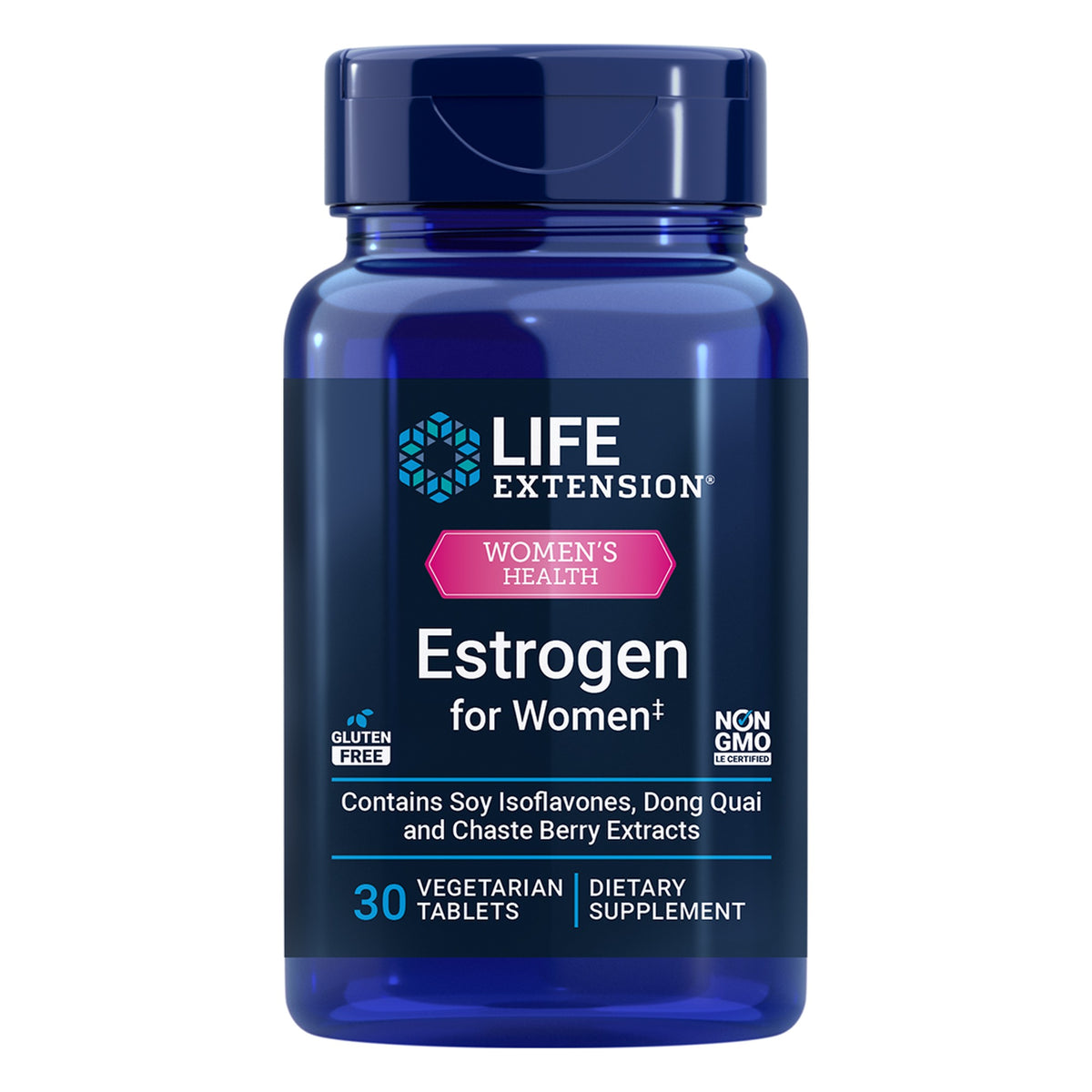
This Life Extension tablet combines plant compounds that you may already know from your own kitchen. The base consists of a broccoli blend and a soy extract with soy isoflavones, supplemented with extracts of dong quai, licorice, and monk's pepper. You take one tablet per day, and a bottle contains 30, so it lasts exactly one month.
Isoflavones are plant compounds that occur naturally in soybeans. The two best known are genistein and daidzein. This tablet contains 137.5 mg of soy extract, standardized to 40% isoflavones. Standardized means that the manufacturer guarantees a fixed amount of a particular compound, so that every tablet contains the same amount. If you do the math, you get approximately 55 mg of isoflavones per tablet, of which 15% is genistein and 14% is daidzein. For comparison: in Japan and China, people have traditionally eaten a lot of tofu, tempeh, and soy milk, making isoflavones a regular part of their daily diet. Because the tablet contains soy, it is not suitable if you are allergic to soy.
The largest part of the tablet consists of 300 mg of a broccoli blend. Life Extension uses an extract from broccoli seeds and the above-ground parts of the plant, along with broccoli powder. What many people do not know is that broccoli contains glucosinolates. These are sulfur-containing plant compounds that are typical of cruciferous vegetables such as broccoli, Brussels sprouts, and kale. They also give these vegetables their slightly bitter taste. Young broccoli shoots and seeds contain particularly high levels of them, which is why the manufacturer uses seed extract. It is good to know that an extract is a concentrated form of the plant. The manufacturer extracts certain compounds from the plant material using water or alcohol and then dries it into a powder. This allows more of those compounds to fit into a single tablet than you would get from a few bites of broccoli. The broccoli powder, on the other hand, is the whole, dried, and ground plant.
In addition, there are three herbal extracts, each in a small amount. Dong quai (Angelica sinensis) is a root from the carrot family, the same family as angelica and celery. In Chinese cuisine, it is used in soups and stews. The extract in this tablet is standardized to 1% ligustilide, a fragrant compound from the root. You probably know licorice (Glycyrrhiza) from drop, because the root gives drop its sweet taste. Monk's pepper (Vitex agnus-castus) is a shrub from the Mediterranean region with small, pepper-like berries. These berries were used in monasteries as a substitute for pepper in the past, which is where the Dutch name comes from. That extract contains 5% flavonoids, a large group of plant compounds that you also find in fruit, tea, and vegetables.
Furthermore, the tablet contains dicalcium phosphate and a coating of hypromellose and glycerin that makes it easier to swallow. In short: this tablet with soy isoflavones brings together a number of well-known plants in a formula. Life Extension is an American brand that has been developing supplements since 1980 and clearly lists the composition of each compound on the label.
137.5mg standardized soy extract per tablet, with genistein and daidzein in a fixed ratio.
The majority of the tablet consists of broccoli extract and broccoli powder with glucosinolates.
Dong quai, licorice and monk’s pepper, each with a clear amount per tablet on the label.
A simple daily dose in the morning and a month's supply per jar.
* Percentage van de referentie inname volgens Verordening (EU) Nr. 1169/2011.
** Reference intake unknown.
Response within one working day
Our customer service is open on weekdays from 09:00 to 17:00.

One tablet contains 137.5 mg of soy extract with 40% isoflavones. That comes down to approximately 55 mg of isoflavones per tablet, of which 15% is genistein and 14% is daidzein.
Dong quai is the root of Angelica sinensis, a plant in the carrot family. In China, the root has been used in soups and stews for centuries. This tablet contains 25 mg of extract, standardized to 1% ligustilide.
The manufacturer recommends one tablet daily in the morning. Do not exceed the recommended daily dose.
No. The tablet contains soy extract and is therefore not suitable if you are allergic to soy.
Glucosinolates are sulfur-containing plant compounds found mainly in cruciferous vegetables, such as broccoli, Brussels sprouts and kale. They give these vegetables their slightly bitter taste. Broccoli seeds and young shoots contain relatively high levels of them.
The difference lies in the amount and the control over it. In tofu or soy milk, the content varies per product. A standardized extract gives you the same fixed amount of isoflavones every day.