




































Is this product vegan?
No. The capsule is made of gelatin, an animal-derived material. The tuber itself is plant-based, but the casing is not.
Bestsellers
Bekijk allesWinkelwagen
Je winkelwagen is leeg

In stock. Order today, delivered Monday by PostNL.
Not valid with discount codes.
Vragen? We helpen je graag!
Chat met ons of bel 038 303 2160
Snel bezorgd
Besteld voor 17:00, morgen in huis*
Achteraf betalen
met Klarna
Kies opties
Not valid with discount codes.
Vragen? We helpen je graag!
Chat met ons of bel 038 303 2160
Snel bezorgd
Besteld voor 17:00, morgen in huis*
Achteraf betalen
met Klarna
Not valid with discount codes.
Vragen? We helpen je graag!
Chat met ons of bel 038 303 2160
Snel bezorgd
Besteld voor 17:00, morgen in huis*
Achteraf betalen
met Klarna
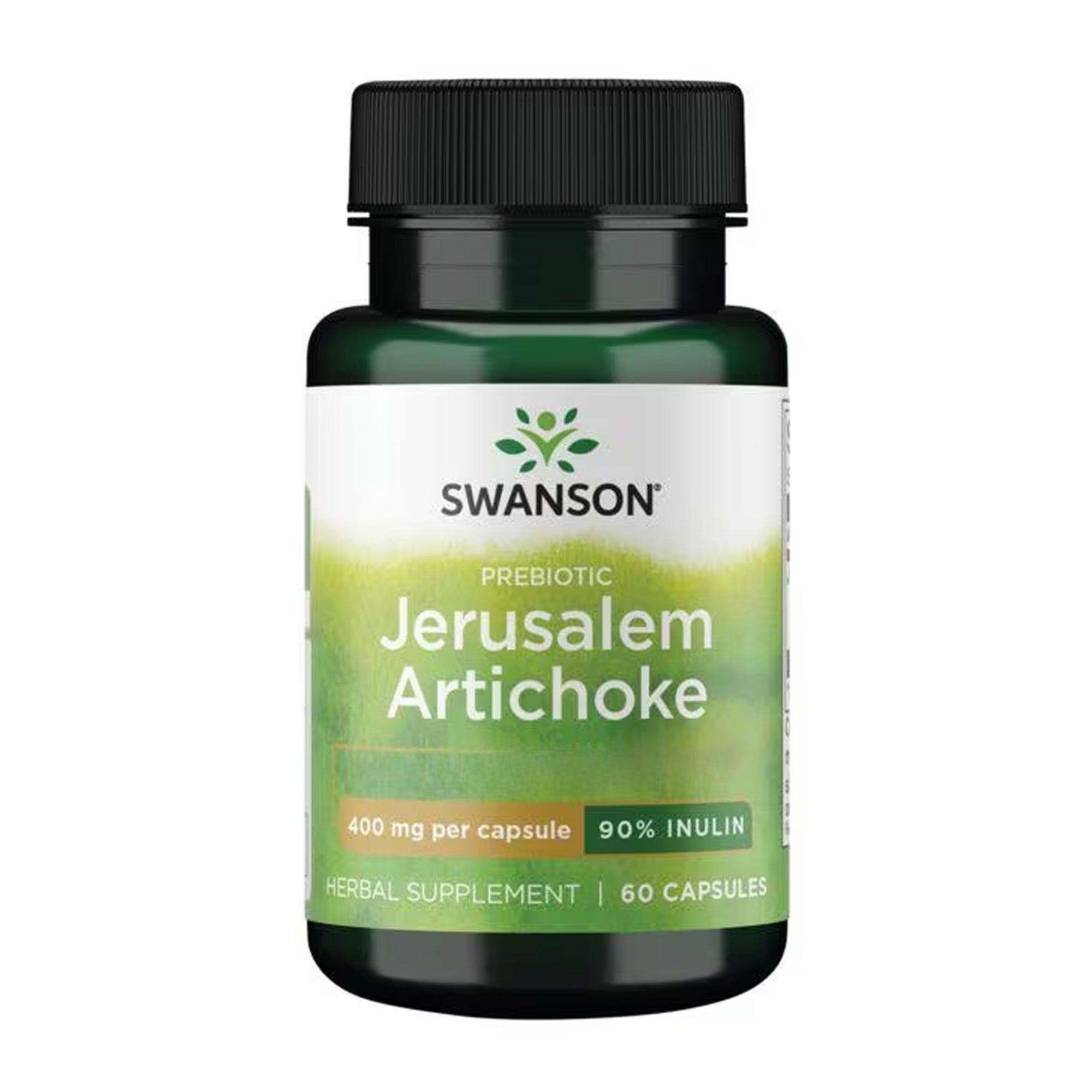
The Jerusalem artichoke, also known as sunchoke or earth apple, is a tuber that, despite its name, has nothing to do with common artichokes. Jerusalem artichoke by Swanson delivers 400mg of dried tuber per capsule, from the plant Helianthus tuberosus. This is a practical form for those who wish to supplement with this tuber, naturally rich in inulin, separately.
The name is misleading: the Jerusalem artichoke does not come from Jerusalem, nor is it an artichoke. It is the tuber of a sunflower species, Helianthus tuberosus, which is native to North America. In the kitchen, the tuber is cooked or roasted and has a slightly nutty, sweet taste. What makes the sunchoke special is that it naturally contains a lot of inulin, a type of fiber that the plant uses to store energy instead of starch. Swanson dries and grinds the tuber into a powder and puts it into a capsule, ensuring a consistent dose of 400mg per unit. The plant was already consumed by the indigenous peoples of North America and later came to Europe, where the tuber was a valued vegetable in times of scarcity. Above ground, the plant strongly resembles a small sunflower, with yellow flowers, while the edible tubers are underground.
Inulin is a soluble fiber that is not digested in your small intestine but continues further into the gut like many other fibers. It occurs naturally in several plants, and the sunchoke is among the species with the highest content. This is where the Jerusalem artichoke comes in: the tuber is a plant-based source of this fiber. This product provides the dried tuber as a whole, including the inulin naturally present in it, and not as a separate, isolated fiber powder. Each capsule provides 400mg of dried tuber.
What many people don't know: fresh sunchokes are lumpy and difficult to clean, and they don't store as long as, for example, potatoes. In dried, ground form, this drawback is eliminated. The tuber goes into the capsule along with only rice flour and two anti-caking agents. The capsule itself is made of gelatin, so this product is not vegetarian. That is a point of attention, because the tuber itself is plant-based while the casing is not. This way, you have the plant in a compact form at hand.
A frequently asked question: how much should you take per day? Swanson recommends one capsule, once or twice a day, with water. With 60 capsules per bottle, one capsule a day provides approximately two months' supply. Because inulin is a fiber that is broken down further in the intestine, a high intake can lead to bloating or flatulence in sensitive individuals; in that case, gradually increase the intake. In short: the Jerusalem artichoke is the sunchoke, a tuber naturally rich in inulin, here as a dried tuber in a capsule with 400mg per unit.
Each capsule contains 400mg dried Jerusalem artichoke, the entire tuber and not an isolated fibre powder.
Jerusalem artichoke is one of the plants with the highest inulin content, a soluble fiber that the tuber naturally contains.
Despite the name, this is not an artichoke, but the tuber of a sunflower species from North America.
Fresh Jerusalem artichokes are knobbly and don't store well. In powder form, you have a consistent measure per capsule readily available.
* Percentage van de referentie inname volgens Verordening (EU) Nr. 1169/2011.
** Reference intake unknown.
Response within one working day
Our customer service is open on weekdays from 09:00 to 17:00.

No. The capsule is made of gelatin, an animal-derived material. The tuber itself is plant-based, but the casing is not.
No. Despite the name, it is not an artichoke, nor does it originate from Jerusalem. It is the tuber of a type of sunflower, Helianthus tuberosus, known in Dutch as topinambour or aardpeer (earth pear).
Each capsule contains 400mg of dried Jerusalem artichoke. Swanson recommends one capsule, one to two times daily.
Inulin is a soluble fiber that plants use to store energy. You do not digest it in the small intestine; it continues into the large intestine like many other fibers. Jerusalem artichokes naturally contain a lot of it.
No. This is the entire dried tuber, including the inulin naturally present in it, and not a separate fibre extracted from the plant.
Inulin is a fiber that is broken down further along in the intestine. In sensitive individuals, high intake can lead to bloating or flatulence. Gradually increase your intake.