













































What does lecithin do in your body?
Lecithin provides phospholipids, the building blocks of your cell membranes. Its best-known component, phosphatidylcholine, is the most important source of choline in your diet.
Bestsellers
Bekijk allesWinkelwagen
Je winkelwagen is leeg

In stock. Order today, delivered Monday by PostNL.
Not valid with discount codes.
Contents
Vragen? We helpen je graag!
Chat met ons of bel 038 303 2160
Snel bezorgd
Besteld voor 17:00, morgen in huis*
Achteraf betalen
met Klarna
Kies opties
Not valid with discount codes.
Contents
Vragen? We helpen je graag!
Chat met ons of bel 038 303 2160
Snel bezorgd
Besteld voor 17:00, morgen in huis*
Achteraf betalen
met Klarna
Not valid with discount codes.
Contents
Vragen? We helpen je graag!
Chat met ons of bel 038 303 2160
Snel bezorgd
Besteld voor 17:00, morgen in huis*
Achteraf betalen
met Klarna
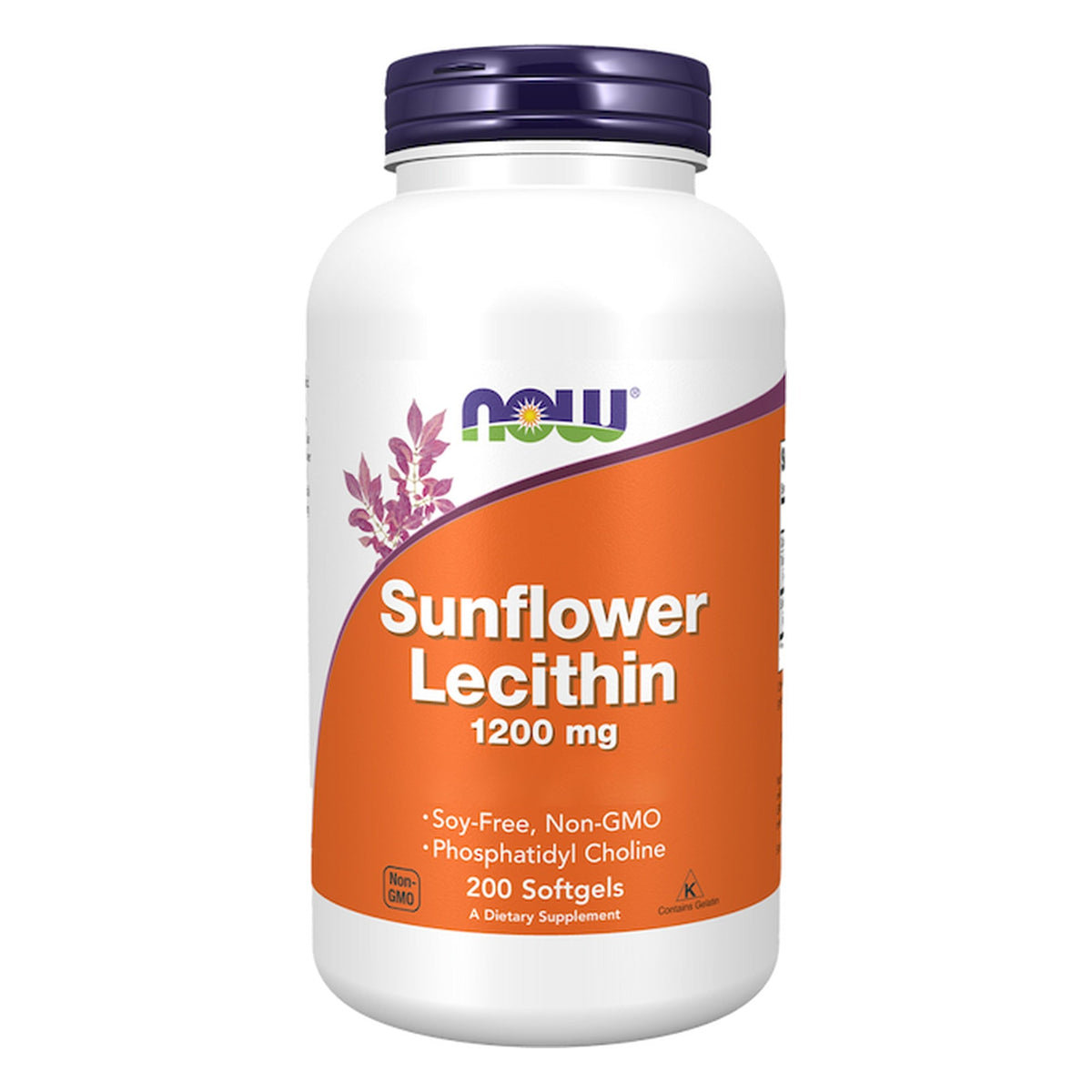
You may know lecithin from the ingredients list of chocolate or margarine. But you can also take it as a supplement. These softgels from NOW Foods each contain 1200mg of sunflower lecithin, extracted from sunflower seeds instead of soy. Two softgels per day provide a total of 2400mg of lecithin, of which 360mg is phosphatidylcholine. Interesting if you prefer to avoid soy.
Lecithin is not a single substance, but a mixture of fatty substances called phospholipids (fats with a phosphate group attached, allowing them to hold both water and fat). The best-known of these is phosphatidylcholine. It also contains phosphatidylethanolamine, phosphatidylinositol, and some regular fatty acids. Phospholipids are the building blocks of every cell membrane in your body. They arrange themselves in a double layer, with the water-loving side facing outwards and the fat-loving side facing inwards. This forms the flexible envelope of your cells. Your body produces them itself, and you get them through eggs, organ meats, nuts, seeds, and legumes.
Many people wonder why phosphatidylcholine specifically is listed on the label. The difference lies in the choline attached to it. Phosphatidylcholine is your body's most important source of choline. In these softgels, the daily dose provides 360mg of phosphatidylcholine, about 15 percent of the lecithin. Good to know: that is a different figure than the amount of choline itself. Choline makes up only about 13 percent of the weight of phosphatidylcholine. That is why you read phosphatidylcholine on the bottle and not choline on its own.
The special thing about phospholipids is that they have two sides. One side likes water, the other likes fat. Because of this, they can surround fat droplets and keep them suspended in water, just as lecithin in chocolate ensures that cocoa butter and sugar remain properly mixed. Your body uses exactly the same principle. Your bile, the fluid your liver produces and your gallbladder stores, consists largely of lecithin. Together with bile acids, it breaks down large fat droplets from your meal into tiny little balls, so that enzymes can access them better. In short: everywhere fat and water meet in your body, lecithin plays a role as a mediator. That makes it one of the most common substances in your body, even though you rarely hear about it.
Most lecithin in the supermarket and in supplements comes from soy. Sunflower lecithin is the alternative for those who prefer to leave soy aside, for example due to an allergy or because soy is often genetically modified. In terms of composition, they are very similar. Sunflower lecithin contains slightly less phosphatidylinositol and slightly more phosphatidylcholine than many soy variants. In addition, sunflower lecithin is often extracted without chemical solvents such as hexane, through mechanical pressing. By the way: the label states that the softgels are made in a facility where soy is also processed. In the case of a severe soy allergy, that is something to take into account. The softgel itself is made of beef gelatin and glycerol, with a little extra virgin olive oil as a carrier.
What you have with this bottle in hand is clear: lecithin from sunflower, 1200mg per softgel, in a package of 100 or 200 pieces. With two softgels per day, you have fifty or a hundred days' worth. The small bottle is a good introduction if you want to try lecithin in your daily routine for the first time, the large bottle is convenient if lecithin is already a regular staple.
For those who prefer to avoid soy. The lecithin comes from sunflower seeds, not soybeans.
NOW Foods lists the phosphatidylcholine content separately on the label. This way you know exactly how much of the most important phospholipid you are getting.
Two softgels provide 2400mg of lecithin. No powder clumping in your drink, just swallow with a meal.
With 100 softgels and two per day, you have over seven weeks—a great-sized bottle to try whether lecithin is right for you. With 200 softgels, you have over three months.
* Percentage van de referentie inname volgens Verordening (EU) Nr. 1169/2011.
** Reference intake unknown.
Response within one working day
Our customer service is open on weekdays from 09:00 to 17:00.

Lecithin provides phospholipids, the building blocks of your cell membranes. Its best-known component, phosphatidylcholine, is the most important source of choline in your diet.
Mainly the source. In terms of composition, they are very similar, with phosphatidylcholine as the main component. Sunflower lecithin is an interesting option if you want to avoid soy and is often extracted without chemical solvents.
With a meal. Lecithin is a fatty substance and naturally pairs well with food. You can take the two softgels together or spread them across two meals.
No, the softgel is made from beef gelatin. The lecithin itself does come from sunflowers. If you are vegetarian or vegan, a lecithin powder or a softgel made from plant-based material is a better choice.
That is not listed separately on the label. However, you do know that there are 360 mg of phosphatidylcholine in the daily dose. Choline makes up about 13 percent of the weight of phosphatidylcholine, so that is approximately 45 to 50 mg of choline. That is a small amount compared to what you get from your diet.
Lecithin is the mixture, phosphatidylcholine is one of its components. In these softgels, approximately 15 percent of the lecithin is phosphatidylcholine. The rest consists of other phospholipids such as phosphatidylinositol and phosphatidylethanolamine, plus fatty acids.