



































Matcha
Matcha is a finely ground green tea from the Camellia sinensis plant, where the shade-grown leaves are ground into a bright green powder that you consume entirely. Unlike regular tea, you whisk the entire leaf into the water, giving matcha an intense flavour and deep green colour. Matcha naturally contains polyphenols such as catechins and caffeine; the content varies per product and preparation method. In this collection, you'll find ceremonial matcha and powdered matcha extract from various brands, with explanations about origin, forms, caffeine, and what to consider when purchasing.

Buy matcha: ceremonial matcha and matcha extract powder
Matcha is a finely ground green tea from the Camellia sinensis plant. The tea leaves are shade-grown for several weeks before harvest, steamed, dried, and then ground into a fine, bright green powder. Unlike regular tea, you don't steep matcha; instead, you whisk the entire leaf into the water, consuming the complete powder. Matcha naturally contains polyphenols (including catechins like EGCG) and caffeine; the exact content varies by product and preparation.
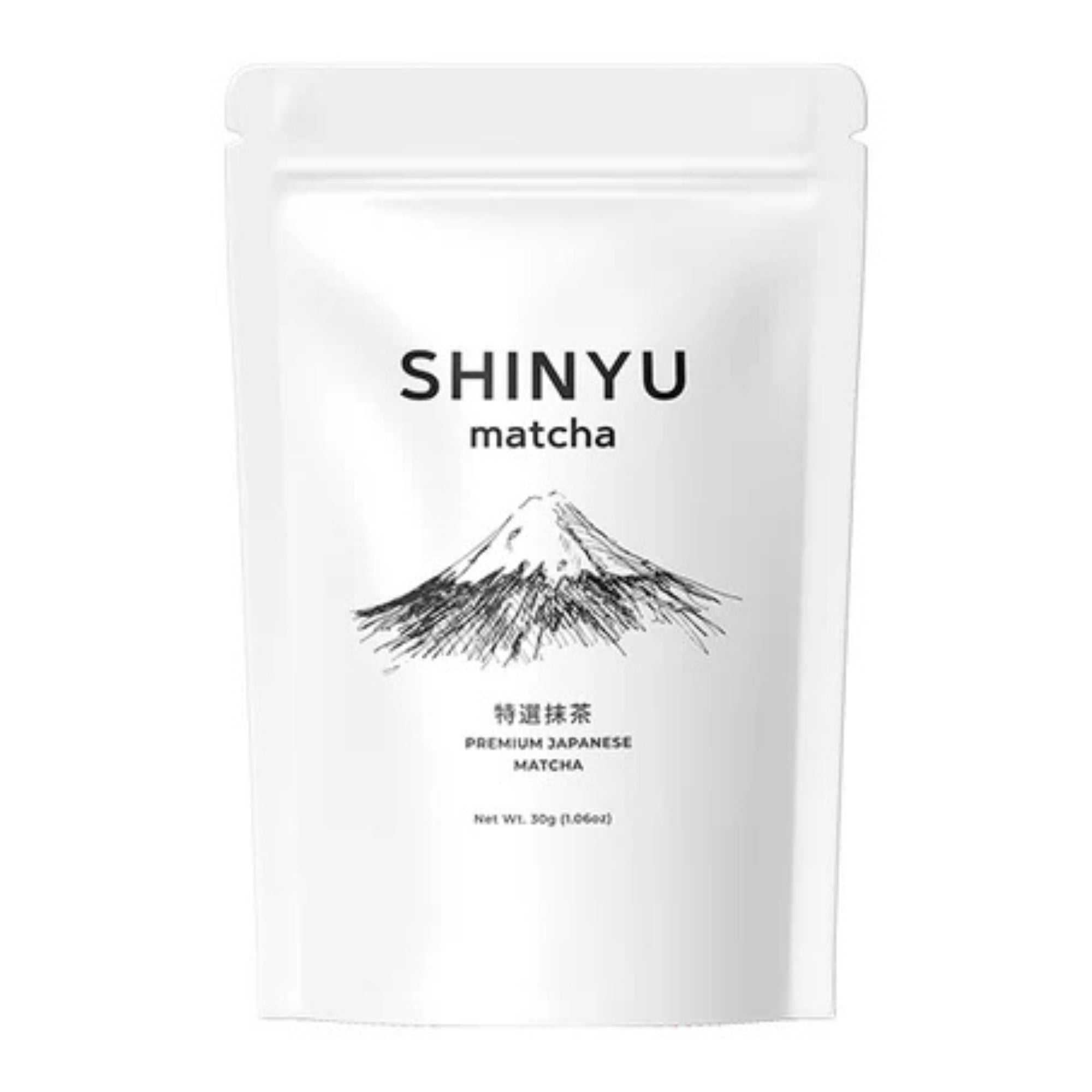
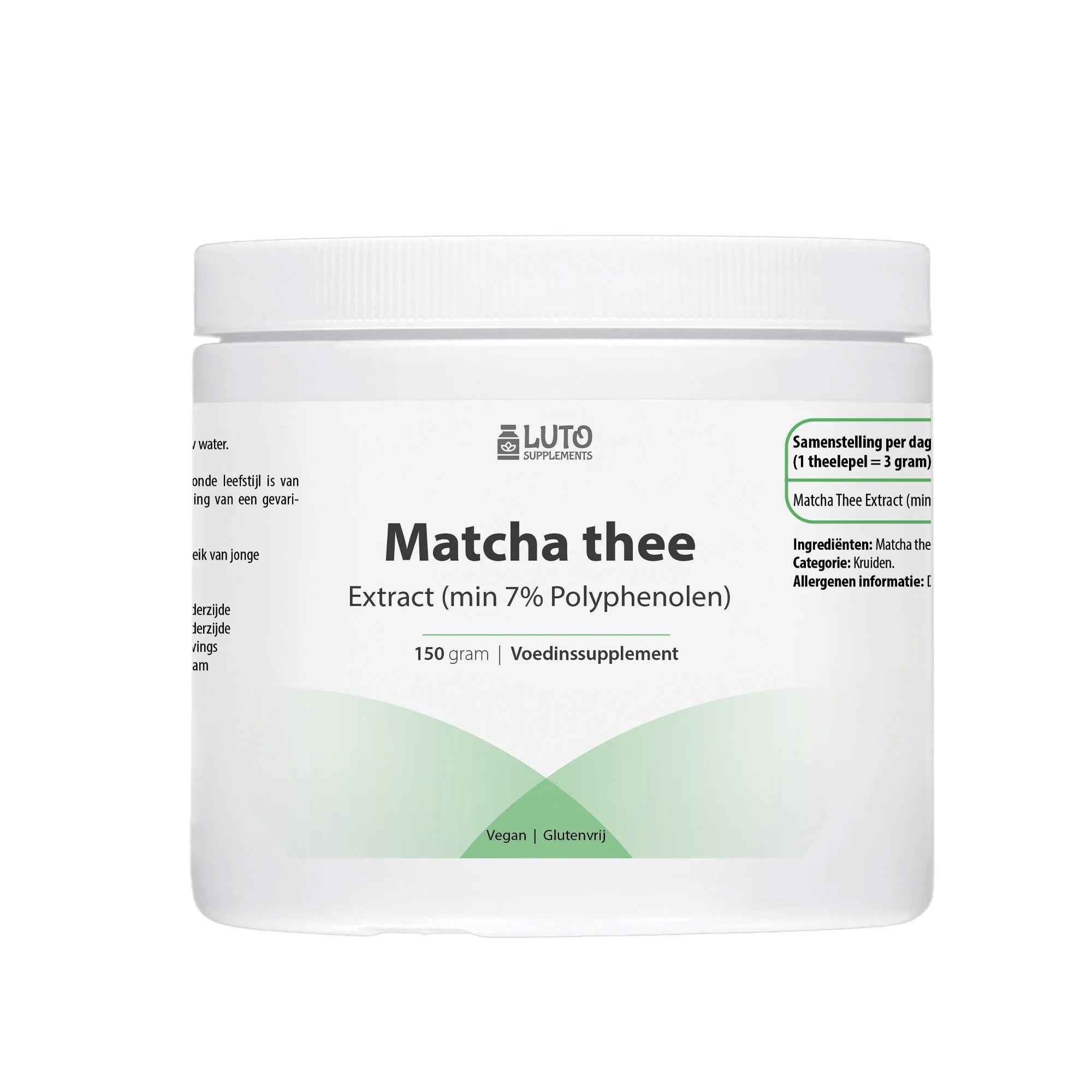
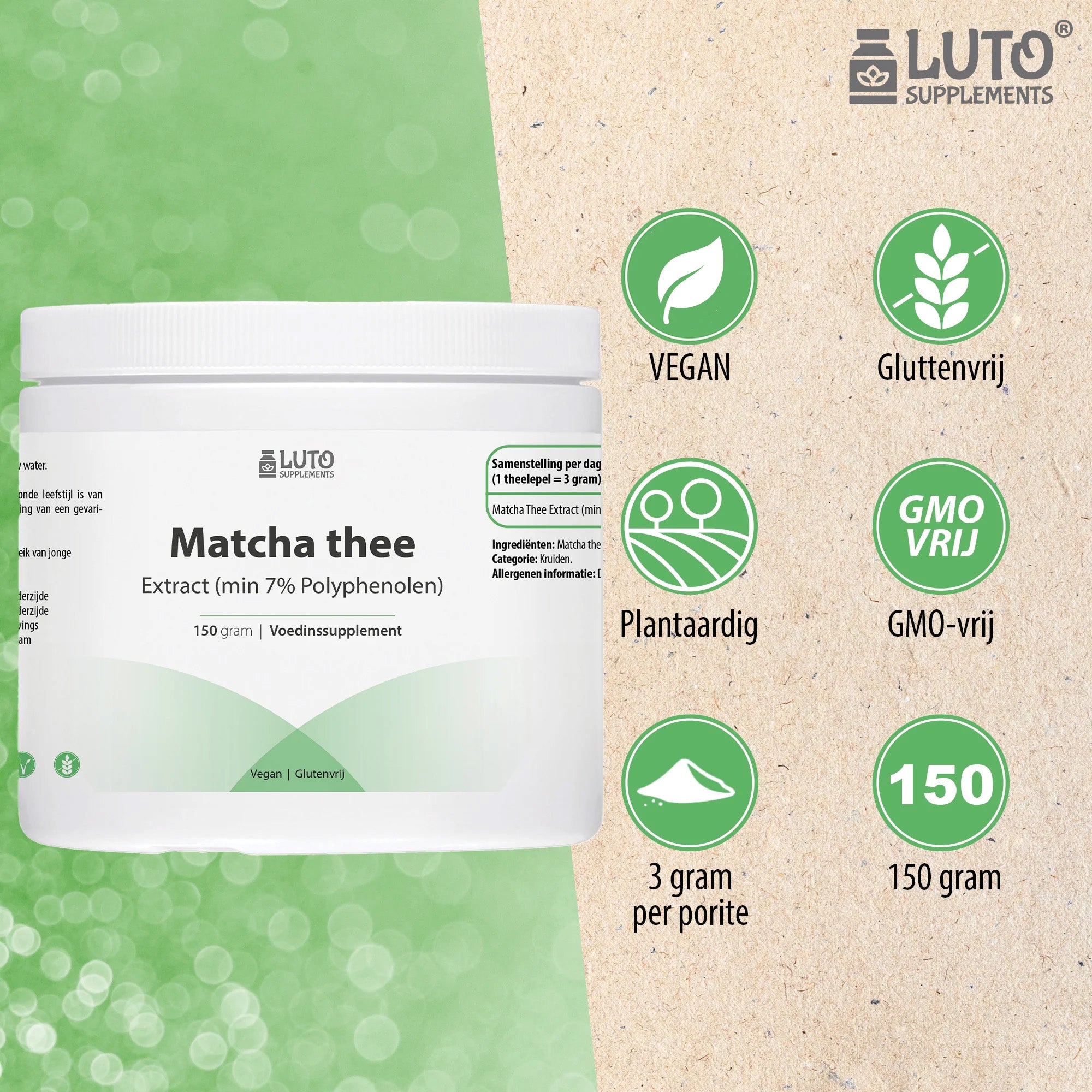
In this collection, you'll find matcha in various forms and from multiple brands. We offer organic LUTO Matcha Tea Extract (150 g powder, minimum 7% polyphenols) and Premium Ceremonial Matcha from Shinyu (Grade A Japanese matcha, 30 g from Kakegawa). Below, you can read what matcha is, where it comes from, what forms are available, and what to look for when buying it. Are you looking for green tea in capsules or loose-leaf green tea? Then check out the related collections at the bottom of this page.
What is matcha?
Matcha is a special form of green tea where whole tea leaves are finely ground into powder. Because matcha uses the complete leaf and you drink the powder entirely – instead of just an infusion like with a tea bag – matcha has an intense, creamy-vegetal taste and a deep green color. The leaves are shaded before harvest, which contributes to its characteristic color and flavor.
Where does matcha come from and how is it made?
Matcha originated in Japan and is closely associated with the traditional Japanese tea ceremony. The tea plants are shielded from direct sunlight several weeks before harvest. The leaves are then steamed, dried, and stripped of stems and veins (to form what is called tencha), and finally ground into a fine powder using stone or steel mills. Well-known growing regions include Uji and Kakegawa; for example, the Shinyu matcha in this collection comes from Kakegawa in Japan.
What is the difference between matcha, matcha powder, and ceremonial matcha?
All matcha is matcha powder, but there are different grades. Ceremonial matcha is made from the youngest, softest leaves and is intended to be whisked purely with water; this grade typically has the mildest, least bitter taste and the brightest color. Culinary or extract matcha is a matcha powder that is more often used in shakes, lattes, and recipes, and is sometimes standardized for a portion of its naturally occurring substances, such as polyphenols. For example, LUTO Matcha Tea Extract contains a minimum of 7% polyphenols, while Shinyu matcha is a ceremonial grade.
How much caffeine is in matcha?
Matcha naturally contains caffeine. Because you drink the entire, finely ground leaf with matcha, the caffeine content per cup of matcha is generally higher than that of a steeped cup of regular green tea, although the precise amount depends on the dosage and preparation. Matcha also naturally contains L-theanine, an amino acid characteristic of tea. The exact caffeine content is listed on the product label; if you are sensitive to caffeine, please keep this in mind.
How do you prepare matcha?
Classic matcha is prepared by sifting a small amount of powder (often about 1 to 2 grams, measured with a matcha scoop or teaspoon) into a bowl, pouring water around 70 to 80 degrees over it, and whisking the mixture with a bamboo whisk (chasen) until it's a smooth, slightly frothy tea. Water that is too hot can make the taste more bitter. You can also stir matcha powder into a latte, smoothie, or yogurt for quick preparation.
How much matcha per day?
How much matcha you consume per day depends on the product and your personal preference. For matcha powder, approximately 1 to 2 grams per cup is often measured. Since matcha naturally contains caffeine, you can take this into account if you are sensitive to caffeine or drink matcha later in the day. For the correct daily amount, always follow the instructions for use and the recommended dosage on the packaging.
Who is matcha suitable for?
Matcha is suitable for people who enjoy the characteristic taste of green tea or who are looking for a drink with natural caffeine as an alternative to coffee. Ceremonial matcha appeals particularly to tea lovers who appreciate the preparation ritual, while matcha extract powder is convenient for use in shakes, lattes, and recipes. If you are taking medication, are pregnant or breastfeeding, or are sensitive to caffeine, consult your doctor if in doubt.
What to look for when buying matcha?
When buying matcha, pay attention to the origin and grade: ceremonial grades are intended for pure drinking, while culinary or extract grades are more often used in recipes and shakes. The color is an indicator: high-quality matcha is typically bright to deep green. Also, consider the packaging (matcha is sensitive to light, air, and moisture), any organic certification, and, for extract powders, the standardized amount of polyphenols. Finally, compare the form with your intended use: fine powder to whisk purely or powder to incorporate into shakes and recipes.
Also check out our collections Caffeine, Antioxidants, and Superfoods for related products.
Need more advice?

Tobian
Customer service